Learn how this thousand-year-old fiesta withstands the tests of time, and how celebrators vibrantly greet the souls of the departed every year.
Pictures of loved ones perch on colourful altars, cemeteries crowded by families, music and laughter, the scent of marigolds in the air – these are all things you might see on Day of the Dead, a spirited celebration held every year on November 1 and November 2 for those who have passed.
It is believed the souls of the dead return to visit, so people set up altars with offerings for loved ones, visit gravesites, come together to party, and sometimes even parade. While the occasion is largely observed in Mexico, Day of the Dead is celebrated all around the world.
The celebration unifies indigenous traditions with the European and Catholic traditions which arrived with Spanish colonisation in the 16th century. Modern-day Latin America’s roots are diverse, stemming from many pre-Columbian civilisations, many of which believed in the continuity of life beyond death.
“A couple of things we feel may get lost is that this isn’t a single tradition. Multiple cultures in Mexico had a version of Day of the Dead, such as the Nahuas, who are the Aztecs, Totonac, Mixtec – a bunch of different cultures had a version of this,” says Germán Muñoz, co-director of folk dance group This is Mexico.
“This is something that Mexicans are kind of grappling with. A lot of that got erased from these cultures, and the very important thing in Mexico right now is rediscovering these first nations, giving them that space and allowing them to have that nuance of differentiation.”
Another important indigenous civilisation who believed in continuity was the Inca Empire, the final Andes region to be conquered during Spanish colonisation in 1533 AD. Many of its traditions and cultures are preserved by modern-day Andean countries, such as Peru, Ecuador and Bolivia.
“There’s a connection with the Huacas. They were places where you usually put a mummy. For example the Inca King, the Sapa Inca, was placed in a specific case alongside some Quipu records.” explains Leonardo Torres Llerena from the UK Latin Community. “Quipus were similar to books. They had the records of his kingdom during the years he was the king and you were able to visit that case 50, 80 years after that, and compare the numbers he had during his kingdom to what you have now.
“If you have records there was flooding 50 years ago, you could compare what that person did. Visiting the dead, no matter if they were the leader or part of the regular people, allowed you to talk with them.”
With the Spaniards came persecution of everything that was different from Catholicism, and so Day of the Dead became a way to keep the custom of communicating with the dead alive. The main celebration typically occurs at the same time as All Saints’ and All Souls’ day, and Christianity is reflected in symbolic aspects such as water, salt, candles and crosses.
“As Mexicans, we put a lot of effort into making a celebration that is not only beautiful, but heartfelt. Many people go to cemeteries to place flowers on the graves of loved ones, and some even have picnics at the tombs so the dead know we continue to think of them,” explains Darinka Gutierrez, a student from Mexico City, “The altar we set up for the deceased has its own meaning, and each item we place on it symbolises something. [It] can have different levels, and they represent the division between heaven and earth, as well as the steps the soul must take to reach its resting place.”
Items such as cut paper, known as papel picado, represent the element of air. Candles are lit to guide the soul’s way back, salt is an element of purification to prevent the soul getting corrupted, and water is to quench their thirst. There is also incense, most commonly copal incense made of tree resin, which cleanses the space of evil spirits.
“The food and drink represents what they enjoyed eating and drinking when they were alive, and the marigold flower, which we know as Cempasúchil, guides the soul to the offering. Photographs are so that our deceased know that we continue to honour them.” says Darinka.
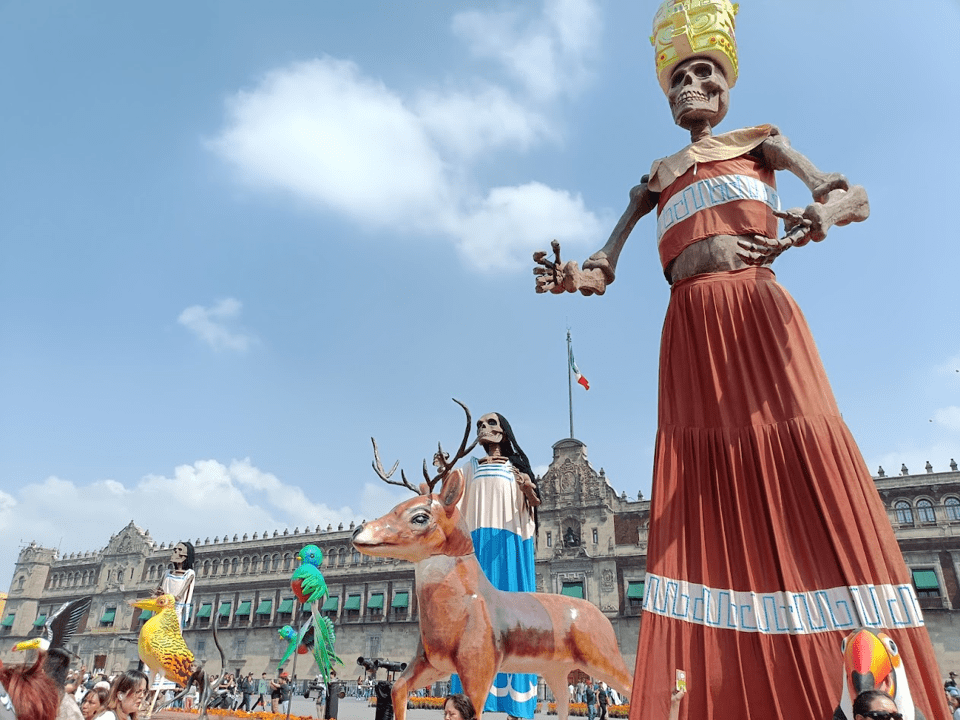
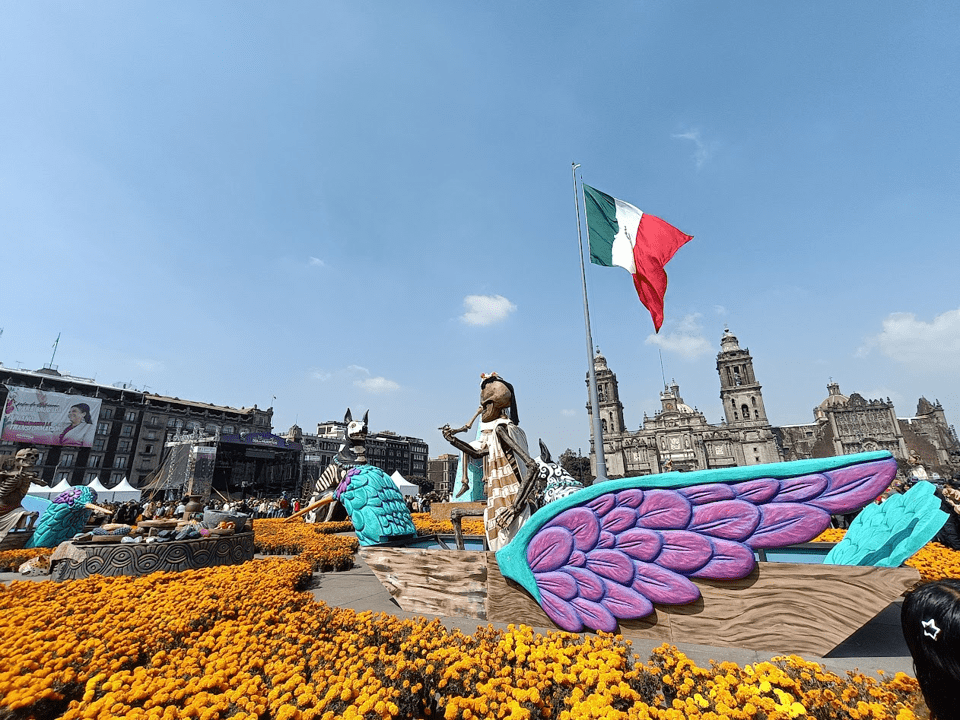
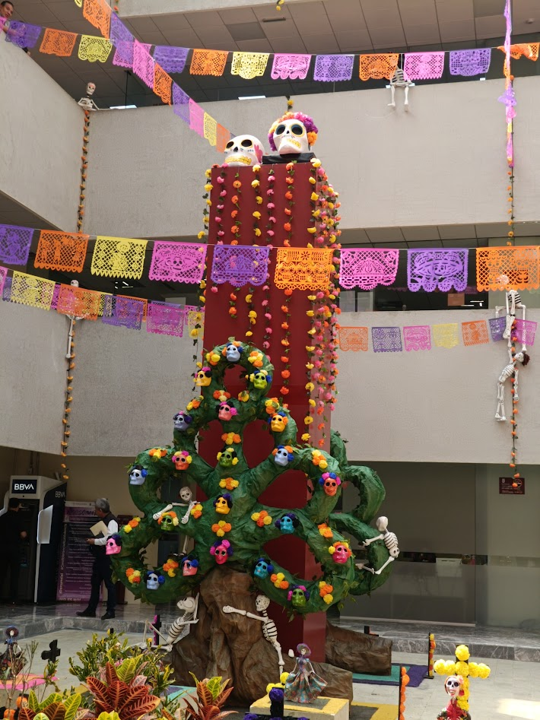
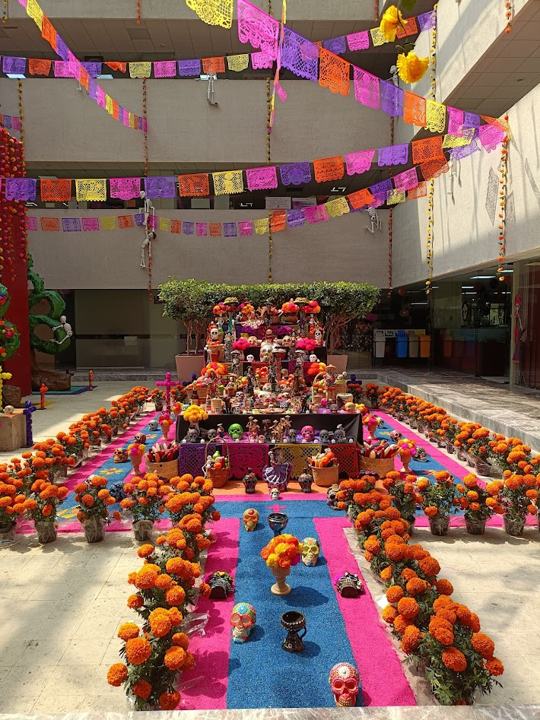
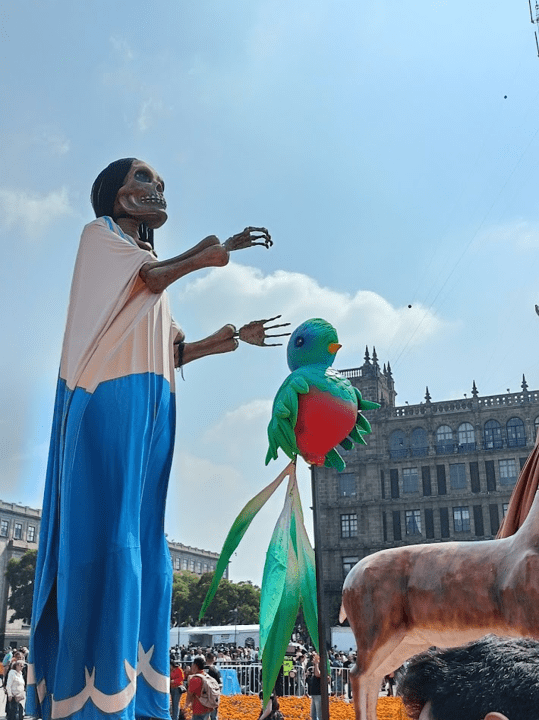
Images from Darinka of a Day of the Dead altar, and celebrations in Zocalo Square, Mexico City.
The celebration is very communal, with friends and family often coming together to celebrate. In smaller towns, people might even open up their houses so others can admire their altars.
“Outside of my room, I put an altar on the terrace. I remember the night I set it out, I went to sleep and everybody said goodnight. My dad went to his room, my sister went to her room.” recalls Daniela Esquivel Martin, a Mexican student. “I heard footsteps on the other side going back and forth from the kitchen. I was like okay, someone got up and got some water, or got some food, whatever you will. But then I felt kind of like, well, really? Are we sure about that?
“Next morning I asked everybody ‘Hey, did you guys hear footsteps or something?’ They said they didn’t hear anything. We have cats, and you can hear them go back and forth, but these were very much human footsteps, not little pitter-patters. I was like ‘must have been my grandfather coming back for food in the kitchen.’”
A video showcasing an altar set up by Daniela’s father.
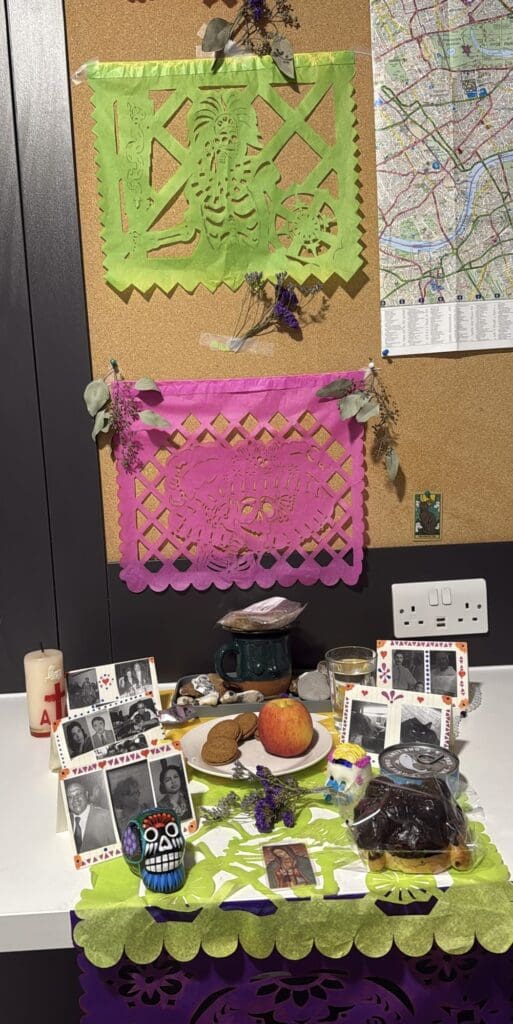
Daniela’s Day of the Dead altar she made while in London.
One staple food is bread of the dead, which is a sweet bread with the shape of bones on top. Daniela says it’s ‘everywhere in every single bakery you can go and eat’ and might be given as part of the offering.
As part of celebrations in the Andean region there is a bread called t’anta wawa, which is a sweet roll in the shape of a baby. “Some people even print the face of the dead person and stick it to the bread.” explains Leonardo. “But that’s a recent tradition.”
A pre-Hispanic Andean beverage called Chicha de Jora, made of corn, is also offered to people, and the dead, as a present to share.
“There’s also a tradition in Peru that you usually drink from one cup, only one cup, if you have a group of twenty people, and you’re in a party – not for only the dead, but in general.” says Leonardo. “This is because it means that you are equal, are sharing something, and everyone is similar, so even in these experiences, during Day of the Dead, we share the glass with the dead. We will fill a cup, and rest it for a while in the tomb because it’s their turn for drinking.”
Last year, the day of celebrations coincided with the annual Alebrijes Parade in Mexico City. These creatures are typically a fusion of different parts of animals, and are explained by Darinka to ‘symbolize the union of worlds and spiritual protection,’ as well as guides, protecting people from evil spirits.
“According to our pre-Hispanic traditions, we are all assigned a guardian animal depending on the day and year of your birth,” explains Darinka. “These spirit guides are called Tonas, but we represented them as Alebrijes. In some cultures, they are also percieved as spiritual guides that accompany the souls when they return to the world of the living.
“It was moving to see the alebrijes, and know that they are watching over us, and also the souls that return to the Earth.”
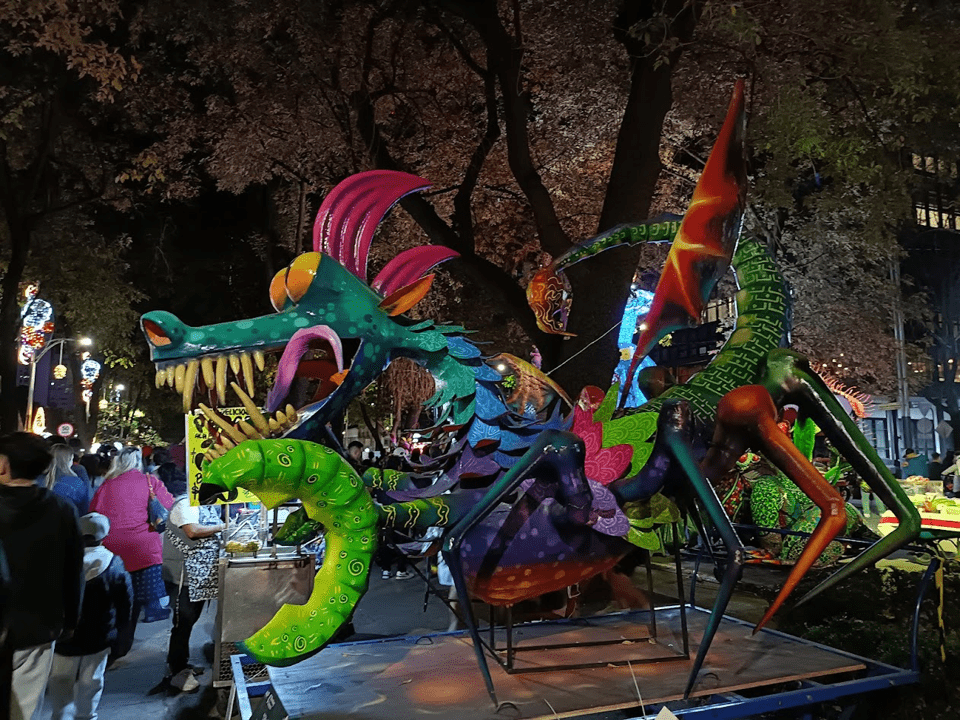
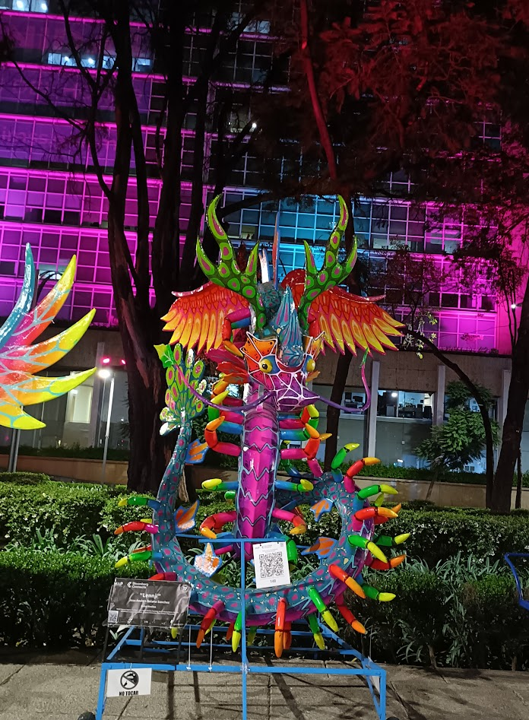
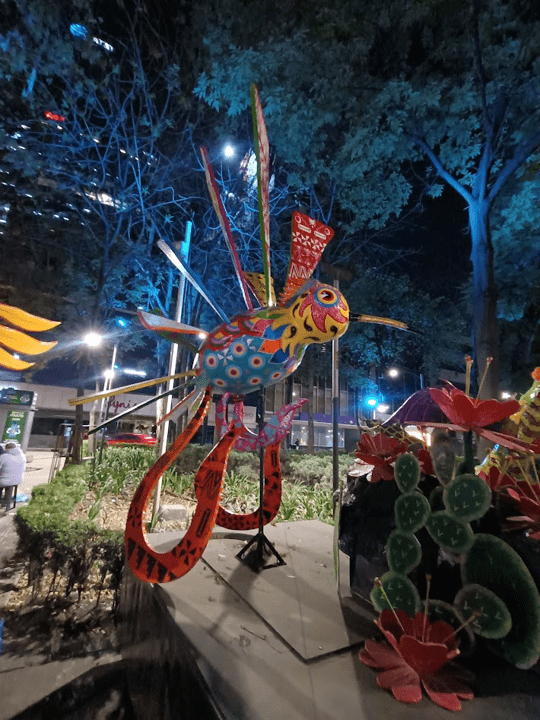
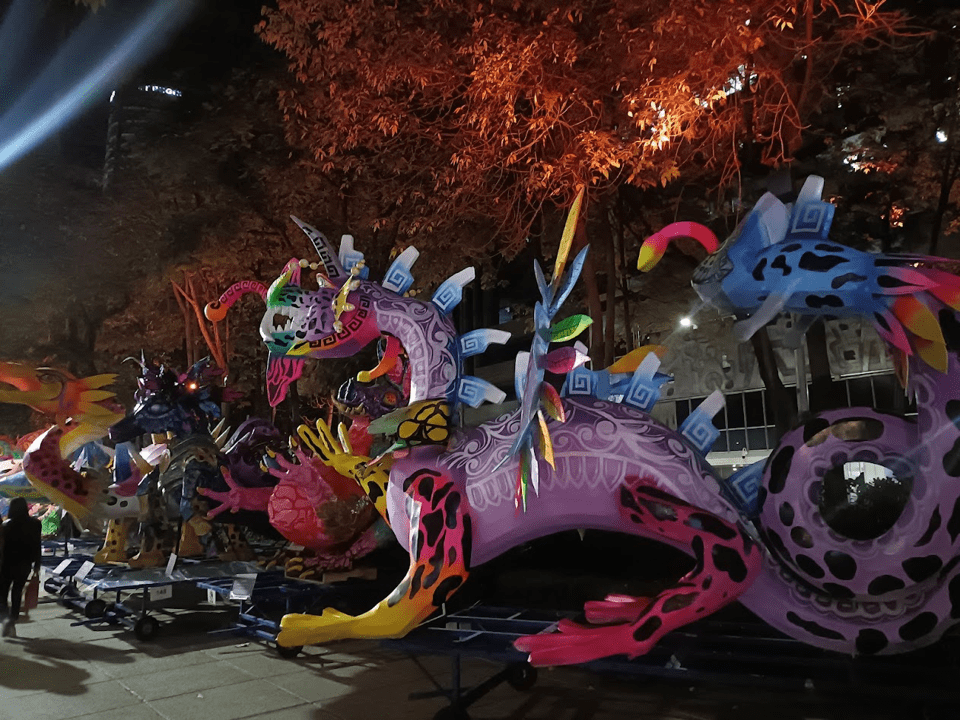
Pictures of alebrije sculptures taken by Darinka.
Sometimes people mistakenly assume that Day of the Dead is associated with Halloween, and by extension Halloween’s morbidity, due to the closeness in dates and the association with death. However, Halloween is largely owed to Celtic traditions, and has its roots in the Celtic festival of Samhain.
“Mexican culture approaches death in a more light-hearted way. You don’t have a Halloween spooky-scary association with death in the culture.” says Germán. “It’s more nuanced, and we definitely feel that some of this might get lost in the global expansion of the holiday.”
In Mexico poems called calaveritas are written, humorous epitaphs that playfully make fun of the addressee. Mariachi bands, ensembles consisting of various string instruments, also play music, and people perform a variety of dances.
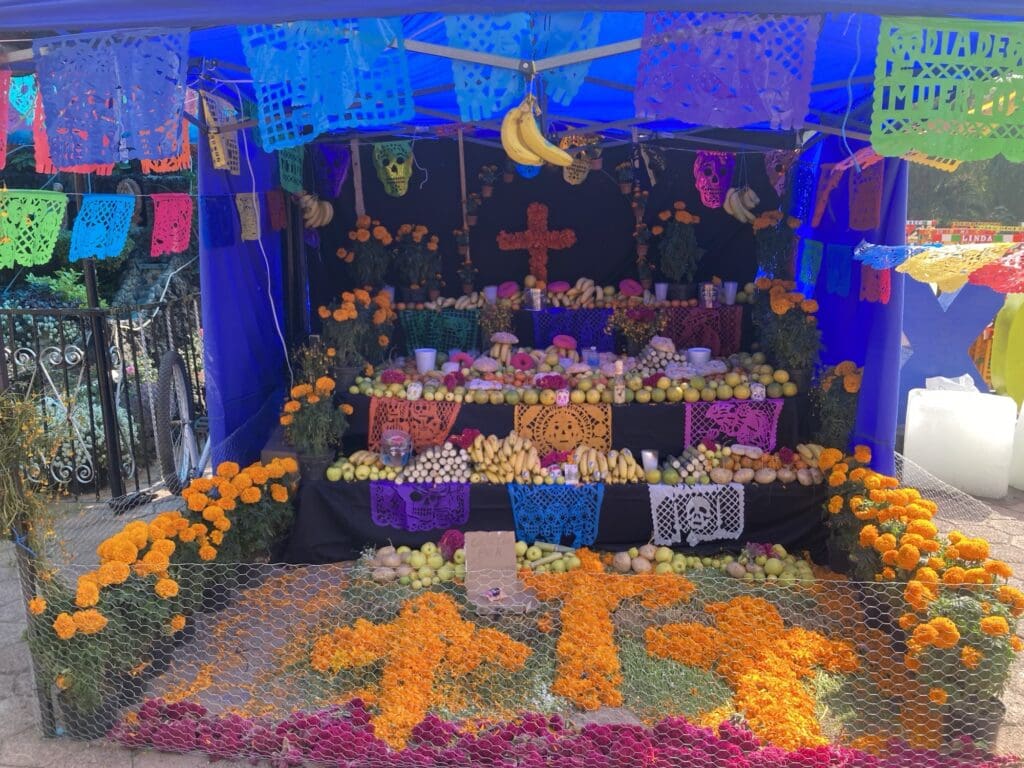
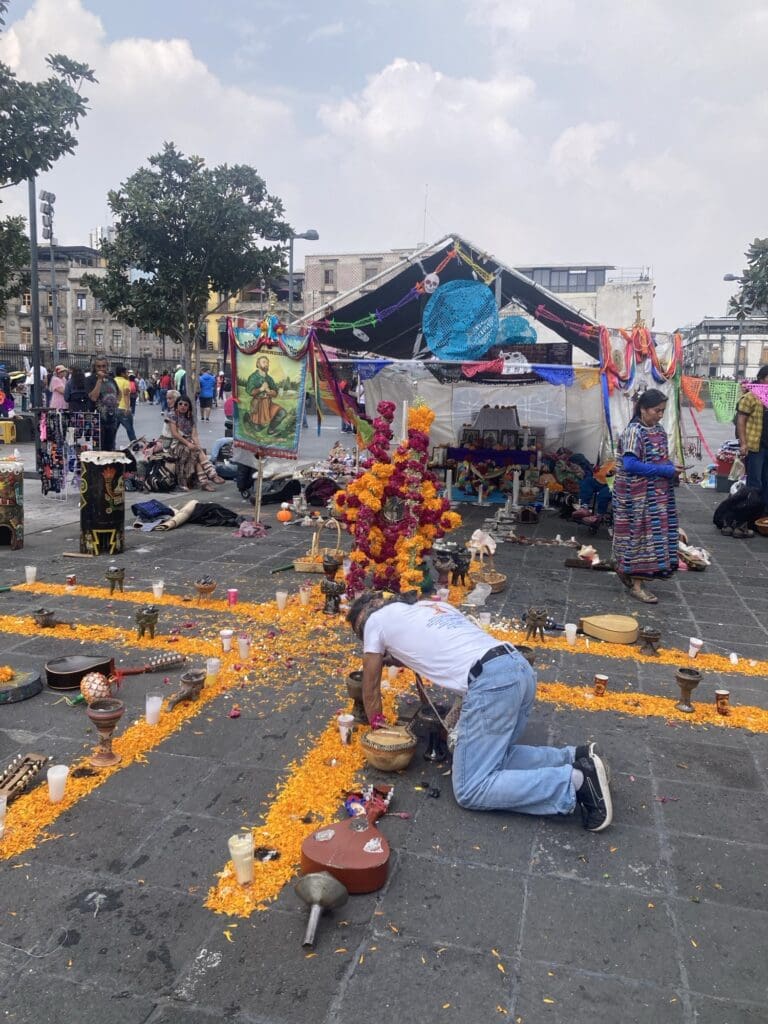
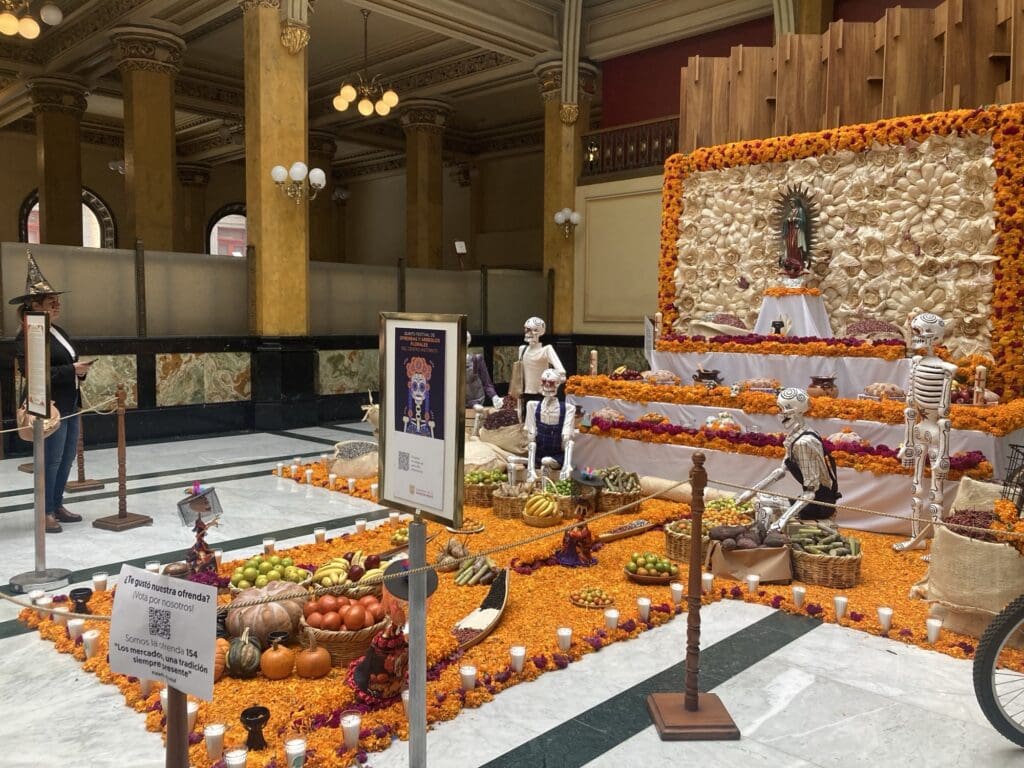
Additional pictures taken by Daniela.
Germán finds that making an altar when away from your homeland, such as Mexico, can be especially meaningful, and becomes a ritual of remembrance that helps you process it with ‘a little bit of grief, and with love’. It also helps people connect with their culture from faraway.
“There’s this belief that the ultimate death is forgetting,” says Daniela. “So if you don’t forget, they never really die. They’re always with you in one way or another.”