How ‘The Gardener’ explores being buried with the wrong name and gender.
Barred from attending your friend’s funeral, you’re left staring at his gravestone. With cheap-tasting vodka better enjoyed at his side, and the dull-bladed pocket knife he had given to you as a gift, you feel withdrawn – until a thunderous sound intrudes on your reminisce. From the heart of this noise emerges none other than a monster, bearing bloodied hands, a withered visage, and a mission: to help act on grievances otherwise unspoken.
The Gardener is an indie visual novel, available on itch.io, with code by Aeris, art by DacuriBlue and LemonanaPink, music by Mokusei No Maguro, and writing by E. L. Sonder.
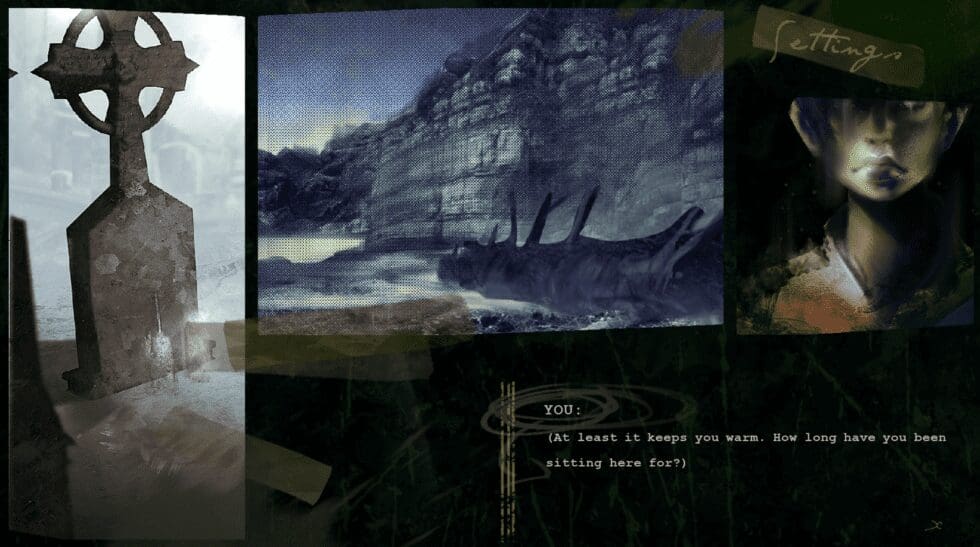
The story centres on the character’s visit to a friend’s grave, alongside the sudden emergence of a monster, ‘The Gardener.’ Addressing transphobia head-on, The Gardener assists in demolishing the misnamed grave, outfitting the friend’s body in something more suited to his character, and guiding the main character through their grief.
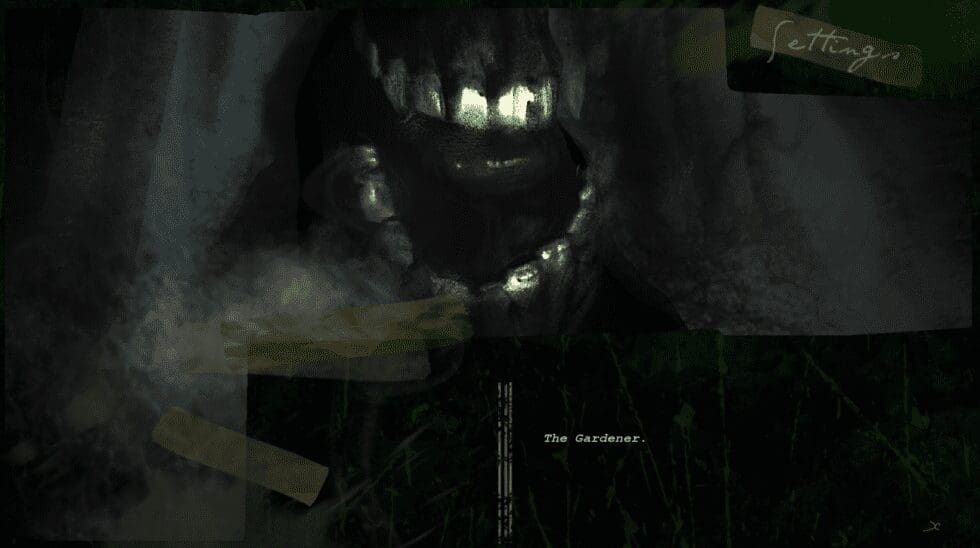
“The Gardener represents a lot of things – but most importantly, is that they represent anger, and shame,” says Elliot. “Shame at being unable to change things, at being unable to make the world safe, to make it good – shame for being angry, shame for feeling violent over transphobia.
“And anger, anger that feels so big you can’t even handle it, but also anger that changes the world. Anger is often vilified, and I wanted to show the monster using its anger constructively. That the rage and pain in grief one feels can be used to do incredible things – like destroy a gravestone with the wrong name, and dig up and rebury the dead.
“That our anger can help us right wrongs.”
While the game’s narrative is linear, it contains elements of choice which grant the player agency. You’re able to pick how your friend is remembered, what he should wear, and how you mourn. Digging a hole to rebury your friend also asks you to select several options, each click lending to the upheaval of soil.
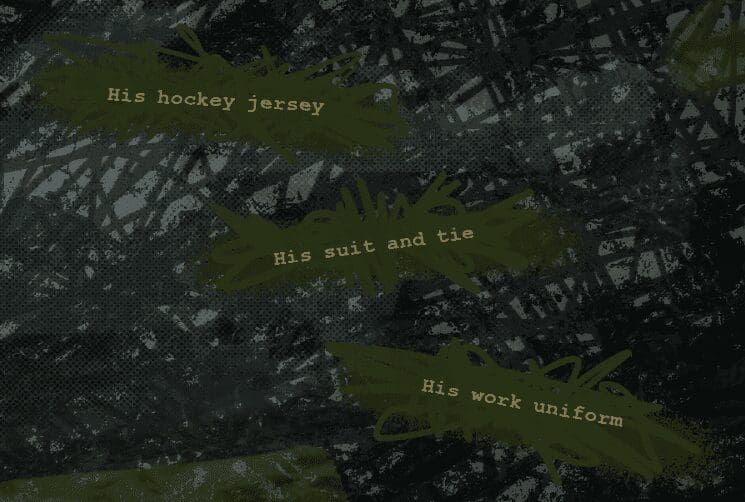
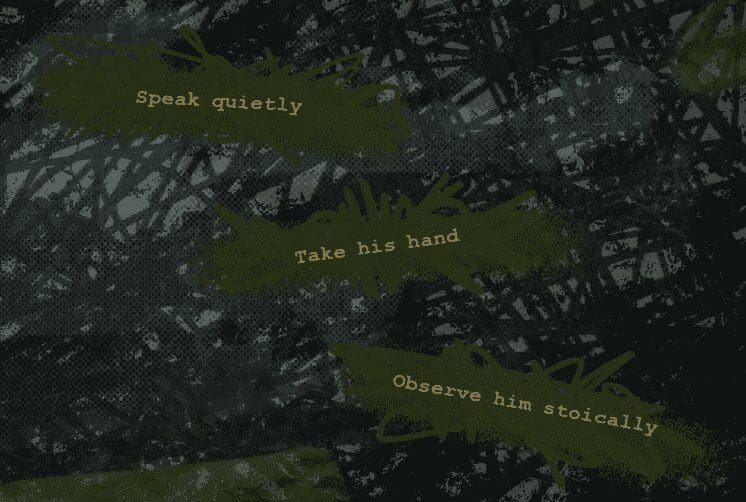
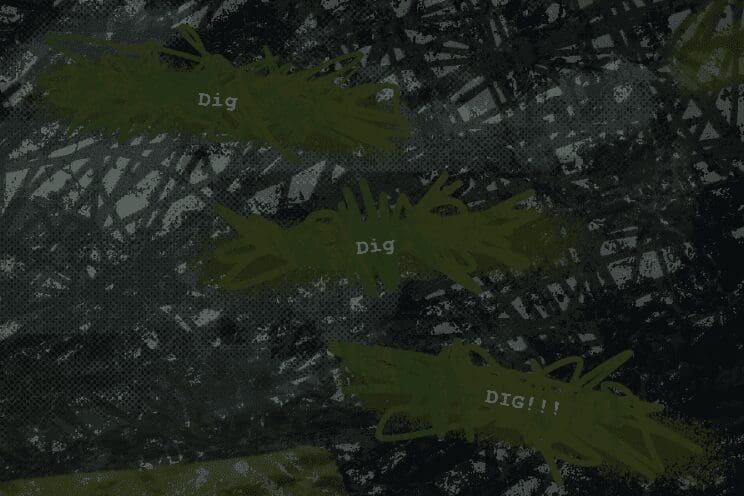
Aesthetics are raw and real; characters and backgrounds look painterly and gritty. There’s the animated element of smoke, strips of tape keeping the textbox together, and the lettering of a typewriter, like something homemade and personal. The carefully tailored backing track sounds mournful and profound, adding to the game’s already rich texture.
Throughout the story, the main character is referred to as ‘you.’
“Partially, in the use of the monster and the second-person pronoun, forcing the reader to be in the story with the main character, I want them to connect the story to their own experiences with loss,” explains Elliot. “But second-person point of view is also jarring and unmooring – and that was intentional, to create that feeling of your feet being swept out from under you.
“When you’re confronted with and realize how short your own life is, and how easy it could be to be forgotten, or buried wrong.
“I also wanted to talk about the depersonalization of grief and the way that transphobia depersonalizes you as well. It’s only at the very end of the story, that the pronouns switch from ‘you’ to ‘I’, only when the spectre of the monster and all the pain and anger and transphobia is defeated that the depersonalization fades.”
Elliot was inspired by the comic ‘On the Occasion of my Death’ by Dyllpiccle on tapas.io, which explores the desire to not be ‘buried a stranger,’ and the hope that his gender identity and personhood will be accurately portrayed after he dies.
“I read it and cried, unable to stop thinking about it,” says Elliot. “It was a tumultuous time in my life, gender-wise. I hadn’t been out as trans for very long, and the very real fear of dying and being misgendered when I died felt unbearable.
“That I would die a stranger, that my friends wouldn’t know me.”
Due to being created as part of a game jam, there are some bits and pieces that didn’t make it into the final game. Elliot wished to include more choices to help shape your friend’s identity, and a direct confrontation with the friend’s family. Now they’re older and wiser, if they were to make it again, they say they would ‘not pull those punches,’ add to the main character’s complexity, and allow themselves the catharsis they believe so many trans people crave.
“My absolute favourite moments and the ones I think are most meaningful are the same,” says Elliot. “It’s these two moments in particular: when the player ‘you’ realises that the monster’s footprints match your own, and you understand that you are the monster and the monster is you, your grief is a fire and the only thing that makes sense is this splitting of your soul: you and the monster.
“Its anger is your anger, its pain and fear and rage: that’s yours, you’re a monster and you can either balk in fear or rise and destroy the things that have hurt you.
“And then the moment when the monster disappears and there is only the boy again, and the pronouns switch, and the game becomes first-person point of view.”
The ending of the game follows the friend’s reburial, the fledgling growth of a new tree, and the feeling a wrong has been righted. Following a moment of silence, reflection, and the chirp of birds, you, the character, regain your breath, part with the monster, and wish your friend easy rest.
“The whole thing was so raw and close to me, like I said, it was a roar in my chest. I needed to get it out,” says Elliot. “It was my first time writing something for a game that would actually get made like that, and the opportunity to make something so meaningful.
“I finished the last line of the script. And then I wept. And then I slept.”
The game can be downloaded here.