After a car crash left Marrianne Rooprai paralysed from the shoulders down, she clinically died four times and woke up in a body she no longer recognised.
Marrianne Rooprai had been at a friend’s wedding with her sister when the crash happened on the journey home. She does not remember the accident itself, and she does not try to reconstruct it in detail, because for her the crash is less a memory than a point of rupture between the life she had before and the body she woke up in afterwards.
“I don’t talk about it,” she says. “One, I don’t know. And two, I find it more of a negative than a positive.”
What she knows is what she has been told and what her body still carries. The crash broke her neck, fracturing a vertebra at the top of her spine and crushing two others, and left her paralysed from the shoulders down. Emergency services had to resuscitate her at the scene, and when she reached hospital she had to be resuscitated again. She spent time in intensive care, heavily injured, heavily medicated and fighting the effects of the crash.
Nine days later, Marrianne was transferred to the Osborn Spinal Unit in Sheffield, where she was placed in traction to keep her neck still. For three months, she lay flat on her back with bolts fixed into her skull and weights holding her head in place, so her damaged spine could be stabilised. For a while, she appeared to be settling, but then septicaemia set in, a crash team was called, and she was rushed back into intensive care with a ventilator to help her breathe.
By the time she began to understand what had happened, she had clinically died four times, lost the use of her body from the shoulders down, and woken up in a hospital bed unable to speak. But before she could make sense of any of that, her mind had already taken her somewhere else
The visions
During the periods when she was unconscious, heavily medicated and close to death, Marrianne’s mind did not produce the calm, familiar near-death story people often expect. There was no neat tunnel, no peaceful procession of loved ones, and no clear sense of passing from one world into another. Instead, there were vivid, frightening fragments that felt real while she was inside them.
At first, in her mind, the crash had not been serious at all. She thought they had driven home afterwards, and that she had woken in her own bedroom, heavy with pain, her body aching as if it belonged to someone else. Her parents were downstairs, the damaged car was on the drive, and she was going to be taken to hospital to be checked over. Then the scene changed, and the ordinary safety of home gave way to something stranger.
The hospital in her mind seemed more like a prison intake, or somewhere from a film, where clothes were stripped away, and possessions were placed into trays. At another point, she remembers swimming in a large tank while people watched. Later, she was on a hospital bed being pushed towards a plane, surrounded by bright light and bitter cold, convinced she was being taken back to Australia.
The most vivid vision placed her in a vast black space, fixed to a chair as if it had been stuck to a wall. Somewhere below her, a door opened like the back entrance to a club, and Snoop Dogg appeared with an entourage. It is the detail people tend to remember, because it sounds absurd when repeated aloud, but Marrianne is careful to explain that it did not feel funny at the time. In the vision, he was not a celebrity cameo or a strange dream character. He was a threat, and she believed he was looking for her.
“People ask if I saw a light at the end of the tunnel, but I just saw Snoop Dogg.”
Marrianne rooprai
Waking up
When she woke properly in the spinal unit, the fear came with her. She was lying flat on her back with tubes coming from her throat, and a tracheostomy meant she could not speak. Because the last thing her mind had shown her was abandonment, she believed her family and Andy had left her, until her parents came around the corner and the nightmare briefly gave way to relief.
“I had never felt so happy in my life as I did when I saw my mum and dad,” she says.
She could not tell them why she was so distressed, or explain the visions, or describe the panic and relief that were happening at once. She could only try to mouth words they could not understand. For the first time in her life, she had no voice, and the people she most wanted to reach could not understand what she was trying to say.
“It was really difficult because, for me, that was the first time I had no voice,” she says.
The life before
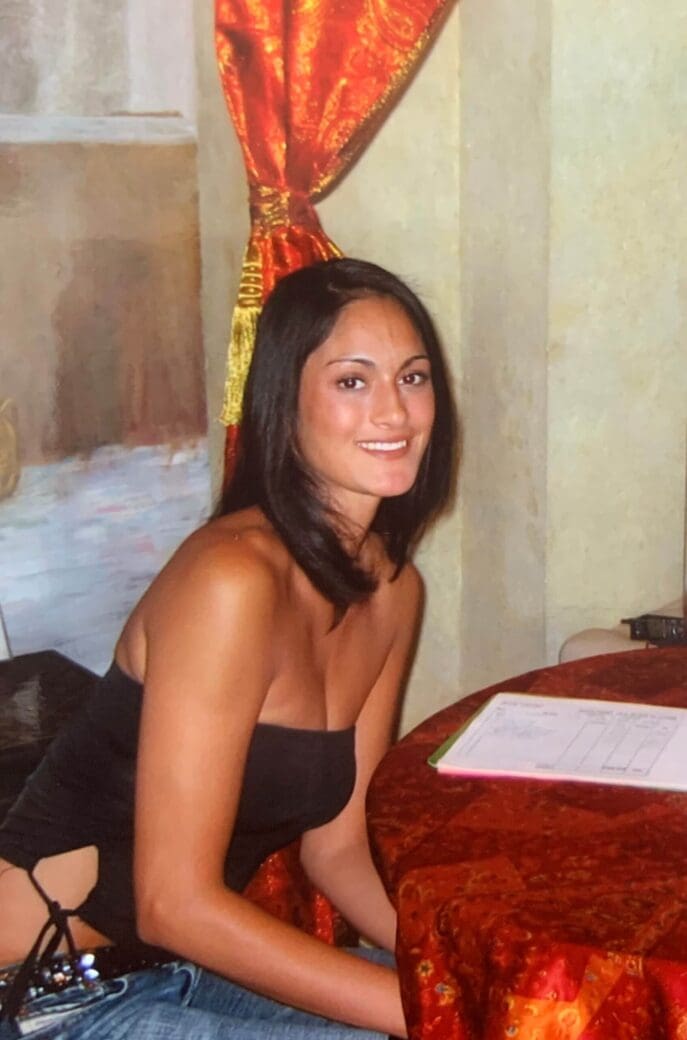
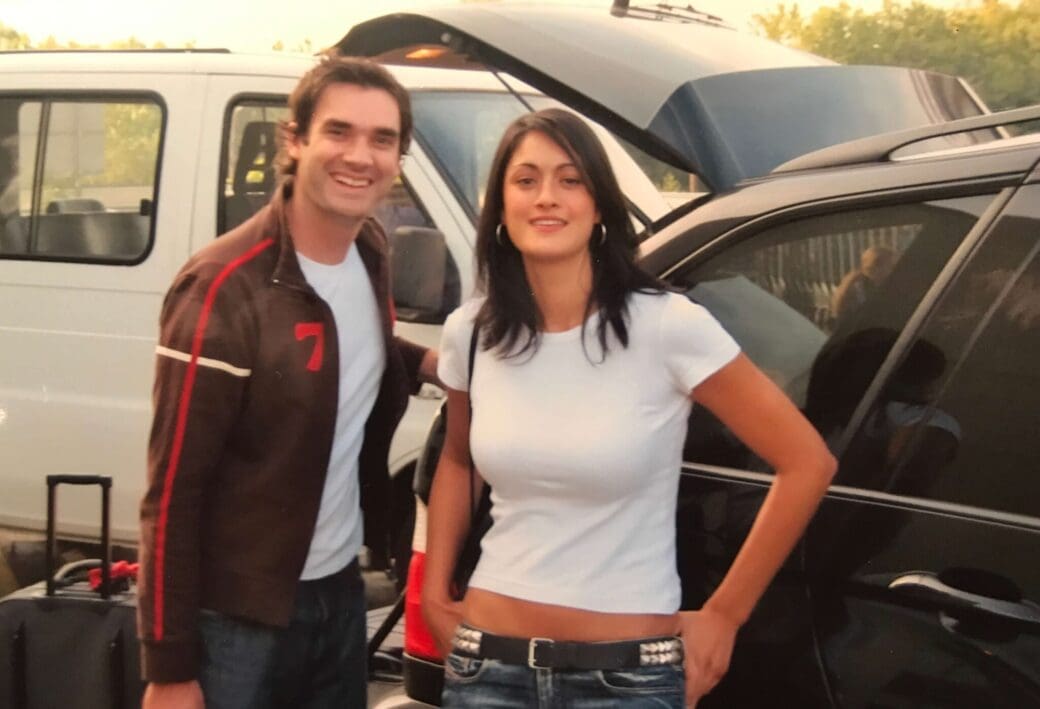
Before the crash, Marrianne was building the kind of life that still had the shine of its beginning. After a year spent travelling and making contacts at major sporting events, she had started a hospitality business in Hertfordshire with Andy. She was sociable, ambitious and used to a life built around movement, with nights out, friends, plans, work, travel and the ordinary rush of being young and busy.
There was a hen do she still thought she would be able to attend, which made the reality of hospital feel impossible to accept. Even after doctors told her she would be in Sheffield’s spinal unit for months, she did not believe them because her mind was still reaching for the life she had left behind.
“I thought they did not know what they were talking about because I had a hen do to go to the next week,” she says.
The scale of the injury took time to sink in. Doctors could tell her she had broken her neck and that she was paralysed, but the finality of that information did not arrive all at once. In the beginning, she says, there was still a part of her that thought this must be temporary, or that she would somehow return quickly to the life she had known.
The body after survival
For three months, Marrianne lay flat with traction holding her head still. Bolts were fixed into her skull, and weights kept her neck in place so her spine could be stabilised. When the traction was removed, the work of sitting up began slowly, by degrees, as her body had to relearn the simple act of being upright. The effort was so intense that she would pass out.
Because she had been lying flat for so long, she had no strength in her neck. She needed a brace and a high-backed wheelchair with cushioning behind her head.
“When they hoisted me into a chair, I caught a glimpse of myself in the mirror, and I just burst out crying,” she says.
The wheelchair made visible the life she had not chosen. She did not want to see friends, go back to the places where she used to go out, or have people look at her and see the chair before they saw her.
“I grieved for my life so much,” she says.
Rehab and small gains
Marrianne does not describe recovery as acceptance so much as work. Rehab became part of her life, something she treated less like a cure than a discipline. She trained, pushed herself, travelled for intensive physiotherapy and kept chasing small gains, even when progress came slowly.
“I treat my rehab and physio like my job now,” she says.
Those small gains changed what daily life could look like. Now she can sit in a chair, propel herself, feed herself, brush her teeth and do her own make-up. To someone else, these might sound like ordinary tasks, but to Marrianne they are hard-won pieces of independence.
“A small thing to other people is a huge thing to me,” she says.
Her progress has not erased the injury, but it has given her back parts of herself that once felt unreachable. The work is repetitive, slow and physically demanding, but it gives structure to days that might otherwise be shaped only by loss.
The Rooprai Spinal Trust
The Rooprai Spinal Trust began in 2005, a year after Marrianne’s injury. Today, the trust helps people across the UK who have been paralysed by spinal cord injury to access specialist physiotherapy. Its work is practical rather than sentimental, built around rehabilitation, movement and the kind of support that can help people regain strength, confidence or independence, even when progress is slow.
Marrianne is careful not to dismiss the NHS, but says the support available after hospital was not enough for the kind of recovery she wanted. Specialist physiotherapy was different, but expensive, and the trust was built to make that support possible for people who could not otherwise afford it.
“The people who come to us for help do not want you to feel sorry for them,” she says. “They just want to make progress.”
The charity now supports people through its scholarship programme, helping them access the kind of rehabilitation that might otherwise be financially out of reach. Marrianne says the work is rewarding because she knows what it feels like to be in the early stages of injury, when the future can feel impossibly small and the right support can change not only someone’s body, but their mental health too.
“When you get into that dark place, it is really hard to get out,” she says.
That word, progress, has become central to how Marrianne understands recovery. It does not always mean walking again. It can mean sitting for longer, moving an arm, feeding yourself, brushing your teeth, doing your own make-up, or getting through a day with a little more control than the day before.
Death now
Marrianne does not talk about death as something she has beaten. The dying was terrifying, and so were the visions, but death itself feels less unknowable now.
“I do not fear death as much now,” she says.
The harder part was coming back: waking up unable to speak, seeing herself in the wheelchair, and learning that survival did not mean returning to the life she had before. More than 20 years later, that work is still there in the physiotherapy, the charity, and the small freedoms she has fought to regain.