Hear from Victor M. Sweeney after our live Q&A to learn about his lived experience preparing the bodies of those who have passed, and how he crafts meaningful moments to remember them.
Our writers Daisy Sanderson and Robyn Smith spoke to mortician Victor M. Sweeney.
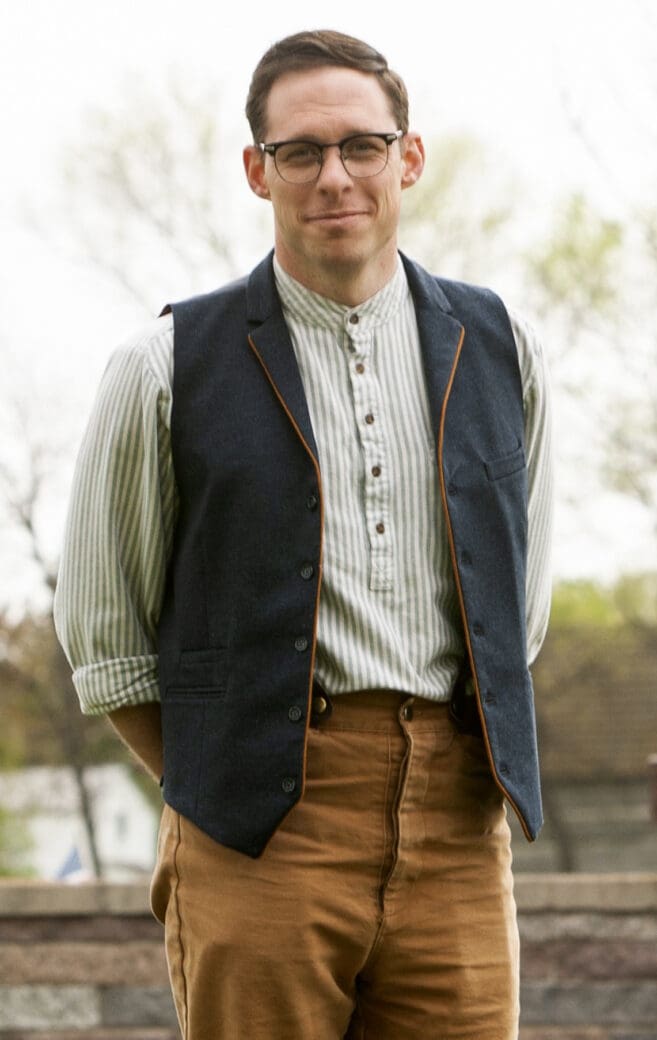
Meet the expert: Victor M. Sweeney
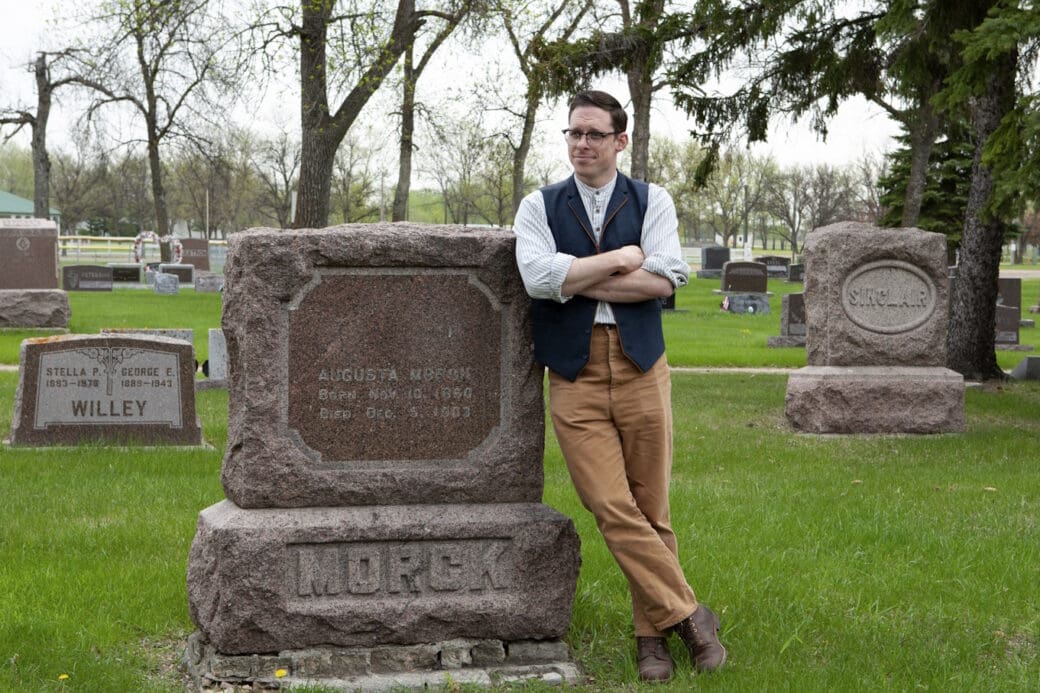
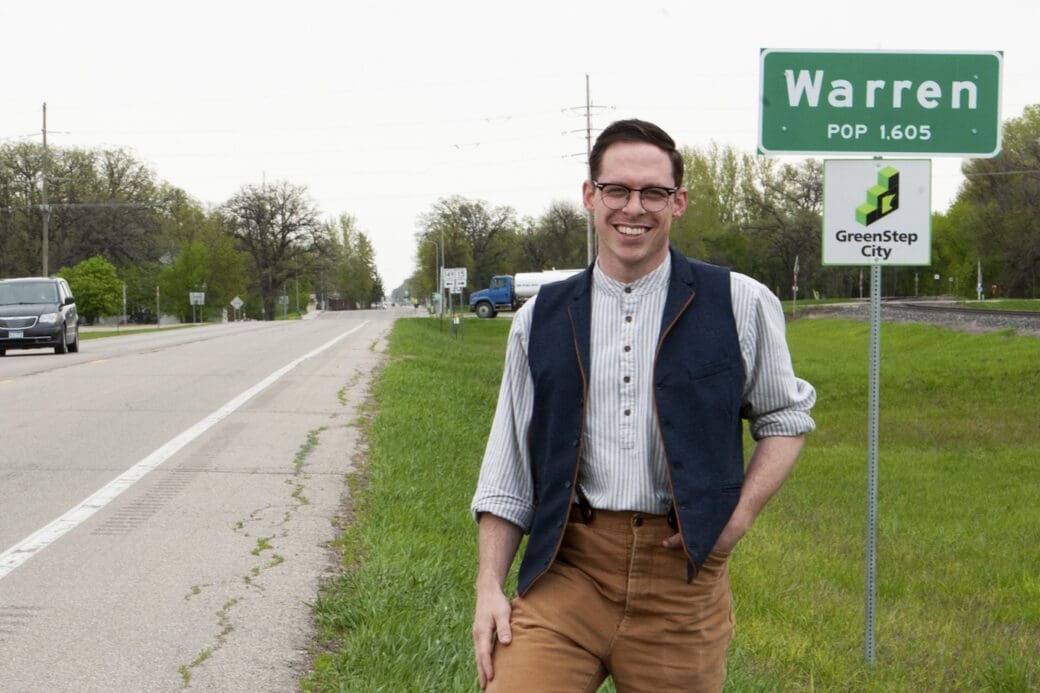
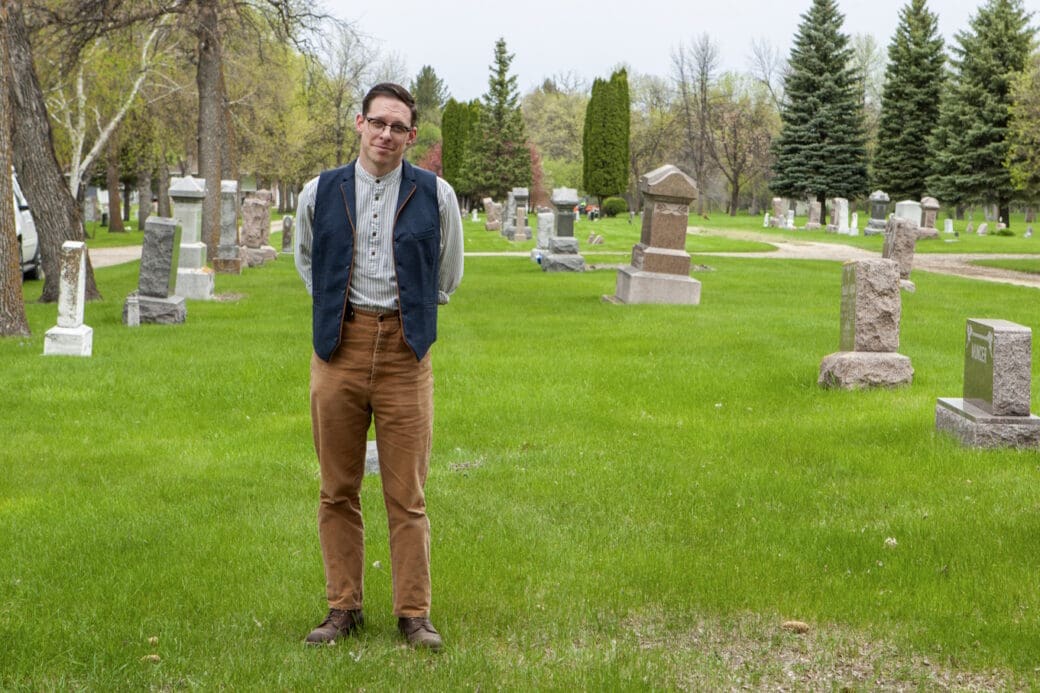
Victor M. Sweeney is a professional mortician based in Warren, Minnesota, with over seventeen years of experience. Appearing on WIRED, the History Channel and CNBC, Victor is known worldwide. He runs his own YouTube channel, and discusses the overlap of life and death on his podcast “DEATH AND with Victor M. Sweeney.”
Q: To someone who isn’t familiar with mortuary and the preparation of the body, what actually is embalming?
A: So, embalming in its simplest form. What we’re trying to achieve is the disinfection and preservation of the body. There’s also a cosmetic effect, but primarily what we’re concerned with is we want to delay decomposition. We can’t halt it. It will never actually stop.
From the minute you die, decomposition will begin in its most basic stages. And then it will get worse, and worse, and worse the longer it goes unchecked. So essentially, we want to enter the vascular system, typically by way of the carotid artery, sometimes the femoral artery, the big one in your leg, inject preservative and disinfectant solution, sometimes called embalming fluid. It can be made of any number of different chemicals.
They’re actually – this is kind of neat – they’re doing a lot of work. Several companies are creating what they’re calling green embalming fluid. They’re made with methyl alcohols and other compounds that are not formaldehyde based. It’s kind of the boogieman of the funeral world, formaldehyde. Great disinfectant and preservative though. That’s the thing.
So anyway, we want to achieve those two things: disinfection and preservation. And then there’s the cosmetic function, because when you’re disinfecting and preserving a body, obviously this is a very scientific sort of thing, right? And oftentimes the preserved tissue will become very firm or will discolour. Oftentimes it’ll become grey, or white, or something crazy like that, so then the cosmetic portion is using internal dyes and other things, like humectants, to allow fluid or tissues to retain fluid instead of becoming dehydrated, or desiccated like mummies would be.
Q: Do you remember the first dead body you ever saw in a professional setting?
A: Yes. I was eighteen, and I was working at a funeral home in my hometown. I was just doing mindless stuff, odds and ends, right? Vacuuming, dusting caskets and handing out funeral programs.
I was there for maybe two, three weeks or so. And my boss, Bob, was like hey, look, I think it’s time you see behind the prep room door. You need to see what we’re doing, because this is the beating heart of what we do. The beating heart of what we do is the body work.
So I went into the prep room, and there was an eighteen year old girl, and I was eighteen. She died of a car crash right around graduation time. She’d been autopsied, so not only is it a dead body of someone my own age, but she’s cut from the neck down to the public bone and totally opened up with all the organs removed. That was my first dead body, and that was the worst because I didn’t know what I was getting into.
I almost passed out, almost fainted, so I just sat down and kind of catatonically watched what was going on very passively. And then the next day they had another one, and said “Victor go on back,” and it was an infant.
Honestly, ever since then it’s been much easier. Those are really the two hardest kinds of deaths, and I think to have those right away were helpful in some ways, despite being at the time a little bit much.
Q: How did you feel emotionally those first few times working with the dead, and did that feeling change as you became more experienced?
A: In the beginning it was interesting, because very early on, the things I could do were somewhat limited. Technically, I probably wasn’t even really supposed to be in the embalming room, but I could do things like suture up wounds. I could wash hair, or get someone dressed.
That’s what I did often when I was young, just help get people dressed. And yeah, you kind of get used to handling the dead.
Let’s say I was in a place that was really big where all I did was deal with dead bodies. It would feel like moving timber from one place to another, whereas I was very lucky. I got to then go to the funeral, or later on, I’d get to sit down with the family, so you learn really quickly where the value is. It becomes like a much more – I’m not going to say a spiritual experience – but something akin to that.
You see the reason that you’re doing the hard thing. And now, you know, I’ll be thirty-six on my next birthday, and I’ve been doing this since I was eighteen. So I’ve been doing this half my life. And now it’s to the point where I can walk into a room and there’s a dead body, no fears, no concerns, really nothing surprises me so much anymore, but the value is still there.
The heebie-jeebies are gone, but I still get to see the good part. Like the good part that held me through when I was a young man, and more nervous, and scared, and a little, you know, turned off. That’s the only thing I see now, because the heebie-jeebies aren’t here at all.
Q: This is such an unusual job to most people. Do you think anyone could do it, or does it take a certain kind of person?
A: I’ve never had anybody ask me that question.
I kind of believe anybody can do it. Well, maybe with a caveat. I think anybody could learn to handle the dead, and really, throughout much of human history, everybody did have at least some passing experience with a dead body. Back in the day before funeral homes existed, or funeral parlours, when someone died, you had their wake in your own parlour, your own living room of your house.
A person of a certain age would have moved the bodies, and dressed bodies, and handled their loved ones. And as we’ve kind of outsourced that to funeral homes, we’ve lost that in some ways. But I do think at heart anybody could learn how to do that.
Now, the second half, see, I have the body part of the job, but I also have the funeral planning, and the middle manning – whatever my job is, it kind of entails everything. That part is a little harder. I think you have to have a certain disposition and a certain, I don’t know, social know-how to pull it off. But I think anybody could, and I think almost everybody should try to interact with the dead in some way.
I do find the cross-support is extremely helpful. I have many families where I’ve kind of gathered them in to be more hands-on with the dead, whether it’s around the deathbed or putting on grandma’s jewellery, or doing her hair, or something like that. When those occasions do arise, I watch families visibly change from being scared when they walk in to feeling extremely comfortable and loving and wistful when they leave.
Q: I know this is something people are often curious about, but maybe afraid to ask: is there a particular smell associated with death?
A: Yes, there is. I’ve heard people describe it as sickly sweet. I don’t really know, I can’t know it, but to walk into it… the thing is, it’s become so second nature to me that if I smell something dead, I’m like, oh, and immediately go into work mode, or I’m like wow, what is this problem? What can I do to make this better?
I remember one time there was a new steak joint where my folks lived, and they took me out to have aged steak. It just smelled like dead bodies to me, and I was like, I can’t eat this. “Oh you have to try this, it’s delicious.” I was like, it just smells like decomposition.
But there is something very curious, because if you smell a dead animal versus a dead human being, your caveman brain knows the difference.
Q: Are there still things you feel nervous about encountering in the preparation room, even after all your experience?
A: Grievous injury is tough, especially when you get a call that’s like… let’s say it’s a car accident, and they go to the medical examiner. And when I get the body back, they’re in a body bag, and I don’t know what’s in there until I open it up. It could be a crushed skull. It could be, you know, just broken arms and legs. That’s no big deal, but the uncertainty of what you’re going to walk into, in cases like that, does make me nervous.
You wonder sometimes, like, if it’s really bad, am I going to be able to repair it? Because that’s part of the deal too, what they call a restorative art. You know, where it’s just… I mean, it really is, it’s artwork of bringing the dead back to their previous appearance or as best you can. That’s been interesting as well, because sometimes you can, and you feel like an absolute champ.
I’ve been thinking lately about it. Even just in getting a funeral done with a challenging family, or maybe having someone young die, and you have these difficult things… I’ve been often thinking of it as doing the impossible. Right? Like we’re actually, you know, what are we going to do today? We’re going to do the impossible.
Because when you walk in, you don’t always think you can do it. Or if we’re not talking about the body, even just sitting down with a family – they walk in, they don’t know what to do, and they’re scared, and they don’t know what tomorrow is going to look like, let alone next week. Let alone next year. Everything is white, blank. Their whole lives have changed.
And so, yeah, in some ways, part of the job, part of the undertaking, if you will, is to do the impossible every day, which is wonderful. I mean, how lucky am I that I get to sit and I get to be in the middle of whatever the impossible is that day and try to figure out a solution?
Q: Hair, make-up, glasses and clothing are such personal details. How much do those small things matter when helping a family recognise someone they love?
A: They’re huge. It’s so funny when you say glasses. I have this conversation maybe once a month with any given family. If someone died and they wore glasses I’m like, hey, do you have dad’s glasses?
They’ll be like… wow, yeah. But like, you know, he doesn’t wear them when he’s sleeping.
He’s going to be laying down, and it’s like, well, I know that, okay. I’m a glasses wearer, but if you walked in and saw me, you’d be like who is this guy? And then the glasses are put on, and you’re like, oh yeah, there’s the rest of his face.
It’s delightful, those small details. Funnily enough, I actually keep a shoebox full of glasses. Sometimes families will donate glasses, or if they don’t want to keep them.
I always keep a shoebox full of glasses because you will inevitably have a family who… let’s say, dad was in the nursing home, and he sat in his glasses. He broke his glasses. His glasses got lost in the sands of memory. They disappeared. I probably have something close, and nine times out of ten, I have something close.
I’ve had families where they said, well, I don’t, he doesn’t have his glasses. No worries. They go and see him halfway through. They’re like, you know, maybe could you see if you’ve got something? And I’m like, well, I’ve had them on hand the minute you told me his glasses are missing.
I picked them out, and you put them on and all of a sudden, boom, there he is. It’s those little things, and it’s hair, all the small things are the things that matter.
You do have to have the underpinning as well. You have to have the foundation of a body that is well preserved, not falling apart. You know, cosmetically looks, you know, well underneath, and if you don’t, you know, good luck.
Q: How do you go back to your family at the end of the day detach from your work in the more personal aspects of your life?
A: It’s funny, I don’t think I do. I just stay attached all the time. The thing is, I’m in a very small town. It has around one-thousand six-hundred people in it.
It’s a little village. Everybody knows everyone, and everybody has my phone number, probably from a previous funeral. I’m between home, and work for an undertaker is already razor thin because I’m on call every other day of the year.
So I walk all day, and then overnight someone dies, and I’m gone. What happens is you can be whatever, decompressing, having a beer. This weekend I planted a garden, right? You can be doing these things, and all of a sudden a call comes in and you’re gone.
I don’t think I have really fully detached from it to be honest. I just stay, like this is my life, this is what I do. It’s more than just something I can clock out of, so why even try? Does that make sense?
For instance, I’m planting my garden, I’m talking with my neighbours over the fence, and we’re chit-chatting before I have to bring the kids in for bed, and they said, oh, you know, my husband, he had an uncle die. An unattended death. He’s probably dead for a month. The family’s trying to figure it out, you know, over on the coast where he died, what are we going to do?
I said, well, here’s some thoughts. It’s not like “oh, sorry, this isn’t my work hours, you can call me back at 10 o’clock in the morning when I’m ready to work again.” No, you can just talk about these things because this is life.
I say to my neighbours hey, if you need something, call me. You know, I do a lot of work for free, just give me a ring if you need advice. Here’s the other part. Let’s say I’m talking with someone and they find out I’m an undertaker, which is not what I lead with, by the way. But let’s say they find that out.
Do you know most of the time I will get a story about the last funeral they attended, or they’ll tell me when their grandma died, or whatever. It’s inescapable, totally inescapable. I don’t even try, I embrace it, I just live with it full time. But, I think also part of the trick is that I don’t live as if I’m, you know, how can I put it this way?
I’m not funerial all the time either – even at the funeral home, I’m not like “hello, welcome to the funeral parlour.” I’m just myself all the time.
Q: Has there ever been a moment where you questioned whether this was the right work for you?
A: Day one, the hardest day.
The thing is, you know, when you find what your vocation is – I really do firmly believe everyone has a vocation in life, a path that chooses you more or less – when you find that, you could walk away from it. I think lots of people do walk away from their vocations, but if you just choose it every day, it will take care of you.
So like, yeah, there have been hard days. There have been lots of days where I’m like… why the hell did I do this of all things? I have a brother who’s a financial advisor, and his job is dealing with people, right? But they’re not on the worst day of their life. He makes way more money than I do. He never gets up at night for work, but the fact is I can’t not do this. This is what I’m suited for.
Having to reckon with that is part of the challenge. Like, well, this is my life. This is what it is. This is what I am meant to do for better, or for worse. Whatever that might look like for you, me, everybody else. Everybody has a different vocation or, you know, a small vocation that they’re living with. But once you reckon with that and you just accept it, like, yeah, days are going to be hard.
I don’t know how many of you listening are parents. How many of you parents are like, boy, I wish I didn’t have to do this today because it’s hard, but you wouldn’t give it up because you can’t. You have to do it once you’re there.
Q: What has been one of the most meaningful days you have had at work?
A: My memory usually only goes back a couple of weeks because the thing is, you’re dealing with so many people over the course of a given stretch. But what I will say is… I’ll tell you a story.
There is one where I went home happy. I had a girl pass away on the West Coast, and for my money, the worst place to die in the United States is along the West Coast and Arizona. That whole stretch, terrible funeral service across the board. Anyway, she dies there, and we line up a funeral home to cremate her and mail her home.
Things are dawdling, dawdling, dawdling… weeks go by, and finally time to have her funeral, well, she is not arriving by mail. Not until the next day. We’re going to have her funeral with a dummy urn, and I’m stressing about this because this is unacceptable, and it’s not the way it should be.
Then I get a ping on my phone that morning that the package arrived at the postal service sorting facility, which is two hours from my home, but I have a friend who lives in that town. I called my buddy, and I’m like hey. It’s eight in the morning, he doesn’t answer right away. He answers the second time I call, and he’s like, I knew it must have been important.
I’m like, look, I got a girl at the sorting facility. I need her up here for the funeral, could you just help me out? He goes yep, I’ll get myself dressed. He goes and picks her up from the packaging plant, and he drives her up.
We don’t make the funeral, but he burns into town, and we made it in time to have burial. The change in the family, from going through the funeral and thinking about their mum, to actually holding her remains in their hand. I do my patented Victor move, which is where we gather around the grave, and I kind of line everybody up loosely how I want them to be.
We pass the urn from one to the other. I’ll say something like, you know, at this time, I’d like everyone to just hold mum for a minute, and say a prayer, or a goodbye silently, or in your heart, and just pass her on. And so she just gets passed around the circle, and it ends with her son, who then puts her into the vault and then the grandson and I lower her into the grave.
To watch the difference from not knowing what’s going to happen to being, well, I guess we’ve done this memorialisation, but you know, there’s no finality to it, she’s here and I can hold her, was just amazing. To walk away and to feel the job completed, and to again, have done the impossible.
Where else are you going to be like, oh yeah, turns out the undertaker knows a guy in a town two hours away who’s going to drive one-hundred and thirty-two miles to bring mum to you at eighty-thirty in the morning?
And that’s really, yeah, it’s been a beautiful, beautiful thing. There are all those little consolations along the way, and there are hard days too. There are challenging families, tough bodies, bad embalming.
You have to, well – the final product, you don’t want it to be bad, but along the way, it could be awful. But the thing is, there are all sorts of consolations, and that’s kind of what you hold out for.
Q: Has your work shaped what you believe about death, faith or the possibility of an afterlife?
A: No, it’s the other way around. I think it’s only really emboldened what I already believed. I will tell you this. I’m kind of a natural born skeptic. When someone tells me something sentimental, you know, anything of pathos, I don’t really like it. Someone could be like “oh, my dad died, and a butterfly flew by the window.” But whatever gets you through the night, you know?
But then you see these things, like the story I was just telling you, where mum was like, you know, driven at top speed for burial. Do you want to know what’s crazy? All during the funeral, beautiful sunny day. As soon as the funeral gets over, and mum is still not here, it starts raining. It’s grey, overcast and raining. We get out to the cemetery and it’s grey, overcast and raining.
I’m holding the umbrella over the priest, right? As we’re saying out prayers around the grave side, as soon as the first grandkid picked up that urn to pass mum around, rain stops, sky opens up, sun pours down exactly where we’re standing.
We put her in the urn vault, we put her in the ground, clouds close up, rain starts again. There is the sceptical part of me, which would say like, oh yeah, that’s just a coincidence. But also, I’ve seen it happen so many times exactly like that.
I have a hard time believing that it’s pure chance at this point.
Q: What do families teach you about how people want to be remembered?
A: What do families teach me? You’ll have a family come in with a kind of preconceived notion of what they want. They’ll say, oh, I want X, and Y, and Z. This is everything beautiful about mum. This is everything great about mum. And mum was the best. And this, and that, and this, and that. But then as we start actually talking about who mum was, or about the realities of life, you’ll see these little bits of humanity come in that are so much more exciting.
One thing that I try to do when I write an obituary, when I talk with families about this is like… we have to find the balance between having rose-coloured glasses, and then also just telling the truth. I think the thing is, when you tell the truth, people seem to connect with that better because they can see themselves in it. They go, oh yeah, I’m also inconstant, and I’m a hypocrite all the time, and I do stupid things, and I make mistakes when people see it, and they know it.
Whether or not families teach me that, I don’t know. But I think there is often a knee-jerk reaction to try to smooth over everything. The truth is like there are no secrets. There are no secrets in death. Very little gets hidden from me. It’s just a matter of being honest with ourselves, but also being honest, and charity. So trying to be generous to the dead, trying to be generous to the families.
It’s interesting. But yeah, I think for the most part, people want to be remembered fondly. I used the term earlier, wistfully. Like they want people to be sad, but also smiling at the same time. And I think if that were everyone’s goal, to smile and to be sad at the same time… that’s about my favorite feeling, I would say, if I had to rank the way I like to feel.
So that’s, I don’t know, people like wistfulness, whether they put it in those terms or not.
Q: I know some midwives keep count of how many babies they have helped deliver, almost as a way of honouring each life they have welcomed into the world. Because your work sits at the other end of life, do you ever keep count of how many people you have cared for after death?
A: No, but I wish I would have. See, that’s something I would have kept track of when I started. But I was, you know, just thrown in. In college I worked in the whole body cadaver lab at my university, so I was embalming like two bodies a day for, you know, about two years. I wish I would have kept track, because the number I think would be staggering, like thousands.
But the thing about it is much like a midwife where, you know, you do this very… I don’t want to say a rote thing, but you know, you do the thing that you are very used to, it is very commonplace for you, and not terribly special in the moment. I’m sure every midwife would be like, oh yeah, it’s a birth, you know, just like every other one.
But then the end goal, the end product, right? You have this beautiful new life that’s going to be entirely different than any other. It’s the same with a funeral, right? You bring someone back, you re-represent them to their family. They have this memorial, you have hundreds of people gathering to say goodbye.
That is going to be something different every single time, and just because the nuts and bolts might be the same, you know, I might use the same card stock for the funeral announcement for one-hundred funerals, the fact is the product, the re-presentation and the memorial, is special every time.
I think it’s easy to get jaded. Maybe midwives get jaded as much as undertakers. I don’t know. I feel like undertakers have an easier time to get jaded because, yeah, you do deal with some grim things in the midst of all the things that are very rich. And you’re like, oh, okay, I will just do another obituary. Someone’s always born and died and blah, blah, blah.
It does get repetitive, until you see the forest for the trees.
Q: Have you ever had a small detail from a funeral stay with you, like a particular song, reading, object or moment that really captured who that person was?
A: I had a funeral earlier this year where the minister knew the deceased really well, and he started crying in the middle of his sermon. Where I live, we are not a very emotive people up here. I am, but all the Norwegians around me are very not.
So it is special to me anytime I see someone really make a very public display of grief, you know, not just at the funeral, but like the minister crying in front of a crowd of people, or when someone stands up to deliver a eulogy and just can’t, and they just choke up, and someone else walks up to like read it and finish it.
Those are, I think, the real gifts. I think that they’re beautiful. I might see them privately all the time, but you don’t see them in public. Whenever I see them in public, I adore it, and families apologise. Like, “I’m sorry, I couldn’t finish the obituary.” No, that was better. That was better than what you had written. Because it was real.
It’s little things like that that I really like. Whenever those moments happen, I kind of lock those away and savor them in some way. I was thinking the other day, I have a lot of dumb thoughts when I’m working late. And I reckon you’re familiar with Harry Potter.
It’s a real bummer JK Rowling beat me to it, but the term death eater, I think, is, you know, unfortunately in the Harry Potter universe, those are the bad guys. I was thinking about this the other day as I was dealing with a challenging family and I brought the body back to the funeral home. I was like, man, I’m like a death eater, or a grief eater or something like that. People just pour out all these problems to me. And I just have to eat them.
And I’m very lucky. I can metabolise after eighteen years of practice. You know, it’s like the guy in the Guinness book who ate a Cessna plane piece by piece. Because he had a practice, and is dumb enough to do it, and that’s me. I get to eat grief and pain and suffering, and I’m dumb enough to do it.
Q: If you could choose one unusual detail for your own funeral, what would it be?
A: I will tell you. I plan on doing this for my boss. I would like to get a bunch of string, and tin cans, and put them on the back of the hearse. And then write “just buried” in the back window.
Was that funny? I don’t know. It would make me laugh. And I think it would be very appropriate for someone who has done this their whole life.
I got to do that for my boss, and then make sure whoever comes after does it for me.
Q: What surprised you the most about the human body when you first started this job?
A: What surprised me the most? How heavy they are. You don’t really know how heavy. I wrestled in high school, right? I could look at any given man and be like that guy is a hundred and seventy eight pounds, right? I could decide, and when you wrestle someone, you can lift him up. No big deal. You can throw him around.
But a dead body. They talk about dead weight, right? It is a real thing. Somehow a dead body is substantially more cumbersome, and seemingly heavier than a live body. I don’t know how to account for it other than to tell you it is true.
Q: Have you ever had a body twitch before you prepared them?
A: Never. Nope. I’ve heard those rumours my whole career. They’re like “yeah, one time my uncle was with this undertaker, and the body sat up in the back.”
We’ve never heard of that happening. Even one time, it’s never happened, and I’ve had bodies that are very fresh. I’ve showed up, you know, 10 minutes after they’ve died and I’ve never seen twitching. Although people do groan a lot.
Let’s say I roll someone over to undress them or something as I’m getting them ready. The air will escape their lungs and it’s like, “huuuuuuuuh,” and that noise coming like a little old lady is super weird. But that is, that’s also rareish. I don’t think it happens.
Q: What new trends are you seeing in memorial services, especially while there’s a lot of changes with technology?
A: Well, I am a Luddite. I’ve seen AI encroaching to funerals. Not to my job, I have a very safe job from AI. The AI obituary really honestly just p***** me off. People are like, oh yeah, I got my mom’s obituary with six prompts. What a waste of time.
I mean, actually it wasn’t, it was a waste of resources. The fact is I’m pretty good writer. I’ve been doing this a long time. When we sit around the table and we talk about an obituary, it’s really beautiful because all the true things come up, right? The good things, and the hard things, and the lovely things, and the challenging things. These all come up in discussion because they’re all fresh on everybody’s mind. That makes for a very good obituary. I have six family members there, and they’re all throwing ideas at you, and I’m scribbling furiously. Seventy years of life into five paragraphs. Fantastic.
But to just pick only the good things when you’re feeling just fine about it in advance, or whatever, and throwing it through a machine. It will not create the same thing. I don’t think it creates the same thing for the family because then it just becomes the summary you read, but you haven’t contributed to it really. Whereas when the family and we help write the obituary, I’m writing things down verbatim and it’s, it’s wonderful. And you’re like, oh yeah, I remember saying that, right? It becomes not only about them, but it becomes part of you.
I had a family recently where they had a picture of their loved one that was from their deceased loved ones phone. They’re like, man, I wonder when they got in the studio to take this picture, such a good picture of them. Like they’ve been sick for so long. How did they do that? And you’re like, oh no, that’s AI slop. And you can tell. It looks like a picture that someone might make of them, but it’s not them. Too perfect, it’s uncanny.
We’re seeing these things. These are the new trends that are, you know, sightless, and people are encouraging. I am not a fan, and I’ve had more than one AI obituary writing company or AI funeral, whatever b******* company, uh, reach out to me and then they’re like, “Victor, would you–” no, I will not even talk to you.
We’ve got to keep the humanity in the funeral service. If we remove humanity in funeral service, we risk just becoming, you know, Victor’s body disposal company, and that’s not really what anybody needs or wants in a hard time. If I showed up in a jumpsuit and dragged your grandma away by the head, which is by the way, the most convenient way to move a body when they’re dead.
If I did that, and was like alright, enjoy it. No humanity. Like how awful would that be? And like, is it substantially different if we’re doing that for all the other intangible, beautiful things that we do along the way?
Q: Have you had any experience with other cultures’ funerals?
A: I live in a very remote area, so we’re all pretty culturally homogenous up here. But I’ve done several Vietnamese funerals. We have a group of messianic Jews that live near me. They’re the kind of interesting mishmash between Jewish ritual and Christian beliefs. That’s kind of fun. A friend of mine works with the, uh, the Hutterites.
They’re a type of Amish, and there’s a group of Hutterites that actually just moved up near me, a big colony of Hutterites. At some point, I think I’ll probably end up out there. It’s always interesting because I think at the end of the day, you know, even in my area where we look rather homogenous and we are culturally homogenous and, you know, with globalisation, we’re becoming more homogenous by the day. The fact is every family, just a singular family, will have their own culture. And to kind of suss out what that is, every time we sit down with a family, we figure out like, oh, what are your actual needs? What do you actually believe?
You might be a professing Presbyterian, but then you have these diverging beliefs and these diverging practices left and right. And so to figure out what those are actually is a real treat and then try to like, not cater to those necessarily, but try to fulfil those along the way is really a joy.
I think when you dig down into each family’s needs, you will find that every single family has these wonderful, beautiful, strange little things that make them different. So substantially different than working with someone who’s from a different country when even, you know, your neighbor has some familial, cultural beliefs that are wildly different than my own.