Takeaways from Simon Boas’ book A Beginner’s Guide To Dying
Context
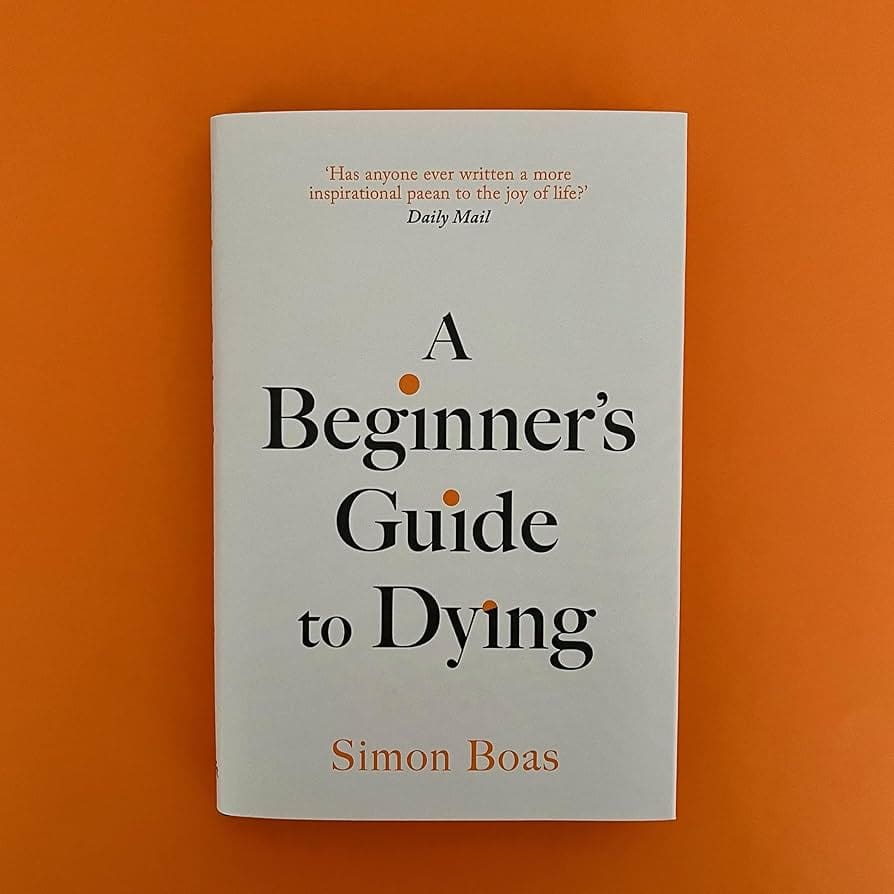
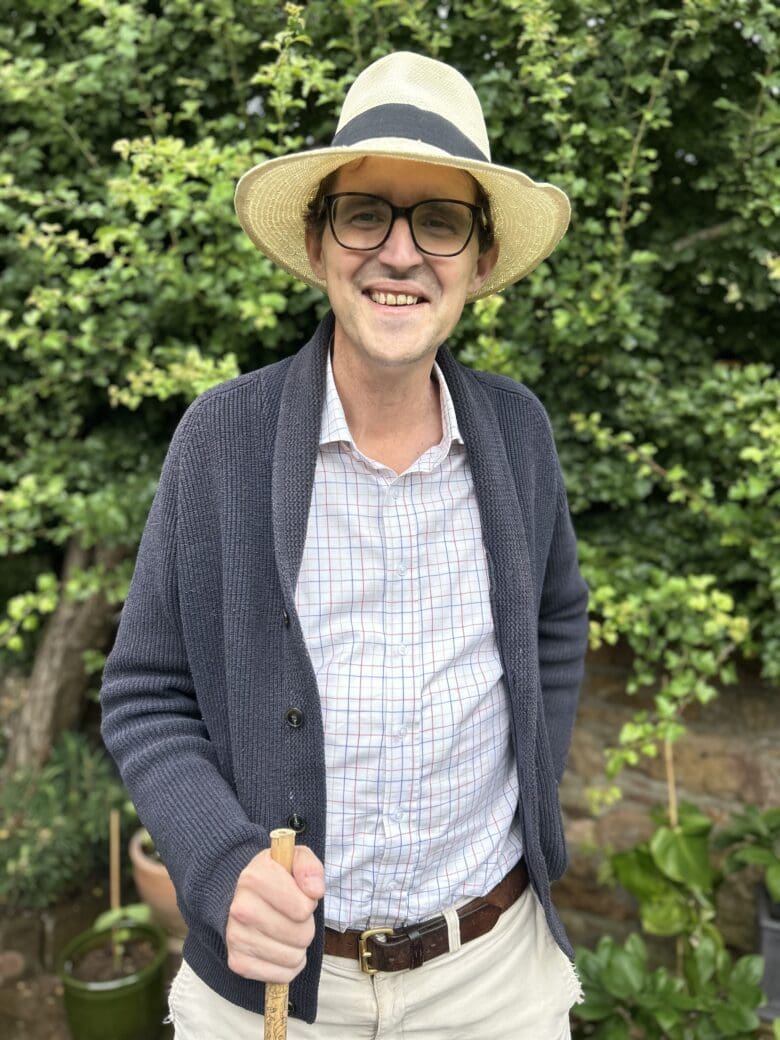
Before I begin, the context surrounding this book is essential. The author, Simon Boas, is not a beginner at dying – in fact, he’s dead.
He published the book in his final few weeks before dying of advanced throat cancer at 46, capturing a truthful and honest account of being a terminally ill person and the lessons you learn being in such a position.
Here are my takeaways from Simon Boas’ bestseller A Beginner’s Guide To Dying, as a 20-year old woman who is just learning to live.
Takeaway No. 1 – do more drugs
You’re going to have to hear me out on this one, the same way I heard out Boas when I turned the page to see he had dedicated an entire chapter of his book to psychedelics, and their role in dying. He discusses the power of psychedelics and their ability to warp reality in a way they can temporarily dissolve your ego and quiet, for a while, the ‘Default Mode Network’ of your brain (that underlying chatter of autobiography and self-criticism that is a bit like living with a lunatic – the bit that causes us distraction and worry). As I made my way through this particular chapter, I quickly understood his suggestions that certain drugs, taken in particular environments of course, can really aid not just someone who is actively dying, but anyone who is looking to adjust their life view in general.
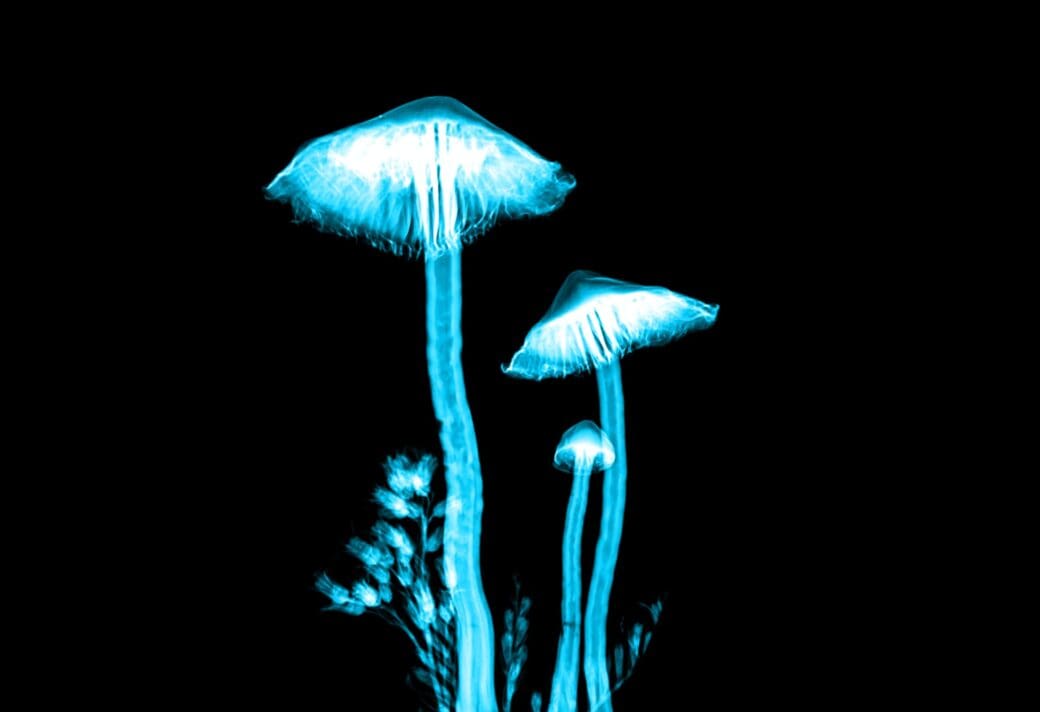
Boas worked with two experienced guides at weekend retreats, taking part in multiple-day ‘ceremonies’ which involved more than just chewing magic mushrooms – meditating, gratitude journaling, spending time in the depths of nature, preparing for the experience properly and in a safe, controlled and relaxing environment. Boas explains the experience resulted in him feeling ‘this incredible sense that all was right in the world’.
A 46-year-old man, actively dying from aggressive stage 4 throat cancer, felt all was right with the world.
To me that’s a selling point.
He began to look at his own struggles and worries with a huge sense of compassion, and mentioned he realised ‘I was just doing my best, and that was good enough’.
In the margins next on the page I’ve chicken scratched: we all deserve to feel this. And it’s a fair point. We all deserve to feel some compassion towards ourselves, and genuine peace, as Boas paints it.
So, just to be clear, the takeaway is to consider trying this if you would be looking to dissolve some ego and alter your view of the world, for what tends to be for the better. This isn’t a suggestion to start chewing on random mushrooms out of the ground, or taking random tabs in any old location. But, if they are treated as a form of medicine, focusing on their healing properties and taken in a controlled environment, it seems they can really help everyone on their journey through life, not exclusively those who are slightly closer to death.
Takeaway No. 2 – get a takeaway
Bryan Johnson is a ‘biohacker’ who first went viral in January 2023 for his claim he was going to live forever.
Taken as a joke to begin with, It became apparent quite quickly that he was in fact not joking, and was taking every measure possible to elongate his lifespan, through his extreme, multi-million-dollar anti-aging regimen (known as Project Blueprint). He consumes 20 to 30 grams of Collagen peptides daily. He only drinks water infused with coral calcium sand. He does 10 squats every 45 minutes. He’s certainly pinned himself as having perfected human health. Every time Johnson’s content graces my social media feeds, I have the same thought: Does this guy realise he could be hit by a car? Seriously, despite all his work to prevent a natural death, there’s no pill, or therapy, or supplement he could take to prevent him being taken out by a car today.
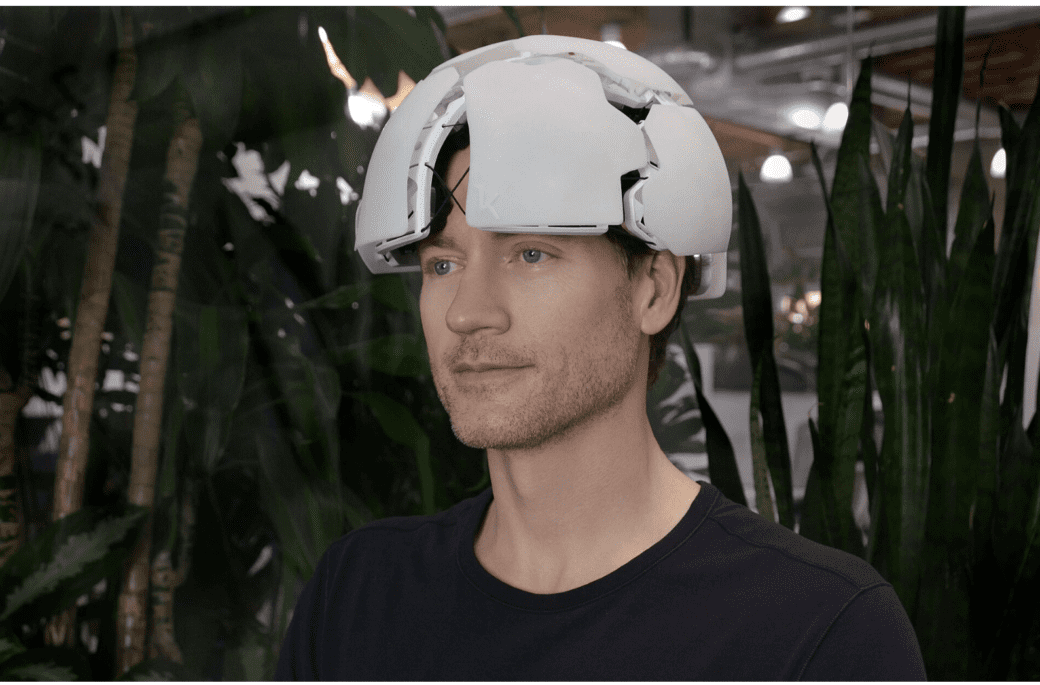
No one else seems to be taking their health quite as seriously as Johnson, but he definitely helped spark a new wave of optimisation culture that has infected my generation, that’s for certain. People have become obsessed with getting their 10,000 steps a day. The clubs are empty as people have to be up at 5am to get to the gym. Oh, and don’t forget the squillion grams of protein you must eat every day.
I know this culture well – I am totally a victim of it. I recently gave myself tendonitis in my feet by waking up at 6am, going to the gym, walking, work, walking again, eating whole foods. The funny thing is, if you asked me why I chose to live like this, I don’t really have an answer. I’m simply following a set of rules presented to me by “lock-in” culture online.
I haven’t truly lived in months.
My plan for this summer was to up my step count even further, train harder. Possibly incorporate Hyrox training into my routine. I had my eyes on a couple half marathon signup sheets. Now, with my walking ability reduced to a measly 5 minute stroll at best, my summer is looking different – now, I’m actually looking forward to it. I intend to munch through ripe stone fruits by the pool, read books I’ve wanted to sit down and read, and cross stitch for hours. I will visit my grandparents, and get a Mr Whippy with my Grandad. I will slow down and enjoy living. I wish Bryan Johnson could do the same.
I’m unsure if Boas was aware of Bryan Johnson and his mission when he was alive, but after reading this book I can safely assume he would be strongly opposed to everything Johnson stands for. He may be the healthiest human alive physically, but is he really living if he can’t have a pizza in bed, or a pint in a beer garden with his mates, or wake up early to catch a sunrise?
So when we are speaking of takeaways, order one and eat it in bed whilst watching TV late at night. Extra points if you haven’t walked 10,000 steps, or your takeaway of choice is seriously lacking in protein. Sure, everything in moderation. I’m not suggesting that you do this every day. But this book helped me to realise that – yes, it’s a cliche – life is short. Enjoy it. Optimisation culture is far from optimal.
Takeaway No. 3 – maybe therapy isn’t evil
This might sound like a casual comment, but I’ve had therapy pinned as the enemy for multiple years now.
In terms of hills I would die on, it’s one of them. However, reading this book has made me wonder if it’s worth another attempt. Despite having his own doubts about it, Boas decided to find a therapist about a year before his diagnosis, and said ‘it was one of the best things I ever did’. Often people who tell me therapy is a helpful tool for someone struggling are fans of therapy themselves, so I’ve always found it hard to take them seriously. However, a recommendation from a fellow skeptic is what made me sit up and seriously think about what therapy could offer me. Boas also writes about how going to therapy can take the pressure off your loved ones and peers to fill that role themselves – a consideration I hadn’t quite thought through in the past. I’m sure my dad would love to step down as my in-house therapist from time to time, so I might just look into finding a professional to take the baton. Boas says ‘find a professional, and it can change your life’.
Takeaway No. 4 – Lord Of The Flies is just a story
The news is constantly showing us examples of malicious people doing malicious things, wars starting and lives ending. Injustice, hate, intense politics; the list is long. Before I read this book I’d certainly taken it all at face value, and come to the conclusion most of us do – the world is an evil, horrible, terrible place. However, Boas has managed to convince me this might not be the case. When stating his case, he references Rutger Bregman’s Humankind. This tells the true story of six Tongan boys marooned on a desert island for months after a fishing trip went wrong, and shows how they co-operated and helped one another throughout until they were rescued. Boas writes:
‘This then shows, through careful research, that humans are hardwired for kindness to others. It debunks various famous experiments (like the Stanford Prison one) and myths (like the ‘bystander effect’) which purport to show the reverse. For the past 10 years, social science has increasingly shifted its view on this – that Lord of the Flies is just a story, and we are all more like those Tongan fishermen’.

He solidifies his point through his personal experiences as a humanitarian aid worker, such as working with torture victims in Palestine, fighters in Ukraine, genocide instigators in Rwanda, just to list a few. ‘And my conclusion is this: nobody is evil,’ writes Boas, ‘If you look deeper, you really do realise that to know all is to forgive all.’
I found it incredibly hard to accept this when I initially read it, but I have since come to the conclusion that, for my own peace of mind, I would rather accept this truth and work on being a forgiving person than check the ghastly news that appears on my phone screen every morning and therefore makes me start my day with a sour view of the world.
From now on, I will be taking Boas’ word that the people aren’t inherently evil, and the world isn’t awful. After all, it’s a well-known fact that bad news sells best. The good news really isn’t being publicised as much, but it definitely still exists. In this book, Boas lists some wonderful facts about our current age that might help you view the world with a lighter lens. I will include some here:
- More kids reach their fifth birthdays than ever before.
- More women are educated than ever before.
- The chance of dying in a war or robbery or a storm is lower than ever.
- A car travelling at full speed today produces less pollution than a parked car in 1970.
- Almost 85 percent of people now have access to electricity.
- The proportion of the world’s population living in extreme poverty has halved in the past two decades.
Takeaway No. 5 – acceptance is liberation
In his final pages, Boas writes about Stoicism – a philosophy that holds the central premise that, while we cannot control the world or what happens to us, we can always control how we perceive and respond to those events. He lists the three main points of Stoicism:
- When you’re dead you no longer experience anything – so why worry about it?
- There is nothing we can do about death – so it’s pointless to worry about it.
- Memento mori – always hold in mind that you will die, perhaps even tomorrow. This doesn’t make life pointless, it makes it purposeful.
This third point is the most striking for me. ‘Prioritise, put worries into perspective, don’t put things off. Live!’ writes Boas.
The message Boas is delivering here is that acceptance is liberation, especially when it comes to death.
‘Acceptance brings perspective, he says, and is better than pursuing miracle cures.’ So instead of trying to cheat death (I’m talking to you, Bryan Johnson) or ignoring it completely, accept it will happen. Since reading this book, I’ve been practising accepting that I will die, my loved ones will too, and accepting that is the only way I can take the fear away. A very valuable takeaway to get from a book, in my opinion.
To conclude
I hope the lessons I’ve taken away from this book and shared in this article can help anyone reading this – whether you’re in your twenties like me, nearing 80, terminally ill, wholly well, depressed, on top of the world – because whilst many things in this world can be life-ending (nasty cancers, fast cars, time and its intense speed), not many things are truly life-changing.
Personally, I’ve found the takeaways you can get from Simon Boas’ book A Beginner’s Guide To Dying are life changing.