Hear from Professor Douglas Davies about the incredible power language grants in the face of death, why we now look back in retrospect, and how religions approach death differently.
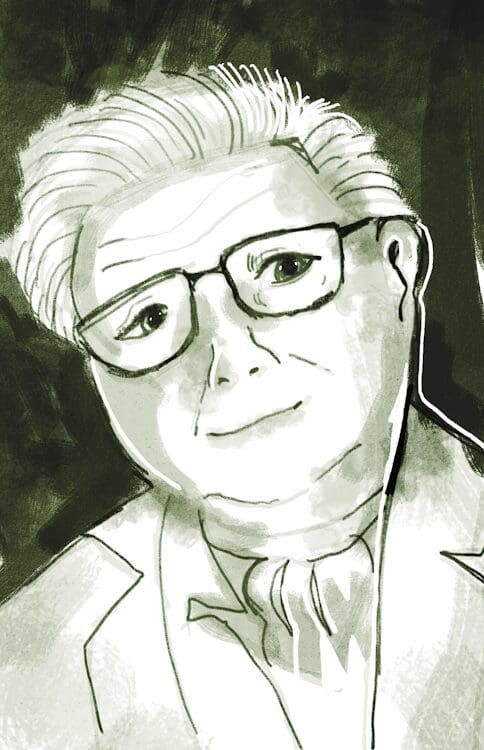
Meet the expert: Professor Douglas Davies
Professor Douglas Davies is the Director of the Centre for Death and Life Studies at Durham University, as well as an accomplished anthropologist and theologian. He has authored almost thirty books, including Mors Britannica: Lifestyle and Death-style in Britain Today, The Theology of Death and Death, Ritual and Belief.
Q: Over the ages, how have people tried to protect themselves against death?
Words against death
A: Perhaps one of the ways of approaching this question is to go back to one of my books. I have one book called Death, Ritual and Belief, and it’s already in its third edition. One of the phrases from it has come to be moderately widely used by folk when talking about death stuff, and that phrase is ‘words against death.’
What I mean by ‘words against death’ were cultural phenomena – things that human societies and human beings think up, which they use to frame approaches to death, and its ceremonies and rites, and in some ways after death as well.
In Death, Ritual and Belief I speculatively argued like this: the human animal, during the course of evolution, developed speech, and speech became one of our most powerful tools, if you like. We’ve used it to improve our environment in all sorts of ways, from farming, to warfare, to all sorts of things, but not least, in relation to death.
My argument is that the human animal developed self awareness, self consciousness – it would look at dead people with a degree of surprise.
Let’s put it like this:
Here in the environment is someone who was a living, acting human being is now silent. How does the human animal cope with the corpse? My argument in Death, Ritual and Belief is, well, it uses one of its most powerful resources: language.
When we start talking about death rituals, and the prayers they might say, or the laments that they might sing, or the use of sacred texts that they might bring forward – all this use of language. These words against death are, in effect, the human being’s use of its most powerful resource in response to a most powerful presence in its environment.
That seems to be my background approach to the question of life and death.
Now, for example, you could argue that in Islam it is a great thing if the newborn baby can have the sacred phrase “there is no God, but God and Muhammad is his prophet” spoken into its ears, in the same way that as the Muslim dies, it is great if that selfsame phrase can be spoken to the dying Muslim.
Why?
Because when that Muslim is buried very shortly, within twenty-four hours, the angels – the heavenly angels – will come to visit him in the grave to ask the leading questions to which, and here’s where it sounds funny, of course, to which the dead Muslim, who in a sense isn’t really dead, will say “there is no God, but God and Muhammad is his prophet.”
So for the dying person to have that in his ears, on his mind as he dies, is powerful. These are powerful words against the conquest of death over the human, but if you’re like the human, over death by the use of sacred words.
That I think is the most significant of background issues about death conquest. Now, of course, I think you can take that into it’s as true in Hinduism, it’s as true in Sikhism, it’s as true in Christianity, in an ideal world, that the use of words against death… the use of sacred, powerful words, because if you ask yourself:
“What power does the human have in any way?”
Well, it’s not as powerful as a gorilla, it can’t swim in the same way as a dolphin, but it can talk – and by God he can talk, and it’s developed this language. And, in a way, what is really important about issues associated with dying and death, is the sheer importance of language.
What were his last words?
What were some of his last words?
What did I say to him or her as my last words to them?
Changes in contemporary Britain
A: Modern people talk too much. Their heads are full of electronic noise. Most modern people, as is true for many of my students, are never without a noise in their heads. I think this leads to many things, of course, but one of the things it leads to is ignoring the power of language itself.
But you, and I, and other people, we know what it’s like if somebody says something awful to us. We know the devastating power of words. In a similar way, we know the great benefit when someone says something really nice to us.
The enduring power of language – of words – of sacred liturgies, these are amongst the most important of things. Now, a question that you can then ask, and you can take into any religion that you like is, well, what words do people use as funerals, then? What words do they use for people as they are dying?
What is extremely interesting in Britain just now, and it’s been running for, let us say, twenty-seven or eight years by now, is funerals that do not have rituals at all. These you will find advertised on the telly and other media quite extensively under pure cremation, or direct cremation. What that means is a company will come pick up the dead body, usually from the hospital, or from the old people’s home, or wherever it’s died, take it away, cremate it, and will bring the ashes back to the family, and no ritual at all is necessary.
This is one of the first times in the history of humanity when words against death are absent. What the consequences of this may be for grief in the long term, nobody knows.
But this is an extremely interesting question in contemporary Britain. We haven’t really seen this really since the Reformation period in Scotland, when the Protestant Reformation hit Scotland very forcefully, and for a short period of time, they had what were called silent funerals.
The people who were carried to the grave were buried, no prayers were said – nothing was said – because the Protestant churches were afraid that people would pray for the dead. That was kind of taboo, because their future was already destined by God, so no prayers would be of any use at all. So be quiet.
The non-use of language in funerals is a key issue, I think. What then has happened in Britain over the last twelve, fifteen years – some would see this, I’m not sure of it myself – some would see this as a process of secularisation and of the falling away of God language, of Christian language, of church language.
To be replaced by what?
That then becomes the question.
The celebration of life
A: So in Britain, and it really kicked off in Australia, but the British picked it up within the last 20 years, has come to be called the celebration of life. Instead of marking the actual death and supposed transfer of the dead person into the world beyond, looking forward, if you like, into destiny, into eternity, into a mirror, a kind of mirror has been set up where people look to the past.
They celebrate the life of the dead person.
We put a photograph of that person up in the crematorium, or we run a film sequence, or a photo sequence of a person’s life, starting from their childhood, right the way up until they die. In one of my books, I call this the retrospective fulfilment of identity.
So what do you do?
You take the person’s ashes and you put them in a river that he loved. You put them on a mountain that they spent time together at, where they fell in love, or where they took holidays. For two-thousand years in the West, largely, this was not the case. There was a future-looking, heaven-destiny-looking projection of the dead.
They were buried in sure and certain hope of their resurrection, or if you were Catholics, you prayed that the angels would welcome them and settle them into heaven – that kind of thing. This has been, culturally speaking, the most remarkable transition in British funeral practice, probably under the influence of non-belief in future lives, or many people have mixed beliefs. It’s neither one thing or the other, but it’s much easier to speak and hear the words against death come up.
It’s much easier to speak about how you know, and what do you know?
You know how a person lived, you know what they liked, so you play their favourite songs. All of a sudden you now have songs against death, music against death – you’re rooting in things that you are certain about. Things you can gain comfort from, rather than talking about angels or God or something, which you’re not all sure about. Which many of you would not believe in at all.
I think this is a major shift in religious practice, and why perhaps I said to you that what is happening today is much more interesting than things that have happened in the past, which so many historians have spent a great deal of time on.

Q: What material items have people believed might help protect against death, or perhaps prepare for death?
Commercialisation
A: I suppose – and, again, I’m restricting this to Britain – commercialisation is always important. Business is important. And if we see ourselves as living in what some sociologists have called a neoliberal age, by which they mean that companies want to sell you things, and they want to make a profit.
So, you can say, well, in relation to death, what do they offer for sale to make a profit?
There are many things.
So that though we might talk about the rather niche issues of using cremated remains to turn into tattoos on people’s bodies, or into jewelry, or into that sort of stuff, which are easily identified with past historical things on Memento Mori, a reminder of mortality stuff, they are nevertheless very much part of the commercial world. There’s also sending the ashes up in a rocket to be dispersed into space, for which you have to pay lots of money.
That commercialism is important, and allied with commercialism is the issue of choice. One of the big issues of online platforms is the desire to tell you that you’re unique. Because you are unique, you can have special days. Your wedding is going to be the most unique, special day of all. You can do a bit of that with the dead as well.
You could engage in all these things, as well as burying your dead, or burying cremated remains, or putting them in niches in walls. All these things are for sale. That’s important.
Graves, cremation, burials and hydrolysis
A: The other perhaps important issue for our culture is, well, you know, about eighty-percent of Brits are cremated. The rest are buried. And if they’re buried, they’re buried in one of two sorts of ways. They’re either buried in a cemetery, or a church yard – dig a hole, put a coffin in, over them up, put a headstone on them to say who they are.
So they’re very interesting words associated with death, because they’re conferring an identity upon the person in the grave. The other way in which people might be buried is in what is called natural burial, or green burial, or woodland burial.
This is a process that started in Great Britain in about 1994, when people very slowly, and it more rapidly developed since then, in which people are buried in a grave. In a hole dug in the soil. In a farmer’s field. In a little forest, or a specially designated area that some commercial company has set up. Sometimes it’s on the edge of a long established cemetery.
The companies that run these woodland natural green burial sites is that you should be buried in a biodegradable container, not in a kind of wooden thing that’s going to keep the corpse from the soil. Here the issue at stake is environmentalism and ecology.
One of my PhD students Hannah Rumble, we studied this years ago and produced a book called Natural Burial, in which amongst other things we talked about how people want to talk about giving something back to nature, and seeing their bodies returning to the soil and so on. So that’s kind of a world of its own.
Pretty soon in the UK, we will be seeing the emergence of the hydrolysis of human corpses. That is the dissolving of human bodies in the chemical solution heated up and under pressure in a special container. My guess is that within two years we will see that at work in England and Wales, and before then probably in Scotland. So that will be another choice.
Do you want to be cremated and burnt, or do you want to be dissolved? If you dissolve the process still results in solid bone crumbled up in the same way cremate remains are bones after burning. These are bones after dissolving, so people will still have remains they will need to decide what to do with in various ways.
Q: With the religions you have mentioned today, is there anything you’d like to add on how their perceptions of death differ? How does death present itself to them and how does what they do in life relate to what comes with death?
A: I suppose there are three broad issues. One concerns eastern, Hinduism, Buddhism, Sikhism.
Those traditions are based in the system of karma, a kind of cosmic system that marks your good and bad behaviors in life, and how they relate to your post-mortem identity.
And what most people think of in this connection is transmigration: that the life force goes out of the body with rituals enhancing that, and that life force coming back into another body perhaps many, many, many times, until your karma gets better, better, better, better, until perhaps ultimately you are released from this cycle of birth, and death, and reincarnation.
What is important there is a constant of merit. How have you lived in relation to the laws and the principles of the religion and so on? That’s very much an eastern style approach, as we might describe it from the West, because if you live in the East, you don’t describe yourself as the East.
The other major tradition which has, which emerged in the Middle East in Zoroastrianism, and then really into aspects of what the Christians call the Old Testament, and that passed on into the New Testament, is the issue of death, judgment and destiny, and what controls that. This tradition by and large does not speak of a reincarnation. There is this world and the next. And if you’re a Catholic an intermediate world, that gives you a wash and brush up to prepare you for heaven. The Protestants tend to go more for a fixed destiny, which is marked at death, or indeed perhaps has been marked by God’s decision about you, even before you were born.
This is the idea of predestination.
These are big doctrinal issues in the West, but Christians run that alongside the idea that Christ lived the perfect life and died to death for everybody else, so that there’s whatever merit you need, you get from him, and you can’t work it up yourself.
This is a big debate between Protestants and Catholics.
The Protestant think the Catholics are always trying to obey laws to build up lots of merit, so that their afterlife can be fine. The Protestants tend to say, if you don’t get the merit straight away from Christ, tough luck, you ain’t going to get it any other way. So there’s that kind of this world, and the next.
In between, doctrines vary. The majority of them, I mean, in Catholic thought generally, they talk about an intermediate world where you are with God in some kind of way, or the Protestants tend to talk about a state of sleep, so that the idea of RIP, rest in peace, is an acknowledgement of a state of sleep after death until the final day when God creates the day of judgment and people are brought into a new form of existence and so on.
So you’ve got the Eastern thing about karma and improving karma.
You’ve got the West in the pursuit of salvation through merit acquisition.
But they are much divided on how you get your hands on that merit stuff. This is why, for example, in Catholic tradition, masses for the dead have been said, so that you pay a priest to say the mass for the dead in the hope of helping that dead person in the other world.
Now, Islam, which of course came some centuries after the emergence of Christianity, follows this same approach that God keeps a record of your good and bad deeds, and you are judged on these at death, and you have a destiny that will be in paradise, which of course was an Islamic style phrase for a beautiful garden. You go to paradise, or you go to the hellfire.
And there is in many aspects of Islam today a real fear of death because of the pains of death and the afterlife before you might finally emerge into into heavenly paradise and so on. So there are those two big Eastern karma cyclical sort of stuff, Western single direction, life, death, judgment, paradise in the future.
But it’d be a very good idea to answer this and, now these are all pretty general statements. Of course they are. To answer this, a third one:
And that is the kind of life that many traditional what we would once have called tribal societies, traditional societies, which would have their own beliefs about the divine supernatural, but most especially about ancestors, and the role of the ancestors in relation to the life of the living and how the living should look after the ancestors in the kind of an ongoing relationship between the living and the dead.
And I think between them, those three general approaches cover most of the world’s death rites really, in one shape or form or another.
Q: How can the media handle the topic of death sensitively?
A: If you’re doing media or journalist studies, they probably teach you to do this, but nearly every journalist who talks to me wants to know about some weird practice. What is some intellectual practice? What is some unusual thing? What do you think is the oddest?
I always avoid these questions. Human life is much more interesting in the present, and what the great majority of people do, rather than some weird practice about turning cremated remains into soup and drinking it. That’s what journalists love, but it’s not central to 99.9% of human existence.
I won’t go into detail, but about six or eight months ago I was involved in a series of interviews with the media on this, and other parts of the world, concerning the hydrolysis of bodies. Some journalists really wanted to use nasty phrases about what was happening to the dead, and I was rather sharp with a couple of them to say, well, that’s not how we talk about dealing with our dead.
Because whenever you’ve got dead, you’ve got relatives, and the relatives are probably suffering from some sort of grief.
Being respectful, I suppose, is the word. Sensitivity is one, and respect is another. And that’s respect for cultural practices, for how people actually do things. We wouldn’t go around talking about the Bride like “she went down the aisle in all white, she ain’t been a virgin for twenty-five years.” You could create really stupid statements about ritual all the time, and I think we need to avoid those in public, and in the media.
We live in a media world, and therefore looking at what the media do is important. We’ve done that already by talking about this issue of pure direct cremation, which is advertised nearly every day in mid afternoon, when many old people are watching the television.
They don’t put it on in the evening. That’s interesting. That’s targeting a population. There are ethics surrounding that. So this idea of sensitivity is really about what you could call public ethics and the role of the media in public ethics.
If somebody famous dies, and you listen to news reports of this, you will often find something like so and so died today, age seventy-two. He was a leading comedian on the British circuit. And now we have Mary and Jonathan talking about their life. So the guy died at eight o’clock in the morning, and within hours, somebody is giving a rundown of his life history.
The body is not even cold yet.
And yet, and then they straight onto and now we’ll have a news report on tennis in Australia. And when you think about that in terms of media studies, then the question of respect and dignity comes up. I mean, imagine you just lost your mother or someone close to you, and you meet a friend in the street, and they say, oh, I’m really sorry to hear of your loss. She was a great lady. Oh, and I’m going to buy a new sofa now.
It’s jarring.
Online platforms and media also, because they want to cover topics rapidly, they will often pass from one topic to another without any serious thought about how the juxtaposition of the treatments are.
There was an example of it today on Radio 4. Go back and listen to BBC Radio 4, the Today Programme. They had an interview with the person who was a major sports writer whose wife and two daughters were killed by the daughter’s boyfriend about a year ago. Terrible, terrible thing, John Hunt.
And so they had that. And they had the Queen on talking about aggression against women, and violence and so on, and if my memory recalls right, it was a good coverage. It was very good coverage, including the Queen ending it by saying, “and I’m sure your relatives, wherever they are looking down on you now, will be so pleased to see how you are coping.”
Now for the Queen to say that, it’s quite interesting really.
It’s probably the first time in the history of the media in Britain that a member of the royal family has commented on religious destiny. That’s highly newsworthy, but they flipped straight from that onto sports reports. Just like that, you know, and because it’s so normative, they don’t think about it.
And yet if you were a member of that family, or the many friends who knew that family, you wouldn’t want that to happen. A piece of music in between or something.
They’re the kind of tangible issues of respect and so on.