
The death of a famous person hits some people really hard. Understanding the psychology behind this can explain why such sorrow can strike so many fans.
In October 2024, amidst the flashing lights of a York nightclub, phones across the crowded dancefloor lit up with a notification of breaking news: Liam Payne dead at 31.
My sister Rebecca, there on a night out with her friends, was stunned – she had been a One Direction fan ever since their X Factor debut back in 2010. Partygoers stopped swaying to the music. One of her flatmates started to cry.
Emotions weren’t eased when the DJ played What Makes You Beautiful in tribute.
A whole generation was in mourning.
Whenever a celebrity passes away, there is always an outpouring of grief from members of the public. For some, it can even feel like they’ve lost a friend or family member.
Years after their death, many people continue to mourn their loss. Some fans keep their grief private, while others turn to communities on social media to share their thoughts.
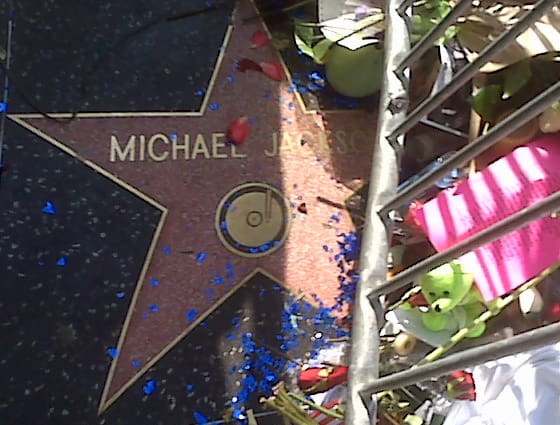
No one exemplifies this better than Michael Jackson.
Facebook is home to countless groups and pages dedicated to celebrating his life.
His official Facebook account currently has over 68 million followers and frequently post pictures and videos in his memory.
(Credit: SlimVirgin via Wikimedia Commons)
Alongside this, there are multiple fan groups that chronicle his life and work. One of them, ‘Michael Jackson – him and his childhood’, has almost 685,000 members.
Its creator, Karen Leigh Phillips, says she created the group because she feels a spiritual connect to the late King of Pop.
He was a celebrity before the social media era, but his death was a monumental event around the world.
His death in 2009 shocked the world, and more than 2.5 billion people worldwide tuned in to watch his live memorial service – the most-watched non-sports television broadcast in history.
“I was in the living room watching TV when my mom called me and told me Michael Jackson passed away and that it’s all over the news. I turned the channel and saw it.
“I fell out of my chair and cried.”
Karen believes it’s important to show how much he impacted the lives of so many fans.
“I want other generations to be able to see the trials and tribulations this innocent man had to go through since childhood until the end.
“We keep his memory going by sharing pictures, stories, tributes, news all about Michael so that others can enjoy him as much as we did.
“Even after his death you can still feel his energy through his music.”
Another admin, Gérard van Schip, says his connection with Jackson comes from his art and humanitarian work.
“People still have so much emotion towards him, even many years after his death, primarily because of his craft.”
“Michael absorbed talented ideas from many others, combined them together in his unique way and gave everything he could to his craft.
“A great example is the song ‘Can You Feel It’ from the Jackson 5 days – listen to his brothers, who sing in normal voices, then Michael who blasts with ALL his energy.”
He too was shaken by the singer’s sudden death.
“I had not seen him perform live for a long time and was looking forward to seeing him in London.
“Me and some friends had bought tickets, so to find out he was murdered by his own doctor hit hard.”
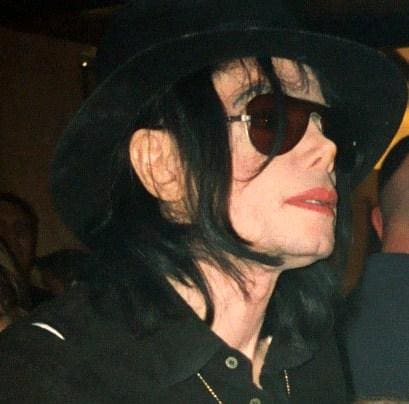
Jackson’s personal doctor, Conrad Murray, was convicted of involuntary manslaughter in 2011 for accidentally injecting a fatal overdose of a powerful anaesthetic.
(Credit: Keir Whitaker via Wikimedia Commons)
Many fans remain loyal to the singer despite the raft of controversies and accusations that surrounded him during his life.
He was first accused of child sexual abuse in 1993 and was tried – but ultimately acquitted – of the crime in 2005.
Despite this, allegations continued to surface up until his death and even to this day.
It could be argued that his death protected him from a stronger reckoning seen with many modern stars and keeps his memory relatively intact.
From an outside perspective, it may seem odd that we react so strongly towards people that we don’t know or only see through the way they’re portrayed in the media.
This points to a deeper psychological reason behind why we communicate our sadness in these ways.
This leads us onto a key question – what causes such powerful attachments in the first place?
Dr Gayle Stever, Professor of Social and Behavioural Sciences at Empire State University in New York, tells Dead Curious that parasocial relationships play a major part in people’s behaviour towards dead celebrities.
“’Parasocial’ simply means a lack of reciprocity, so anytime we get to know a person through media, and they don’t know us at all, that relationship is parasocial.
“It’s the proliferation of information about media personas that are the catalysts for parasocial relationships (PSRs).
“You ‘get to know’ someone through constant exposure, sometimes without meaning to have it happen.”
Even she isn’t immune to these effects.
She remembers when Princess Diana died and the unprecedented amount of public grief it provoked – her funeral was broadcast in more than 180 countries with an estimated television audience of between 2 and 2.5 billion people.
“I realised… that I actually had a PSR with her in spite of the fact that I had never followed her or been a fan of hers – I knew a lot about her and her life, children, and family, and I was deeply saddened at her death.”
Dr Stever adds that our brains are wired for social interaction, and so it responds to the presence of the familiar face and voice of another person by feeling a connection with them.
There’s a part of the brain that can’t tell if we ‘know’ that person in ‘real life’ or not. It responds to the familiar face in the same way it might do to a person who’s in the room with us.
“We respond to other humans according to the two human imperatives – survival and reproduction. So, the attractive media person becomes a vicarious source of inspiration, comfort, and safety.
“Most PSRs are perfectly normal and healthy.”
She explains that grief is a response to loss, so when a celebrity – especially someone with whom we have a parasocial relationship – dies, society loses not only that person but also any future work they might have produced.
We also lose out on any information they might have shared about work they already have done and, perhaps most importantly, the chance of actually meeting them in person.
“We have lost them from the cultural landscape. We will no longer see them in our daily news, or on our social media except as others talk about them.
“For a celebrity who has an active social media presence, this can be a substantial loss.
“Fan groups will share their grief, and that is just what would happen in any social group where there is a shared loss.”
I think it’s safe to say that most of us have had encounters with parasocial relationships at some point in our lives.
Even though my sister was only a casual fan of Liam Payne – though she now wishes she had the chance to see him live – he undoubtedly made an impact on her life.
She summed up her thoughts when she heard about his death as this: “He and One Direction were a big part of my childhood.
“So, the idea that the band would now never be able to get back together really hurt my inner child.”
It’s this kind of personal connection that makes a celebrity’s death affect us so much.
The famous person will never know the true extent of the impact they had on people, but their fans can see it and feel it.
And if posting on fan groups or leaving flowers at a memorial makes them feel better, then they should go ahead and do it.