Dr Laurance Donnelly has spent three decades using soil, disturbed ground and decomposition to help police search for buried remains.
The woman with a spade
Dr Laurance Donnelly first knew Saddleworth Moor as a child.
He grew up east of Manchester, close enough for his parents to take him there at weekends. He remembers the rocks, the fossils, the mines, the caves and the stretch of open ground that seemed to go on forever. He also remembers a woman digging.
The woman was Winnie Johnson, the mother of Keith Bennett, the last remaining victim of the Moors murders, whose body has never been found. Keith disappeared in 1964.
Dr Donnelly’s parents got to know Winnie Johnson, and she became a family friend. He had known her for many years. Long before forensic geology became his professional life, the search for Keith Bennett had already shaped the way he understood that landscape.
As a child, Dr Donnelly was fascinated by the moor. As a geologist, he began to read it differently. Saddleworth Moor was no longer only a place of peat, rock, weather and memory. It was a place where a child might still be buried.
By the time he finished his PhD in 1994, Dr Donnelly had begun thinking seriously about how police searched the ground for human remains. Pauline Reade’s body had been found on the moor in 1987, more than 20 years after she was murdered. Keith Bennett remained missing.
Dr Donnelly knew geologists already had ways of looking beneath the surface. They searched for minerals, metals, buried structures and changes in the ground. He began to question why the same thinking could not be used to search for the dead.
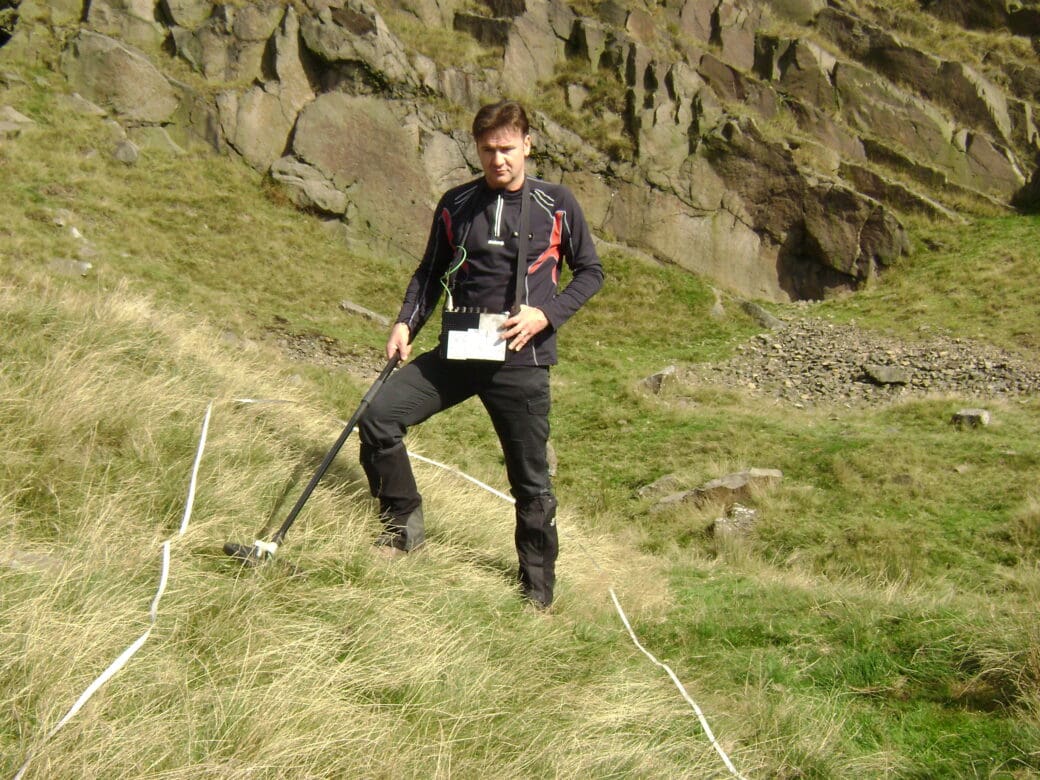
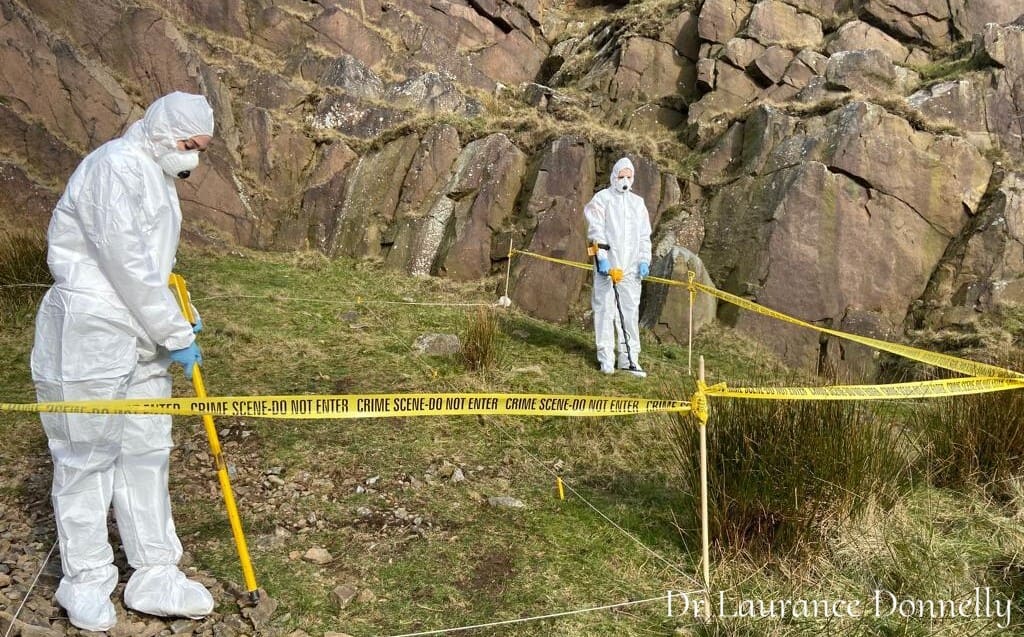
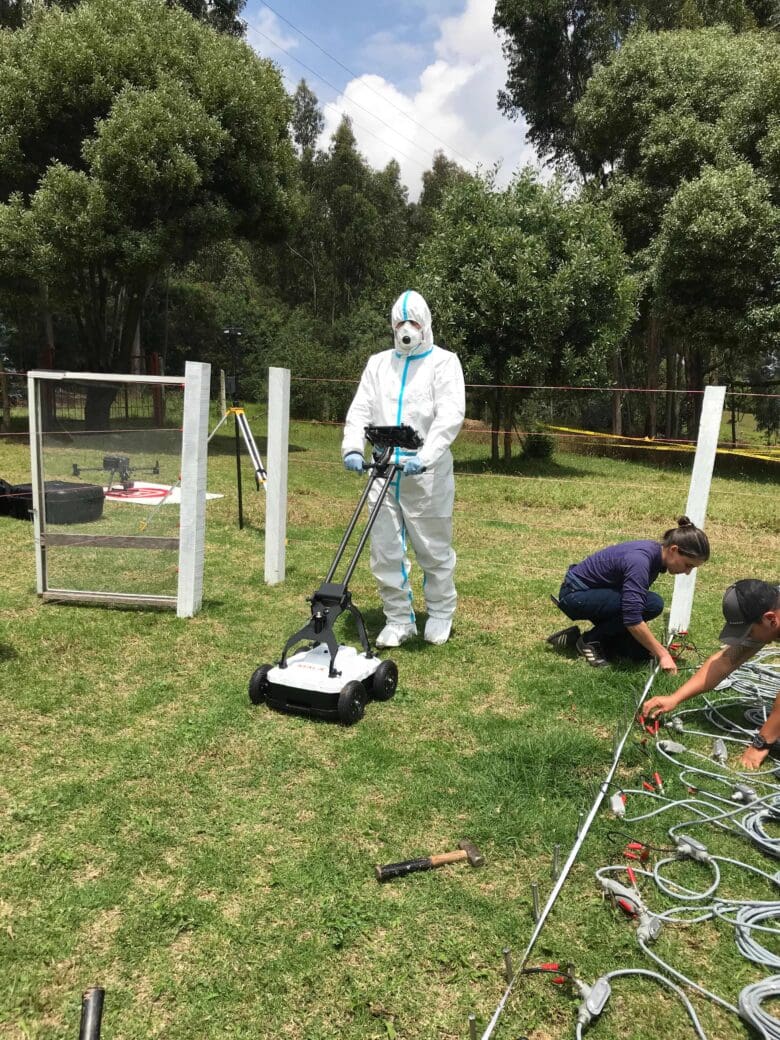
“My perception back in 1994 was that the way the police searched the ground was perhaps rather limited compared to what techniques I had available as a geologist,” Dr Donnelly says.
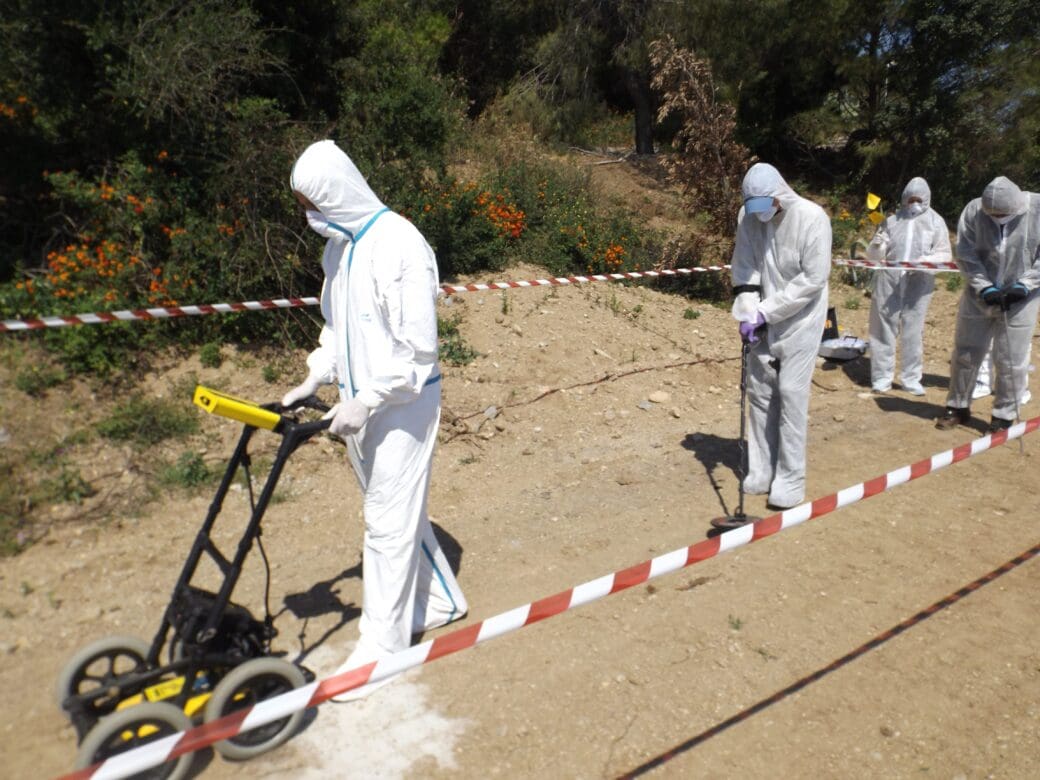
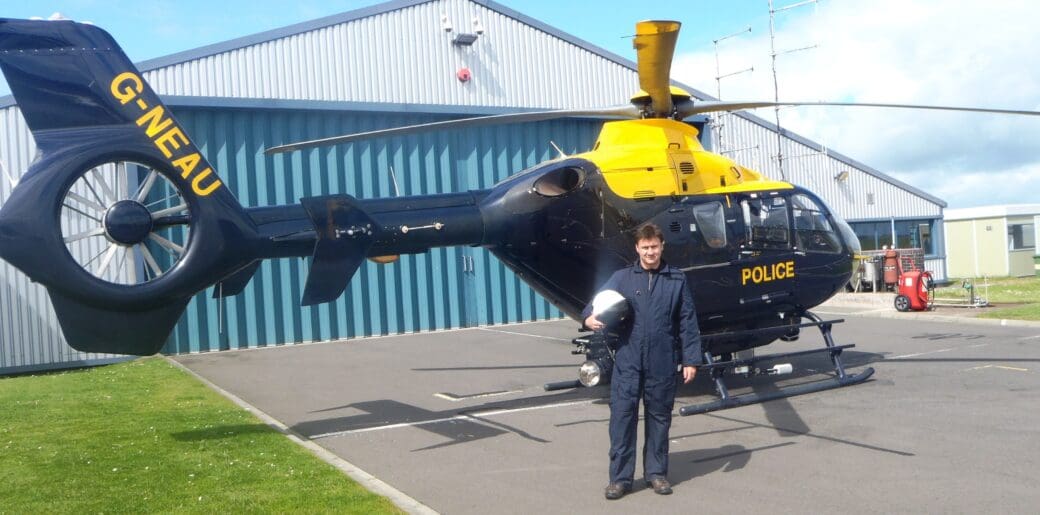
Police had dogs, helicopters and some geophysical techniques. Dr Donnelly had been trained to read the ground itself. He believed geological search methods could help locate human remains, weapons, firearms, drugs and other items that criminals had buried.
So he began searching Saddleworth Moor himself.
For several years, he did it privately. Then, in the late 1990s, officers came to his door, and they wanted to know why he had been working on the moor.
Once he explained what he was doing, the conversation changed. He took officers to the moor and showed them the methods he had been using.
He had not found Keith Bennett, but he had found buried objects. The strategy worked. If it could locate hidden items, it could help police search more carefully for human remains.
“That was my first connection with the police,” Dr Donnelly says. “It kind of took off from there.”
Reading the ground before disturbing it
Forensic geology is the application of geology to police and law enforcement work. For Dr Donnelly, it has often meant helping investigators understand soil, buried evidence, disturbed ground and the traces left by decomposition.
The work begins before anyone digs.
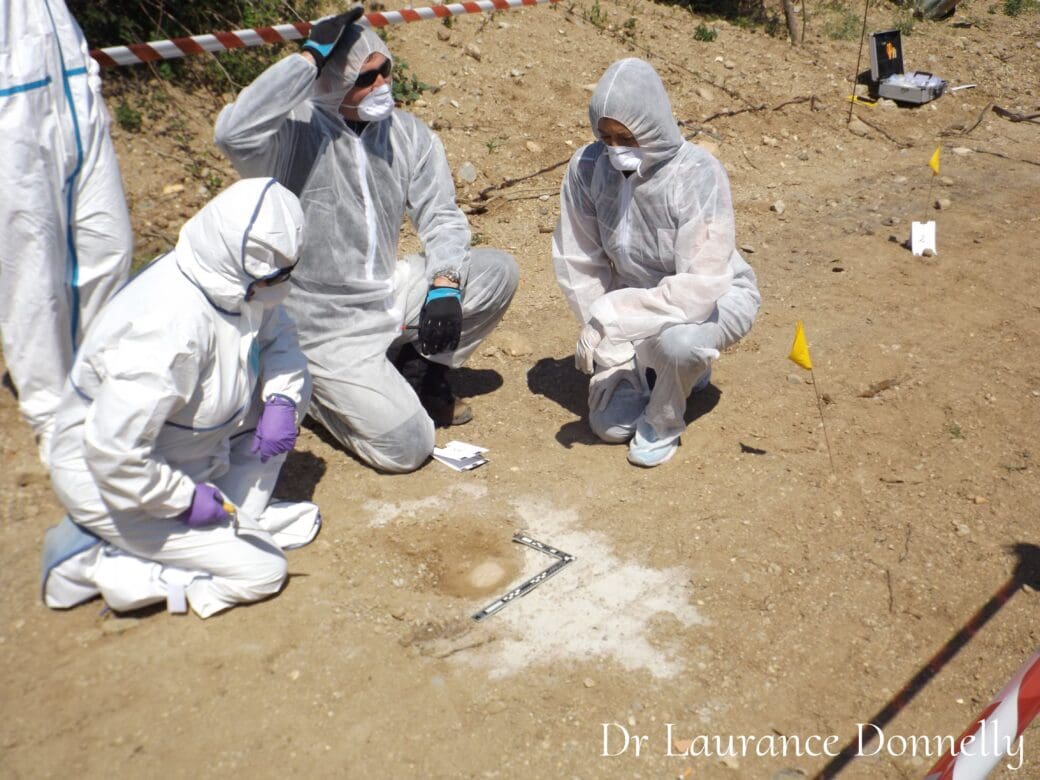
When Dr Donnelly is involved in a search, he first builds what he calls a conceptual geological model. Investigators need to understand the ground before they decide how to search it. They need to know how deep a burial might be, how easy the ground is to dig, what the soil is made of, where groundwater moves and what kind of target they are looking for.
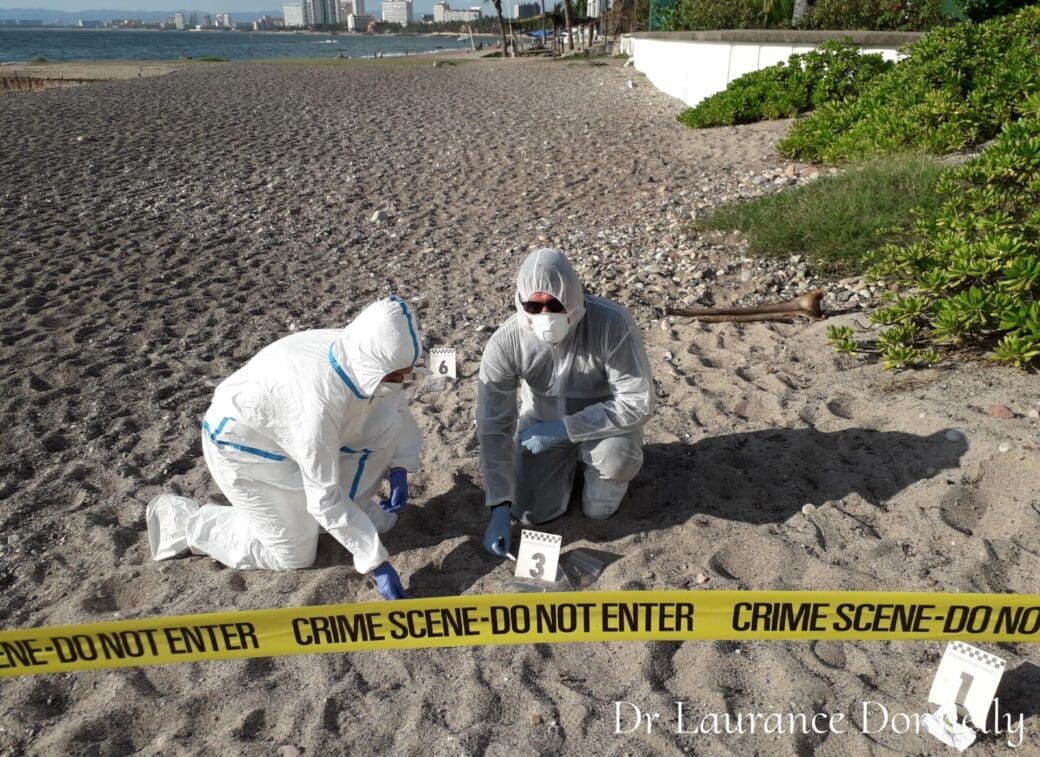
A body in a garden is not the same as a body on a moor. A beach is not a glacier. A jungle, coastline, field or back garden changes what investigators can see, smell, measure or recover.
“Any particular search will have a unique set of circumstances,” Dr Donnelly says.
That is why forensic geology is not one machine, one dog or one method. It is a way of deciding which search asset has the best chance of finding what may be hidden.
Sometimes, it can also help prove that something is not there. Dr Donnelly says police may search the ground to rule out a location, allowing an investigation to move on. In a missing person case, that can stop attention from being fixed on the wrong patch of land.
Soil as trace evidence
The dead are not the only reason geology matters to police.
A suspect may understand fingerprints. They may know about DNA. They may wear gloves, avoid touching surfaces or try to keep themselves away from anything that could identify them. Soil is harder to control.
Dr Donnelly explains this through Locard’s exchange principle, one of the foundations of forensic science: when two things come into contact, material is transferred between them. That material may be tiny, temporary or difficult to detect, but the transfer has happened.
Shoes can carry soil. Clothing can carry soil. A car can carry soil.
Dr Donnelly says tyres, splashes on the outside of a vehicle, the footwell, underside and even the air filter can contain geological evidence. Those traces may be compared with a crime scene, a suspected burial site, or an item police believe was used in an offence.
A vehicle, in this sense, can become a record of movement.
That evidence is fragile. If police drive the car away, step inside it or move it without care, they may add new material or destroy what was already there. Dr Donnelly says a vehicle may need to be lifted by crane, transported securely and examined for soil before anyone risks contaminating it.
Evidence is not only blood, fingerprints or DNA. It may be the ordinary earth someone never noticed they were carrying away.
The case that never left him
For Dr Donnelly, everything returns to Saddleworth Moor.
He still believes Keith Bennett could be found. He says there are locations that need to be thoroughly searched, and while there remains a possibility, he will continue.
“I think there’s every chance that Keith Bennett can be found.”
Dr Laurance Donnelly
There is no easy comfort in that. Keith’s mother died without being able to bury her son. Dr Donnelly has spent decades working in a field that grew, in part, from that absence. The search did not give Winnie Johnson what she wanted most. But it helped shape a discipline that now assists police in the search for other missing people and buried remains.
In 2002, Dr Donnelly gave a presentation at the House of Commons about forensic geology and the Moors murders. A BBC Radio 4 interview followed. Work he had been doing privately became known to police forces, politicians, scientists and other geologists.
At the time, he says, many geologists working with police were isolated. Their work was often secret, sensitive or high-profile, and there was no professional forum for sharing knowledge.
Dr Donnelly approached the Geological Society of London about creating a special group. It took several years, but in 2006 the Forensic Geoscience Group was established. In 2011, he founded the International Union of Geological Sciences Initiative on Forensic Geology.
The work expanded, but the origin remained painfully specific: a mother looking for her child on a moor.
Searching for the dead around the world
Dr Donnelly says forensic geology now supports police and law enforcement in the UK and internationally.
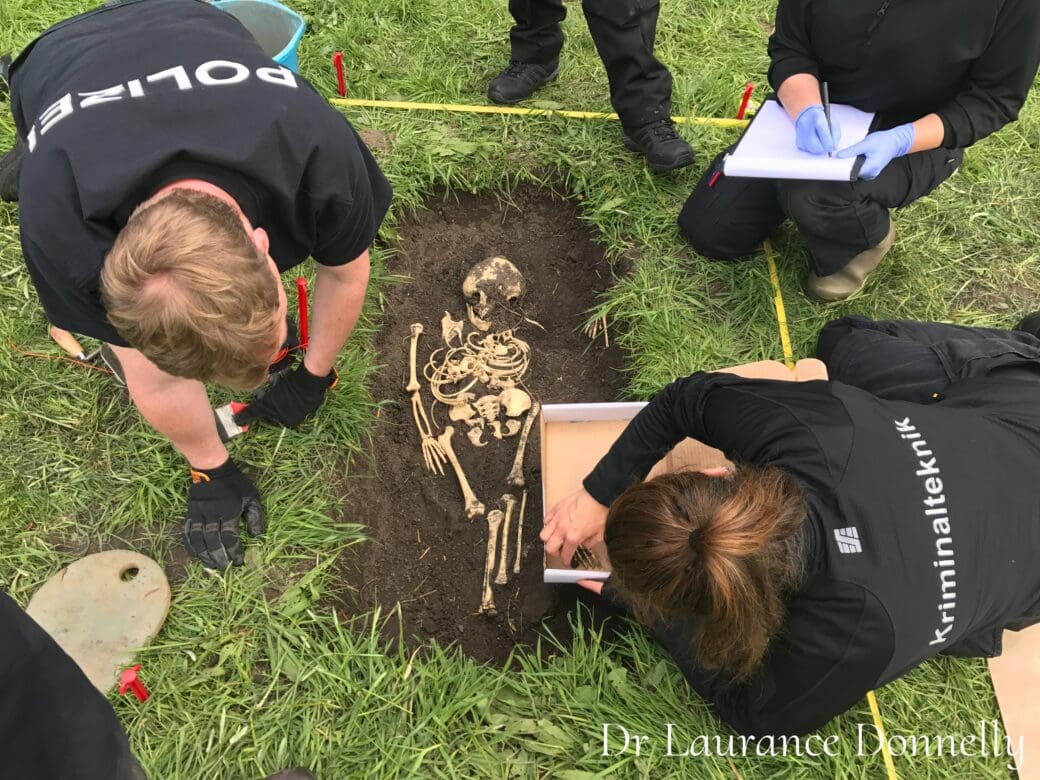
The work can involve crime scene examination, geological trace evidence and searches for buried remains linked to homicide, serious organised crime and terrorism. Dr Donnelly also describes searches for human remains in Chile, Colombia and Brazil, connected to dictatorship and cartel violence.
The global scale has not made the work less intimate. Every search still comes down to a body, a place and the question of what the ground may be holding.
The science can sound technical: satellites, drones, geophysics, groundwater chemistry, soil probes. Beneath those methods is a human need that has not changed. Someone is missing. Someone may have been buried. Someone is waiting for an answer.
Why the ground matters
Dr Donnelly does not present forensic geology as a miracle science. It cannot promise that every missing person will be found. It has not yet found Keith Bennett. It cannot undo the violence that placed bodies in the ground.
But it changes the way investigators look.
A moor is not empty. A garden is not ordinary. Soil is not just dirt. Beneath the surface, the ground may hold disturbance, scent, water movement, fragments, pressure, chemistry and time.
For criminals, burial may seem like disappearance.
For forensic geologists, it is evidence waiting under pressure, water, roots and weather.
The dead may be hidden, but the ground is rarely silent.
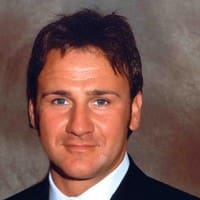
About the expert: Dr Laurance Donnelly
Dr Laurance Donnelly is Chief Geologist and Head of the Technical Department at AHK International, and one of the world’s leading specialists in forensic geology. His work uses soil, rocks, minerals and landscape evidence to support criminal investigations, forensic searches and missing person cases.