
Sin-eating originates from the 1600s, where someone would eat and drink over a body to cleanse their sins. Now a dormant ritual, what actually is sin-eating, why was it important, and why did it die out?
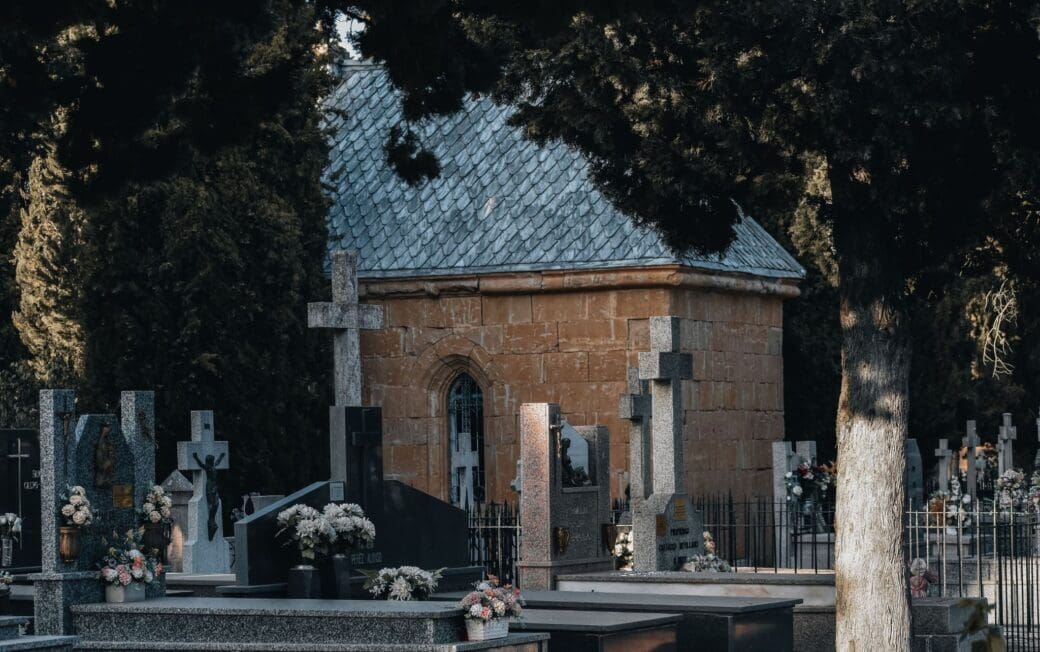
In Shropshire, the grave of Richard Munslow stands in St Margaret Churchyard: a local man, a doctor, who was born in 1832, and died in 1906. A respected member of his community, a married man, with 7 children. When he died, the practise of sin-eating died with him.
Dr Helen Frisby, visiting research fellow at the University of Bath, says the existence of Richard Munslow, a named sin-eater, is quite significant.
Helen says: “He does get quite a disproportionate amount of attention, but then that’s understandable because hes quite, A, a late example and B, he’s the one that we know about and he has an identifiable grave.”
A sin-eater is usually anonymous, their names unrecorded and lost to history. Typically someone poor or a beggar, and only called in when they were needed. When they must become ‘the sin-eater’.
“It’s a way of giving absolution to the dead, and comfort to the living,” Helen explains, “You would have a sin-eater who would come in, and who would ceremoniously receive usually biscuits, cake, or wine over the body.”
Formulaic words would be spoken – I give easement to your soul – and by taking food and drink passed over the coffin, the sin-eater would take on the sins of the dead person.
“So the dead person can go off into the afterlife unburdened, and the sin-eater takes on the load of sins for themselves.”
Sin-eating ‘suddenly lands with a bang, fully formed in record in the 1640s’, Dr Frisby says, and its first reference within history makes an assumption the reader is expected to know what it is, clearly. What is interesting about sin-eating is how little it was contested by medieval churchmen, despite being direct competition for the local priest in giving absolution to the dead. Helen has a theory that sin-eating is actually something that comes out of the Protestant reformation.
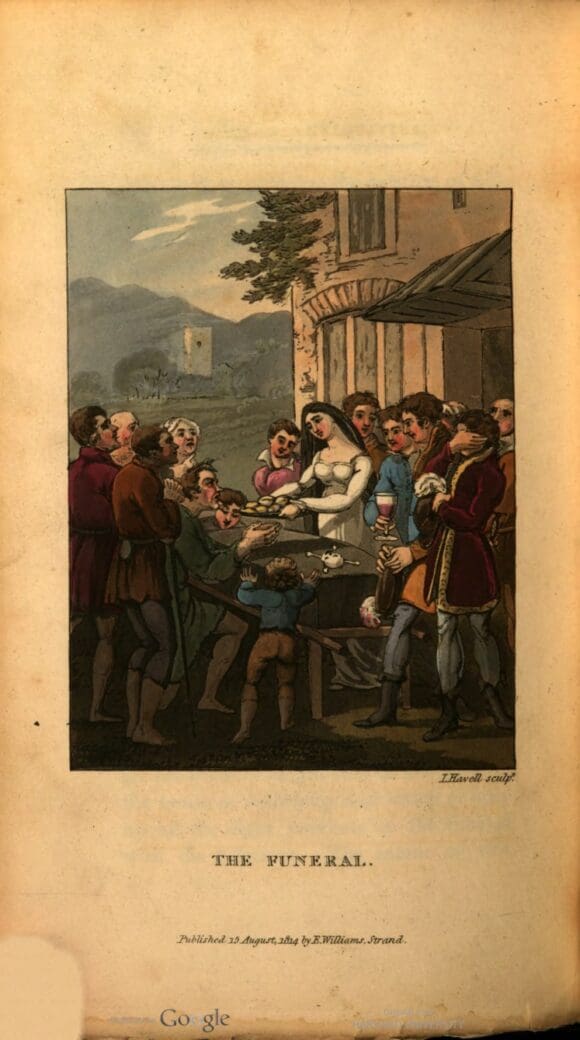
“The reformation liturgy was reformed such that the mass was taken out of the funeral liturgy. So, I think that it probably became transposed into the domestic realm of folklore at that point, which is why it’s suddenly there, readyformed to be recorded, as if people should know what they’re talking about.” Dr Frisby says.
Affection or fear?
Sin-eating relates back to a sort of ‘universal desire to help the dead’, yet one thing that the Protestant Reformation tried to do was put a separation between the living, and the dead.
Helen says: “If you compare the medieval Catholic liturgy with the Protestant funeral liturgy, the Catholic one is all very much about seeing the dead on into the afterlife, and having a continued relationship with them. Which, I think, is more in tune with how human psychology actually works.
“Whereas the Protestant one is very much about handing the dead over to God and accepting that there’s nothing more we can do for them.”
Helen talks about a wider ‘economy of relationships’ between the dead, and the living. In the pre-reformation period where the living would help the dead through purgatory, and in turn the dead would keep an eye on the living from heaven. Dr Frisby thinks a lot of that was lost at the reformation, and thus these kind of rituals – sin-eating – enact and express that ‘impulse than can no longer be expressed through the formal funeral services’.
Sin-eating would have been a part of a whole set of rituals around things that you can do for the dead in order to help them: giving a penny for St Peter, putting candles around, and carrying a coffin out feet first so the spirit of the person who has died won’t get lost.
“It’s not all about affection and love for the dead. It’s also about the fear of the dead, and making sure that they go where they need to go so they can’t come back and disrupt the living as well.”
Funerals aren’t about so much letting go as about renegotiating the relationship between the dead. Sin-eating is a part of that. Back then, it was a much needed ritual.
Advantageous or exploitation?
What about the sin-eater, however? Are these people in society, already vulnerable and living on the edge of the community, being taken advantage of?
“I’ve seen examples of both,” Helen says, “John Aubrey, who’s the first kind of extended account that we have in writing in the 1680s, talks about the sin-eater as very much a kind of marginalised person, who would live on the edge of the community, be called in when needed, and then kicked out.”
On the other hand, these beggars were often quite ‘pragmatic tramps’, and were happy to eat any amount of sin bread if it meant they were fed, and could earn a shilling out of it – ‘a tramp of a rationalist outlook’.
Another account from around the same time details a woman who went to quite some lengths to seek out work as a sin-eater.
Helen says: “She reportedly drank a draft of poppy tea that made her look like she was unconscious, so she was given her last rights. Then, when she came around she was sort of ‘moved beyond’ as it were, and is therefore able to take the role on. So she’s clearly going to a great deal of trouble.”
John Aubrey uses the word, spelt at the time as raskal, to describe these people. A term now that describes someone as a ‘loveable rogue’, but back then had slightly more sinister connotations. Someone who was a bit unsavoury, maybe swaying towards being a criminal.
Accounts of who sin-eaters were evidently vary. On one hand you have the community ‘raskal’, accepting rejection in favour of a meal and some money, even getting into the role where it was required. On the other hand, you have Richard Munslow, a man respected by his community, a doctor.
“Nothing is ever straightforward with these things,” Helen says, “and we’re just going off of what we know, limited as it is.”
Folklore or lost cultural practise?
After over a 100 years since the last sin-eater, the loss of the ritual is likely to do with ‘shifting sensibilities and less elaborate’ funeral practises.
Helen believes its in part due to practicality, and the introduction of other mourning methods like the chapel of rest. Originally an American practise, it made its way across the pond in the 1930s. It gave the bereaved a ‘kind of privacy’.
Previously when someone in your household died, people would be in and out of your house to view the body, and in turn they’d ‘eat you out of house and home’.
“And hopefully they’d offer you support, too,” Helen explains, “But also, you’ve got people coming around and judging your home, and you’re set up at possibly the worst time in your life.”
Far too emotionally taxing on an already grieving family.
The loss of sin-eating could merely be a ‘disruption of those kind of older customs’. As with other trends, sin-eating died out.
“So as with all these innovations, it’s swings and roundabouts, of course,” Helen says.
However, the gaps within the knowledge about sin-eating, and the shelving of the practise, make prime pickings for pop culture.
“In the last 40 years or so there’s been quite a revival of sin-eating in books and films, and so on.
“They’re a perfect folklore, and there’s so much we do know, and so much we don’t know.” Dr Frisby explains.
If you’re a novelist, or a filmmaker, sin-eaters have a lot of material for you to play with.
While we may never know just how many sin-eaters they were, graves like Richard Munslow’s show that they weren’t just the members of society that were cast aside. They could be ‘pragmatic tramps’, but they could also be the village doctor.
Sin-eating, at its essence, is birthed from a ‘kind of universal human desire to help the dead’, ensuring their sins are absolved, and the living are reassured in their actions.

About the expert: Dr Helen Frisby
Dr Helen Frisby is a visiting research fellow at the Centre for Death & Society, University of Bath.
As a historian, Dr Frisby is interested in folklore and material-visual culture as sources of historical evidence, the concepts of custom and tradition, and so-called ‘history from below.’