
A look back at Jules Bianchi’s death, and how new drivers cope with the immense risk that Formula 1 brings.
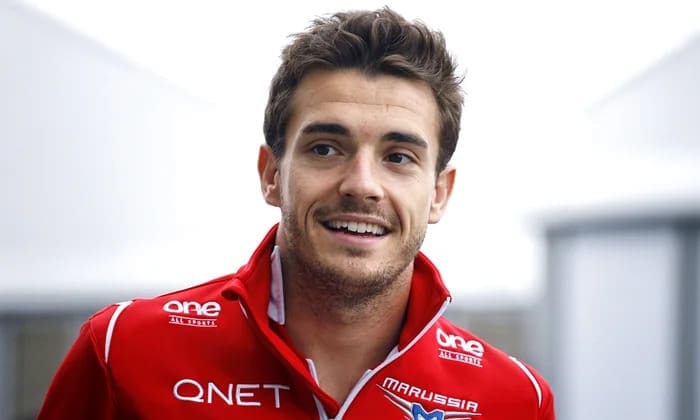
On 5th October 2014 at the rain-slicked Suzuka Grand Prix, Adrian Sutil crashed into a curve at lap 42. Suffering no major injuries he leaves the car and a recovery wheel loader is sent to the scene to pick up the pieces of the Sauber. But just a lap later, disaster struck as Jules Bianchi lost control in the same spot – crashing into the back of the crane at 126 kph. Almost a year later, Bianchi passed away due to his fatal injuries sustained to his head.
His death lingered in the community for years, with fellow drivers paying tribute to him in their own ways. But most notably, his death brought attention to safety regulations that were drastically changed following an extensive report. Now, death in modern Formula 1 feels almost out of place, with the intensive focus on safety becoming the forefront of how rule-makers come to their decisions.
Formula 1 has spent the last decade reshaping its identity around the idea of survival. Safety is no longer just a requirement to tick some boxes but instead, a defining feature of the sport. It’s engineered, refined, and increasingly expected. The introduction of the halo cockpit device (engineered and produced after Bianchi’s death) is now a standard fixture on the cars, and has done more than prevent fatal injuries. It also reframed how danger is perceived, as what was once visibly exposed became structurally contained.
For drivers who have grown up with this version of the sport, that shift is almost invisible. Junior driver Kabir Anurag describes the halo not as a radical intervention, but as something barely noticed. A piece of equipment that “doesn’t obstruct vision or anything.” Its presence only revealed the risk once it had been implemented.
“As a community we didn’t realise how dangerous it was until they put the halo in, thinking about how you can get really injured from that area,” he said. “It was just so open and we only realised it after.”
This distance does not just exist in the design of the cars, but in the mindset of the drivers themselves. For those coming up through the sport now, risk is something inherited rather than experienced.
Kabir describes it with a kind of matter-of-fact detachment. “We don’t think about it too much,” he says, explaining how danger is often pushed to the back of the mind unless it becomes unavoidable. Incidents, particularly those happening to others, are processed briefly before being let go.
It seems like a way of coping, but also a way of moving forward. In an environment where risk is constant, to confront it head-on would be paralysing. Instead it becomes abstract and understood intellectually rather than felt. Death, unless it’s immediate or personal, struggles to hold its weight.
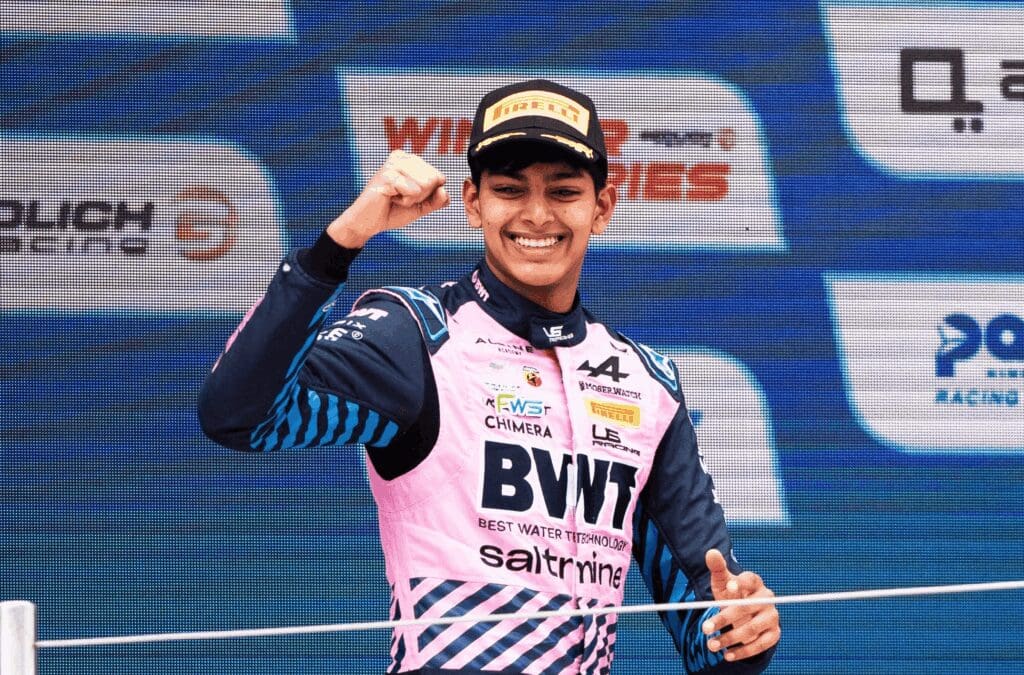
Publicly, tributes are observed, silences are held, names are remembered. But privately, the reality is more complicated. For young drivers, these moments do not always translate into lasting impact, but into the part of the sport’s history rather than its present. “It’s a very different place and different era for us now,” Kabir continued.
What emerges from this detachment is not just about motorsport, but also part of a human response to risk. In professions where danger is routine rather than exceptional, it is rarely confronted head-on for long. Instead it is absorbed into the rhythm of the work in order to move on, continue doing what people choose as their passion. To dwell is to stand still.
This process is often described as normalisation and then compartmentalisation. Over time, exposure to high-stakes environments reshapes perception, turning what might once have felt extraordinary into something expected. For racing drivers, as with surgeons, soldiers, or others operating in dangerous environments, risk becomes less of an overwhelming presence and more of another day on the job.
Moments of fear or shock are not absent, but contained and then dealt with. They surface briefly, like after a crash, a close call,or a loss, before being folded away to allow continuation. As Kabir suggests, even significant incidents can lose their immediacy with time, becoming easier to leave behind than to fully process. “For me, I had a really big crash and it was really hard the day after. But when I came back the week later I honestly didn’t really think about it,” he said.
This distance isn’t careless or pushing anything under the rug, it’s intentional to keep moving forward. Death changes form and becomes ambient, and when it does occur it only temporarily disrupts the balance.
In the years since Jules Bianchi’s death, the sport has changed in ways that are visible and behind the scenes. Safety has been reinforced, systems redesigned, risks anticipated rather than reacted to immediately. The legacy of Bianchi exists in memory and architecture, such as barriers, protocols, and protective structures now normalised in our minds.
Yet for those entering the sport now, this turning point feels increasingly distant. What remains is not the shock of loss but the outcome of it, a safer environment which makes fatal accidents fade to the back of our minds. Memory, unlike engineering, does not make itself known so easily. And so the sport moves forward in a quiet tension. Safer than it once was, but gradually further removed from the moment that forced it to change.