Gary Harper mixes cremation ashes into paint to create memorial artworks shaped by favourite places, songs and small details.
Gary had never opened Jack’s ashes.
Since 2017, they had stayed sealed away, too precious and too painful to touch. Jack was the family dog, and before Gary could ask another family to trust him with someone’s ashes, he felt he had to begin with his own.
So he painted Sefton Park, where Jack used to walk.
Jack had always been scared of water. Other dogs would run into the lake, but he stayed at the edge. When Gary began the painting, he first placed Jack’s ashes in the sky. Then, as the paint moved, some of them drifted into the lake.
Gary says: “I just thought, oh my God, he’s finally in the water. It sounds small, but it really got me.”
That moment sits at the heart of his work. The painting did not bring Jack back. It did not fix grief. But it changed one small memory: the dog who had always feared water was finally in it.
View this post on Instagram
From his garden studio in Liverpool, Gary now creates memorial artworks using cremation ashes mixed into paint.
Before he begins, he puts on the person’s music. It might be country, old pub songs, dance tracks, or whatever their family tells him they loved. He clears the room, sets out crystals and prepares the colours. Then a small amount of ash is mixed into the paint.
The ashes are not visible in the finished artwork. They do not sit on the surface or announce themselves. Instead, they become part of a landscape, a still life, a beach, a bar, a park or a city street.
Gary says: “I want it to feel like the person’s there with me. I’m not just using them as an object in the paint. I’m making the painting with them.”
For families, the finished piece is not only something to look at. It is a way of keeping someone close without keeping them hidden away.
Each commission begins with questions.
Gary asks about the person’s music, their favourite places, where they got married, where they went on holiday, what they drank and what colours they liked. Because he often paints landscapes and still lifes, these small details become the structure of the piece.
A favourite drink can become a still life. A holiday beach can become the scene. A park can hold the memory of a dog walk. A bar can become a way of returning someone to the place where they danced.
Gary says: “You hear someone’s whole life through the small things.”
That is what makes the work feel intimate. The ashes matter, but they are not the only focus. The painting is built from memory: the places, habits, songs and objects that made a person recognisable to the people who loved them.
Some enquiries come from relatives. Others come from people who know they are dying and want to arrange the painting themselves.
Not everyone goes ahead. Some people begin the conversation and then stop replying. Gary understands that the process can be too much, or that people may need more time before deciding what to do.
Gary says: “You can’t push people with it. You have to wait until they’re ready.”
That patience matters. The paintings are not just commissions. They involve trust, timing and grief. Someone is handing over something that cannot be replaced.
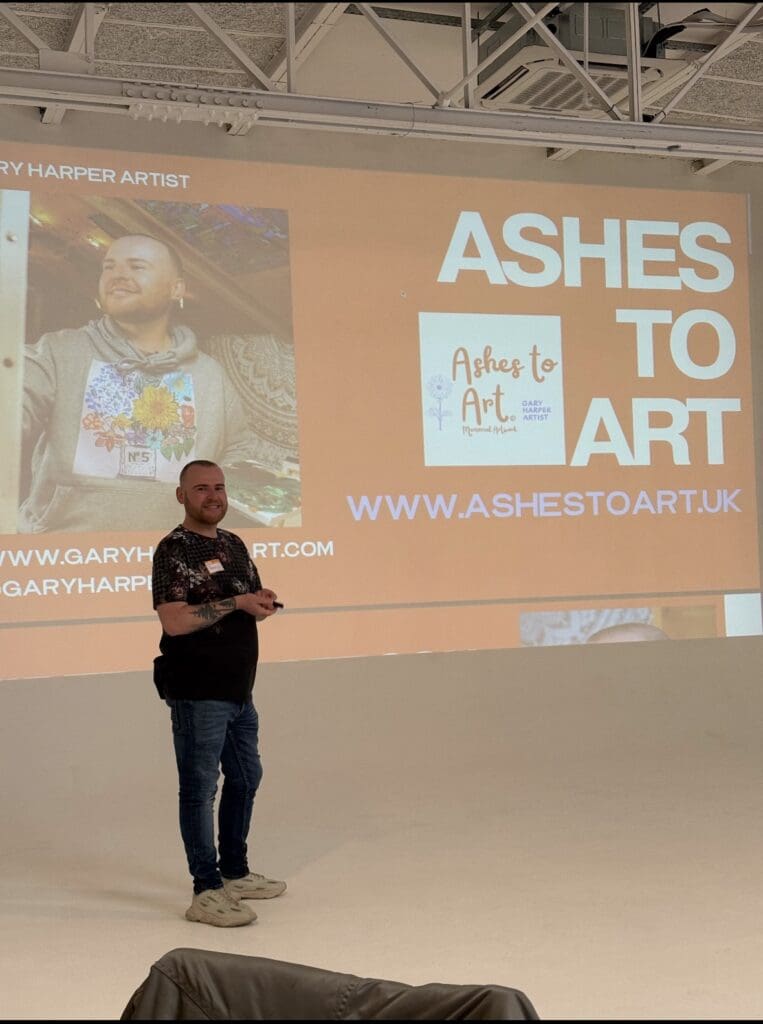
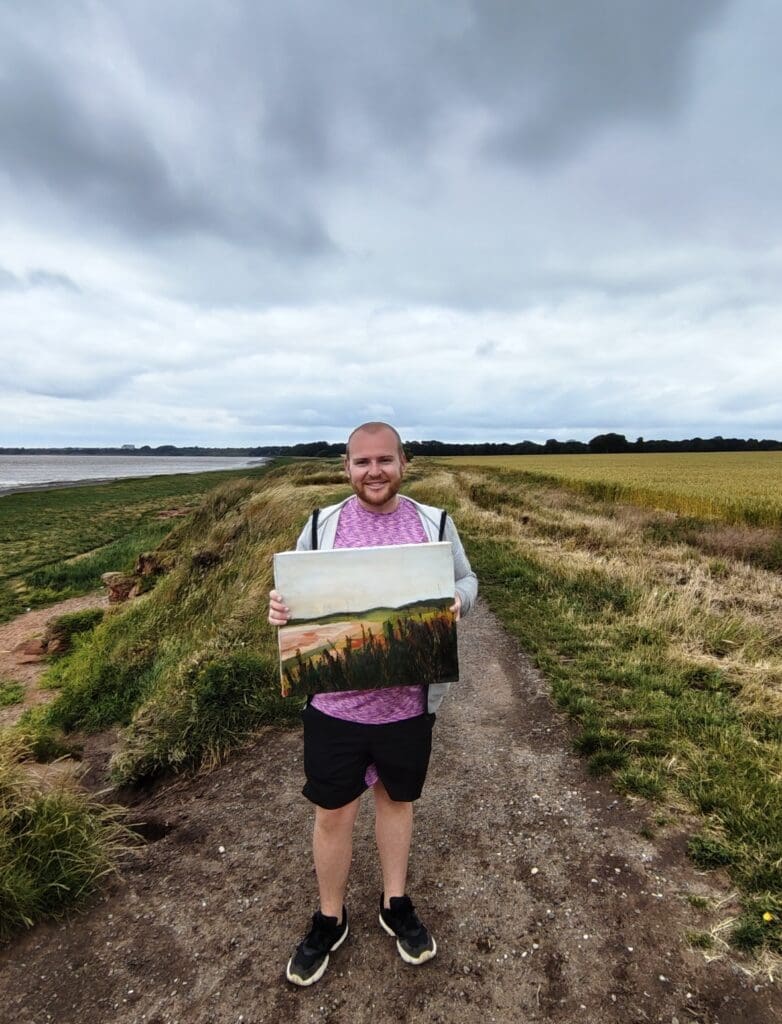
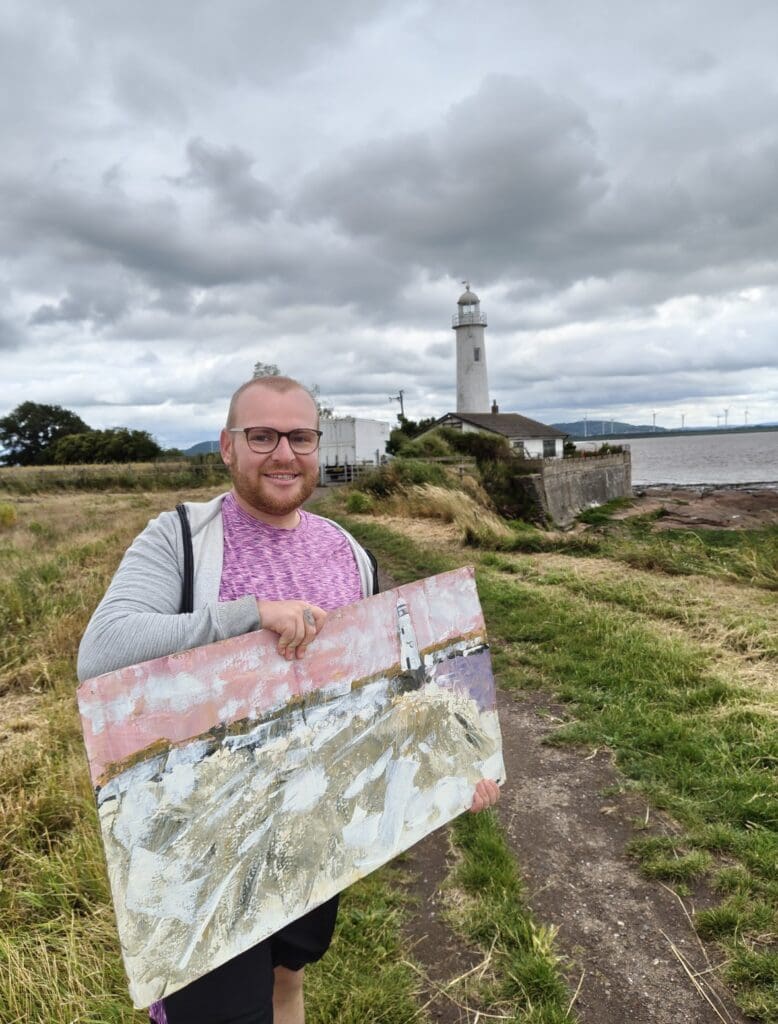
When a memorial painting is finished, Gary often delivers it himself if the family is local. Sometimes he collects the ashes too. The handovers are emotional.
Gary says: “It always ends up in tears and hugs. It gives someone clarity or peace.”
The responsibility still unsettles him. The ashes are irreplaceable, and that trust becomes part of the work.
Gary says: “Every single time, it’s a big responsibility. The most anxiety comes from getting the ashes to me. As long as I get them, it’s fine. But every time, it’s there.”
Gary hopes to work more closely with funeral homes, crematoriums and headstone makers. For now, he paints from the studio in his parents’ garden.
To follow Gary’s journey, click here.