Social media is helping drive the sale of skulls, bones and modified human remains, as experts warn legal loopholes leave much of the UK market beyond regulation.
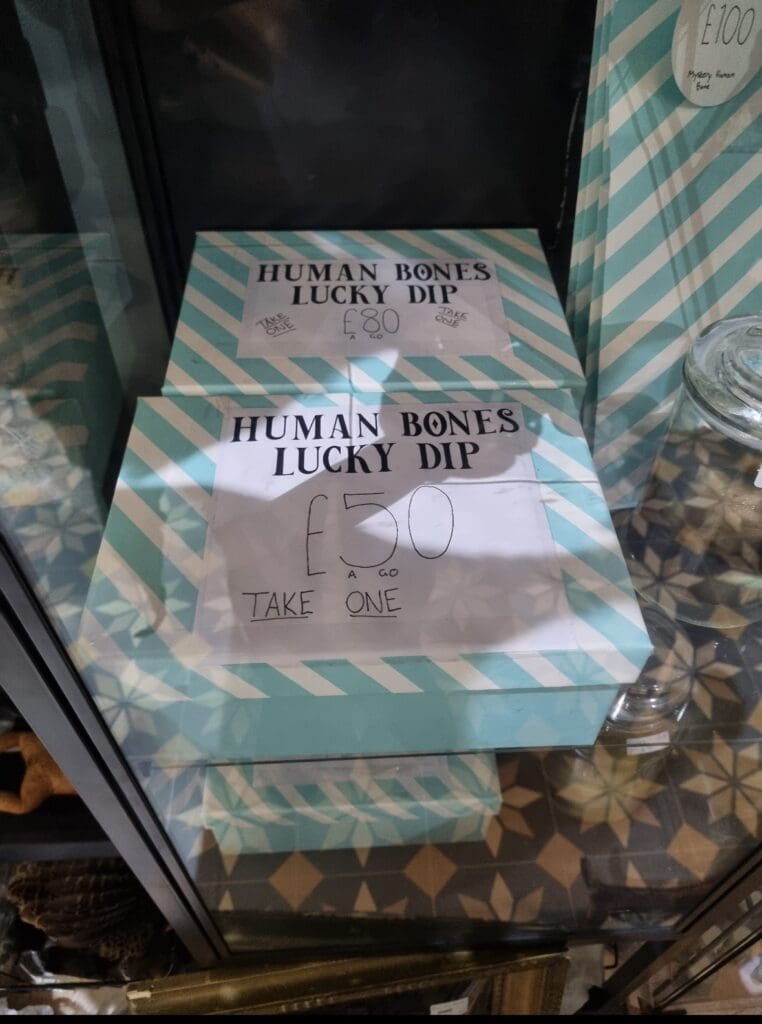
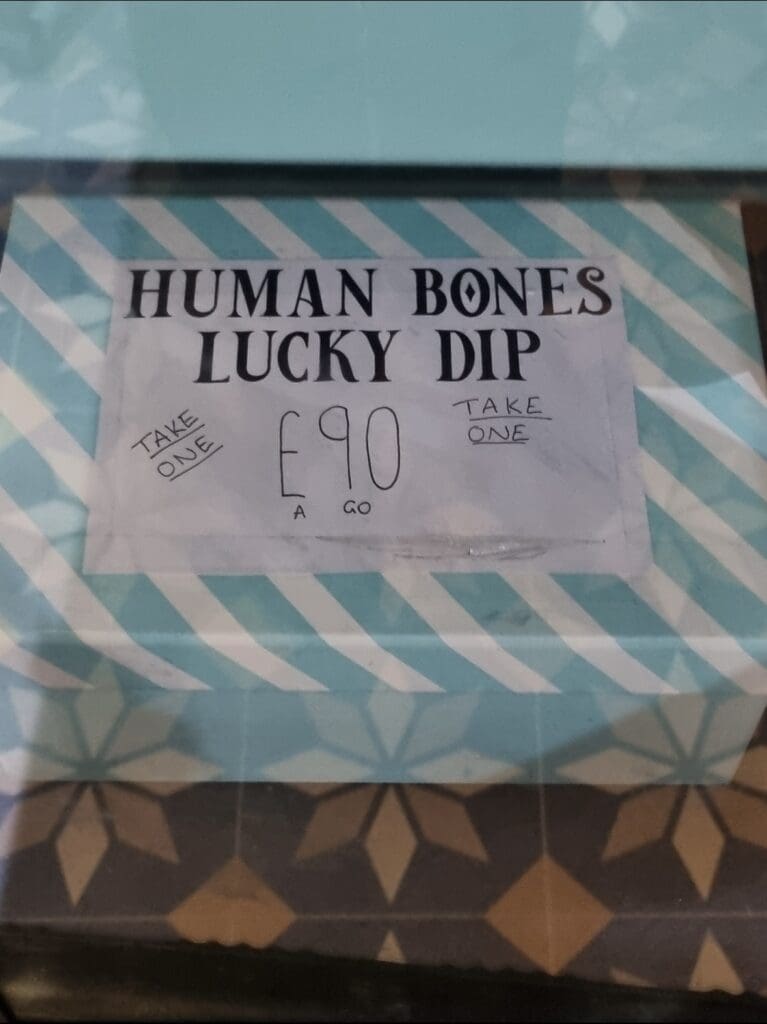
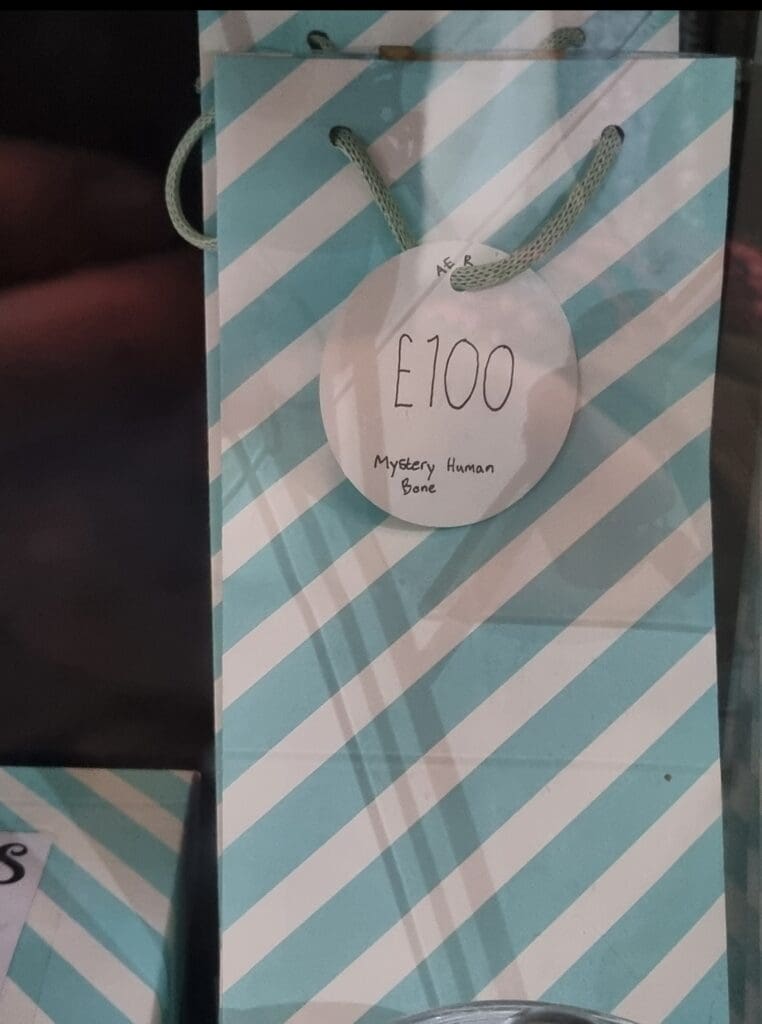
A bag of bones sat on a market stall in Liverpool, priced between £50 and £100.
Not replicas. Not props. Human remains, packaged as a “lucky dip” and sold, according to Dr Lauren McIntyre, an osteoarchaeologist and co-coordinator of the British Association for Biological Anthropology and Osteoarchaeology (BABAO).
Dr McIntyre says: “There was a stall doing a human bone lucky dip, like pick and mix. They’d got random bones in bags with stickers saying how much they were.”
The seller removed the items after being contacted. There is no suggestion that the sale was unlawful.
For the experts trying to stop Britain’s human remains trade, that is the point.
The market has moved online
Dr Trish Biers, from the University of Cambridge, co-coordinates BABAO with Dr McIntyre, investigating the sale and trade of human remains.
According to Dr Biers, the group has blocked more than 200 sales in the past five years, including from auction houses, shops and online sellers.
She says: “Social media has completely changed the market. It’s not illegal, and that’s the problem.”
The trade has long included ex-medical skulls and former museum specimens. More recently, Dr Biers says, the group has seen more skulls described as “archaeological”, with appearances consistent with having been dug from the ground or removed from coffins.
Both experts say social media has changed the trade, pushing human remains beyond specialist collectors and into private online groups where bones, skulls and modified remains can be bought, sold and shared more easily.
Dr McIntyre says: “There’s a wider variety of places people can sell stuff now. It’s not just people selling odd bits and bobs or actual auction houses
‘We’ve noticed there’s an awful lot on social media. A lot of them are actually private groups. If you’re not a member of them you can’t see anything.”
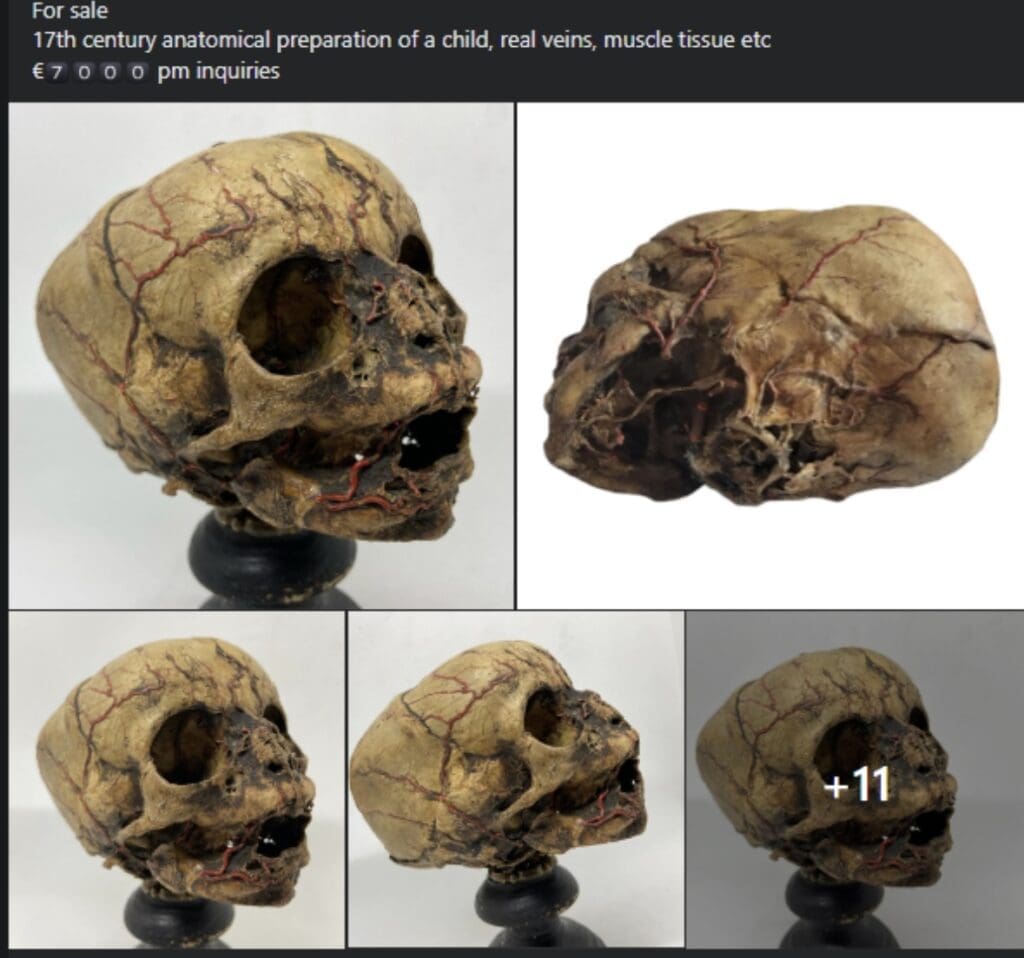
Screenshots are passed around privately. Listings are disguised as replicas. Spellings are altered to avoid moderation. Human remains move through spaces designed to disappear.
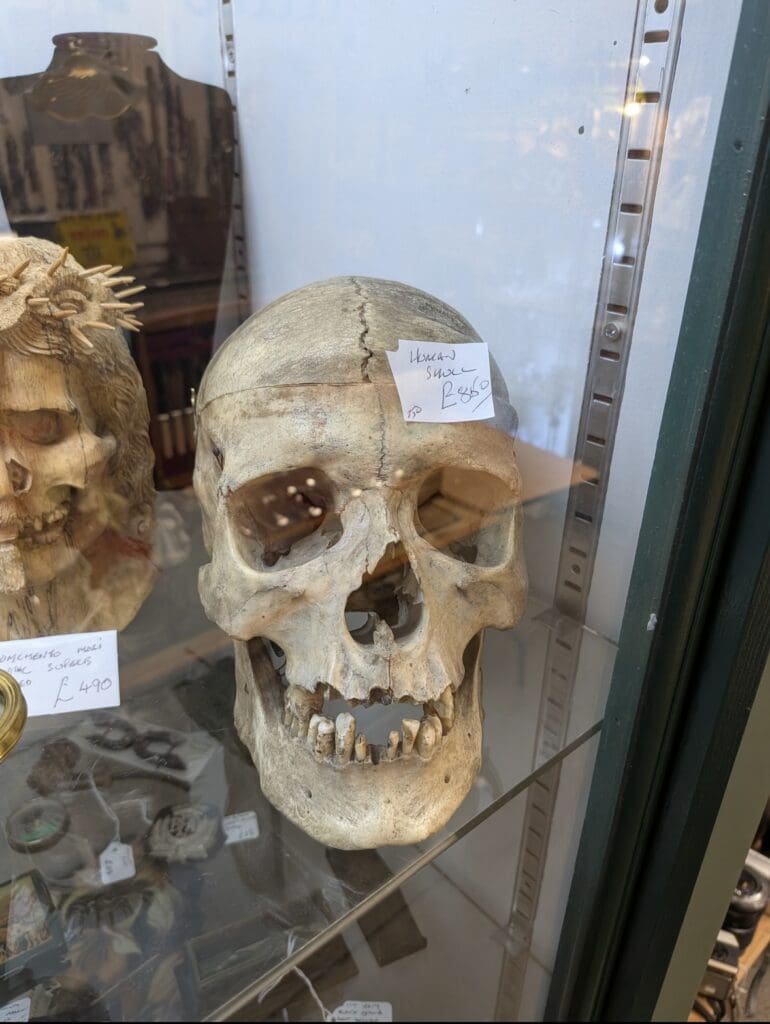
The trade has also entered the world of “curios”, where bones are marketed as gothic, decorative or Victorian-style objects.
A skull becomes a display piece. A bone becomes a collectible. A person becomes something to list, price and post.
The legal gap
Human remains are tightly regulated in some settings and barely regulated in others.
At Cambridge, Dr Biers works under a Human Tissue Authority licence. Remains must be stored, documented and handled according to formal rules. Institutions are subject to audit, and each set of remains brought into a collection must be recorded.
Private sellers can often operate with far less scrutiny.
“You can’t take photos of remains under 100 years old for medical research. But it’s OK to turn a child’s spine into a handbag handle.”
Dr Trish Biers
The Human Tissue Act 2004 regulates human tissue in specific contexts, including research, transplantation and public display. The Human Tissue Authority says a public display licence is needed for human material from someone who died less than 100 years ago, but older remains can fall outside the same controls.
A House of Lords Library briefing on human body parts states that, in the UK, human body parts can legally be held in private collections and offered for sale, provided they were not acquired illegally and are not used for transplantation.
Dr Biers says: “If we’re going to talk about respect and treating human remains with respect and dignity, why is there this weird spectrum? They’re all human remains. They’re all bones.”
Once bones lose their context
In archaeology, the rules are clearer before remains are removed.
GOV.UK guidance says a licence is needed to remove buried human remains from the ground or examine them in the ground for archaeological purposes.
Dr McIntyre says: “For us to legally disturb old human remains, we have to get a licence from the Ministry of Justice. If you disturb those remains and you don’t have an exhumation licence, then you’re doing it illegally.
“Once that thing is out of the ground, if there’s no way to trace it back to where it’s come from, then it’s not going to get policed either.”
That loss of context sits at the centre of the trade. Some remains show signs of medical preparation, including cut crania, wired jaws or metal fittings. Others display staining or damage consistent with burial. Many are sold with little reliable information about who they belonged to, where they came from, or whether consent was ever given.
Dr Biers says: “A lot of it is what they call ethically sourced or retired medical remains. We know the medical trade is very problematic and has been for decades. Just because something’s legal doesn’t make it ethical.”
The problem with “ethically sourced”
Dr Biers says the material being sold falls broadly into three categories: medical specimens, archaeological remains and “anthropological” material, including ancestral remains from Indigenous communities.
Some older medical specimens in the UK are likely to have originated overseas.
Modern body donation in the UK is tightly regulated, with written and witnessed consent required before death.
Older specimens may come from periods when those standards did not exist. In that context, “ethically sourced” can become a phrase that comforts buyers without proving consent.
The same uncertainty can make repatriation almost impossible. Once ancestral remains from overseas communities enter private collections, returning them becomes far harder.
Dr Biers adds: “Once you have Indigenous remains in a private collection, you can forget about repatriation. It will be very difficult to do that.”
What people do with the bones
The trade does not stop at possession.
Some remains are modified, decorated or turned into objects, then sold as art, accessories or decorative curios.
Dr McIntyre says: “If you’ve used a piece of human bone and turned it into an object, it’s counted as art. Some sellers will get round things by doing that and say, ‘Well, it’s legal, this is a piece of art. I can sell this.’”
A bone can become a handle. Teeth can become jewellery. A skull can become a centrepiece. The alteration does not remove the ethical problem. It can make it easier to ignore.
“We know more about the vegetables we eat. There’s more tracking for vegetables than a human head.”
Dr Trish Biers
The psychology of collecting the dead
For Samantha Waite, founder of Taboo Education, the trade cannot be understood through law or archaeology alone. It is also about what human remains allow collectors to feel: belonging, control and power.
“Displaying bones is how people tell other outcasts that they belong together. The skull on the shelf is less a memento mori than a middle finger.”
Samantha waite
For her, the deeper appeal lies in possession. Human remains make mortality tangible, silent and ownable.
She adds: “The remains are permanently available, permanently silent, and entirely under the collector’s control. It creates the sense of being in the presence of another person, but without the complexity or vulnerability that real relationships require.”
She also sees the modern trade as part of a longer history of colonial collecting, medical exploitation and institutional power.
Samantha says: “The through line from colonial collecting to 19th-century medical institutions to today’s online marketplace is not curiosity or preservation. It is ownership, and the power that comes with it. The body becomes inventory.”
What happens when sellers are challenged
BABAO says it does not condone the selling or trade of human remains and can advise people who want to transfer remains to institutions that meet ethical standards.
The taskforce has had mixed success persuading sellers to withdraw items from sale. Some auction houses and shop owners cooperate after being contacted. Others insist the trade is legal and refuse.
Dr McIntyre says: “Sometimes the auction houses will get back in touch and say, well, this is legal to sell, we don’t care. Sometimes they won’t respond at all.”
The group also hears from people who have inherited human remains and do not know what to do with them. In some cases, BABAO can help rehouse remains through institutions or trusted networks. Reports can be made anonymously through the BABAO taskforce.
“What processes have to happen for a human skull to end up on a shelf in a shop?
Dr Trish Biers
They’re not its and they’re not thats. They’re them. They’re people. They’re just dead people.”