Dead Curious spoke to end-of-life doula Dr Emma Clare about the conversations families avoid, the fears we misunderstand, and why one honest moment can transform the final chapter of someone’s life.
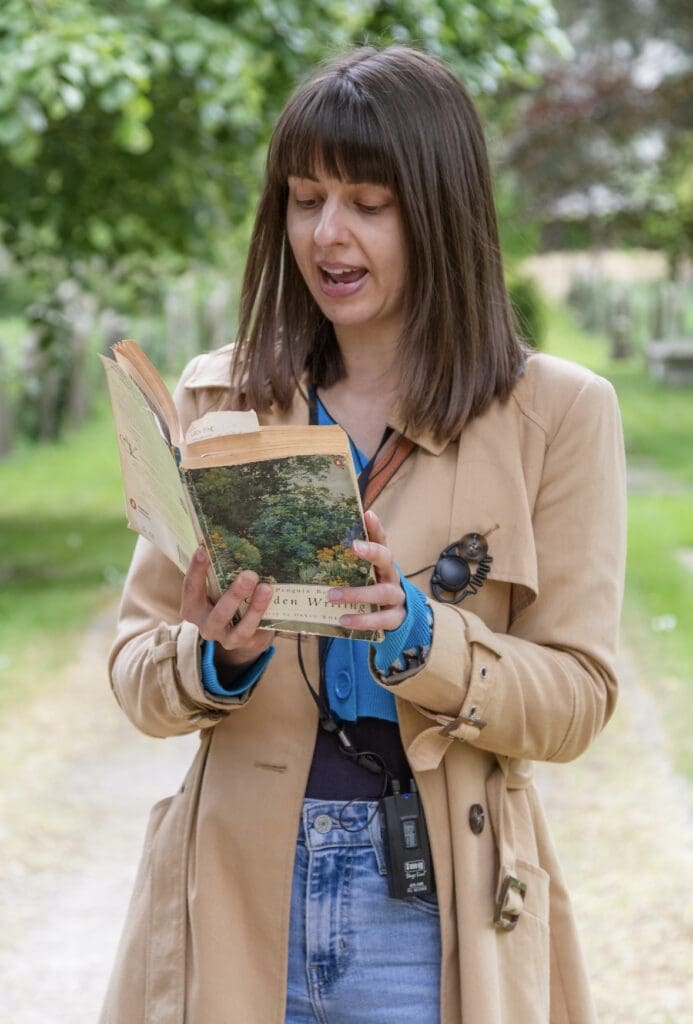
Meet the expert: Dr Emma Clare
Dr Emma Clare is a Chartered Psychologist and end-of-life doula in training who helps people and families talk honestly about dying before crisis takes over. Based in York, she has supported people at the end of life since 2018 and is a founding member of End of Life Doula UK.
Q: For people who may not have heard of the role before, how would you describe what an end of life doula actually does?
A: We are ordinary people in our communities. We are not medical experts, and we are not there to replace doctors, nurses or hospice staff. What we offer is non-medical emotional, practical and spiritual support to people who are approaching the end of their life, whether that is because of a terminal illness or simply old age.
A big part of the role is also supporting the people around them. Very often we are not just supporting one individual, we are supporting a whole family. That might mean helping everyone understand what is happening, making space for difficult conversations, helping people work out what matters most, or simply being there as a calm and consistent presence at a time when everything can feel frightening and overwhelming.
Q: When you talk about ‘important conversations’, what do you mean?
A: Very often, people simply have not talked about priorities. Everybody is on a different page, everybody is stressed, and nobody quite knows how to say what they really mean.
What was so striking to me was how often both sides already knew the truth. The person who was dying might say, “I know what my priorities are now. I know what I want and what I do not want. But I am struggling to say that to my family because I do not want them to think I have given up, and I do not want to upset them.” Then the family would say, “We know where this is going. We know they are dying. But we do not want to say that because we do not want to upset them.”
So everybody knows what is happening, but nobody feels able to name it. That means nobody can properly prepare, plan or make the most of the time that is left. I found that incredibly frustrating, because often just one open conversation could shift everything. Once the truth was out in the room, families could stop circling around it and start focusing on quality time instead.
Q: What do people need most at the end of life?
A: I sometimes think people find this a radical thing to say, but I really do not think most of what people need at the end of life is about services. A small but vital part of it is medical, of course. People need timely and adequate pain relief. They need clear guidance about what is happening in their body and what the progression of their condition may look like.
But beyond that, most people’s priorities are very human ones. They want to connect with family. They want to see friends. They want support from their faith group or community. They want to be with their pets. They want to be at home, if that is what they choose. They want familiarity, dignity and a sense of meaning.
Those things are not primarily medical. They depend on peers, neighbours, friends and relatives. So although services are absolutely important, and should be much better supported, I think we have got the balance wrong. End of life is not simply a medical problem to be managed. It is really a community matter that needs input from services, not the other way round.
Q: Have you seen people become more peaceful as they approach death?
A: Yes, although we are always careful not to romanticise death or pretend it is always beautiful. It is not. There are definitely difficult deaths, and there are deaths that do not go as the person or family would have wanted.
But in the majority of deaths I have seen, people have been accepting. And where they have not seemed at peace, it has often been because something unresolved is going on, maybe a family conflict, an old disagreement, or some emotional loose ends that have not been tied up. It is often not the illness itself that is preventing peace, but the unfinished business around it.
Death is frightening to contemplate, and it is supposed to be frightening in some ways, because that instinct helps keep us alive. But once somebody is actually in the process of dying, there is often a kind of natural withdrawal. People turn inward. They may want more time alone. They may become quieter. There are physical and psychological changes happening, and in many cases the body seems to know what it is doing.
Even with people who were very afraid earlier on, when the dying process itself began, most were calmer than they had expected to be. Many were accepting, and many seemed peaceful. You are there at the final bookend of somebody’s life. That ending closes their story. It matters enormously.
Q: How do you cope with the emotional side of the work yourself?
A: I think one thing that helps is that the relationship is built around the understanding that this person is going to die. That is there from the beginning. It does not make it easy, but it does shape the relationship.
There are definitely times that are hard, particularly if things do not go in the way the person wanted. But I tend to come back to the thought that, if I had not been involved at all, it probably would have been worse. Even if it was not perfect, I made it better than it might have been otherwise. Sometimes that has to be enough.
I often say I am a recovering fixer, because my instinct is to want to fix everything and make it perfect. But this work teaches you that you cannot do that. Trying to force that can even make things worse. What you can do is help, witness, advocate, support, and make things more bearable.
Q: Is advocacy part of the role?
A: Very much so. It is especially important for people who do not have family or friends able to advocate for them. One of the first things we do is get to know the person properly. What matters to them? What kind of life have they lived? What does a good day look like for them? What do they want, and what do they not want?
Then, as things progress, there may be moments when that person is not able to speak up for themselves, or when they are being swept along by systems that are not really aligned with their wishes. At that point, we can advocate.
Q: Do some people turn to doulas because they feel let down by mainstream services?
A: I would be careful about putting it that way, because I do not think this is about blaming services. End of life care asks for such a different approach from most other areas of medicine. Doctors are trained to have answers, to diagnose, to intervene, to fix. And in most contexts, that is exactly what you want from them.
But when it comes to dying, so much of the answer is, “We do not fully know.” There is uncertainty, complexity and a need for a very different kind of support. That is hard, and I have a lot of sympathy for professionals trying to work in that space.
Where we often come in is when somebody feels that the standard system does not quite fit who they are or how they live. I have worked with LGBTQIA+ people, for example, who are tired of having to come out again and again in care settings or explain their relationships repeatedly. I have also worked with sex workers and other people whose lives do not fit neatly into standard assumptions. Often, services are not trying to be discriminatory, but there can be many unspoken assumptions that make people feel unseen.
Q: Does the same apply to spiritual or religious needs?
A: Yes, definitely. Services often try to be accommodating, but there are things that can be difficult in formal settings. Somebody may want a ritual, a candle, music, prayer, or a particular atmosphere that does not fit neatly into institutional rules.
As doulas, we sit in that space between professional services and ordinary community life, so we can often be more flexible. Obviously we still need to be safe and sensible, but the question we try to ask is: is there a good reason why this cannot happen? Rather than defaulting to, “No, because it is not how things are usually done.”
Q: In terms of creating meaning at the end of life, what has surprised you most?
A: One of the loveliest surprises for me was realising how much people wanted to teach me things. Especially if they did not have younger generations in their family, there was often this very strong desire to pass something on.
I remember going to see one gentleman who asked if he could teach me boxing. I said, “I will be terrible, but you can try.” He got the gloves out, and that whole visit was just him teaching me boxing. That was what he wanted to do. He said, in effect, “I have got no grandchildren to teach this to.” It was a huge part of his life and identity, and he wanted to hand it over to someone.
That stayed with me. There have been so many moments like that. You never quite know what you are walking into. Someone might want to tell you about their work, show you how to make something, share a recipe, explain their craft, or tell the story of their life in a way that feels true to them.
Q: Legacy sounds like a big part of the work. Why is it so important?
A: I think it is such a deeply human thing. The desire to leave something behind runs through so much of what we do. People want to feel that they mattered, that they were here, that something of them will continue.
That can mean different things for different people. For some, it is children or family. For others, it is their stories, their values, their skills, their creativity, their humour, or simply the way they were known by others. If someone has become disconnected from their family, or their community has fallen away, part of the work can be helping them find another route back into meaning.
I have supported people to get back out into community, to give talks about their career, to piece together a scrapbook or memory book for relatives, or to think about how they want their story told. That is a really important point too. People often want to tell their own story while they still can, so somebody else does not end up telling it for them.
Q: Do you think society has become disconnected from death?
A: If you go back far enough, most people died at home. Children would have been around death. People would have seen dead bodies. They would have known what dying looked like because it was part of ordinary life.
Now, death has largely been handed over to formal services, both before somebody dies and afterwards through funeral systems. It is hidden away. And because human beings are generally very bad at handling uncertainty, what we do not know becomes frightening.
That is why I think it is so important to engage with death before it becomes a crisis. Learn about it before it is your parent, your partner, your friend, or you. We think everybody should know what ordinary dying looks like. Not because it makes it easy, and not because it takes away grief, but because it takes away some of the terror of not knowing.
Q: Has doing this work changed the way you live your own life?
A: I worry much less about small things. It gives you constant perspective. It also makes me appreciate everyday life much more.
One of my favourite things anyone I supported ever said to me was that, after receiving a terminal diagnosis, life suddenly felt more colourful. That has always stayed with me. I feel very lucky to have found this work in my twenties, because it changed how I pay attention. When I go outside, especially into nature, I really notice things. I take time to look properly. I think about the fact that none of us know how many times we will see something.
It has made my life richer, not darker. People often assume that engaging with death all the time must be morbid or depressing. But honestly, I have never done anything more uplifting or more full of joy. It has made me more grateful, more present and more alive.
Q: If there is one thing you wish more people understood about death, what would it be?
A: I would probably go back to what I was saying about understanding the ordinary process of dying, especially the physical changes. The thing I see causing the most distress is when families do not understand what they are seeing and hearing, and understandably assume something terrible is happening.
For example, someone once told me their mother had died “gasping for breath” and “choking”, and that it was awful. But a lot of the things people witness at the end are normal parts of dying, and they are not necessarily what they sound like. What looks frightening from the outside often does not cause suffering in the way people fear. A person may be so deeply unconscious by then that they are completely unaware.
Eating and drinking is another big one. Because we show love through feeding people, families can feel devastated when someone stops taking food or water. But often the truth is not that the person is dying because they have stopped eating and drinking. It is that they have stopped eating and drinking because they are dying. Trying to push more in can actually make them more uncomfortable.
Those simple explanations can transform how a family experiences those final hours or days.
To learn more about end-of-life doulas and the support they offer, visit here.