
An introduction to the Chinese festival Hungry Ghost Month.
Death is universal, but the ways we think about it are certainly not. Some cultures prefer to keep it at arm’s length, hidden in quiet wakes and hushed whispers. Others invite it into everyday life through ritual, shared memories, and stories. Looking elsewhere at how other societies face the dead can reshape our relationship with mortality, turning something feared into familiarity, even communal.
The seventh month of the Chinese calendar comes, and though no one says it explicitly, people across the country feel something upon them. In seeing incense, joss paper, and offerings placed on the ground near metal bins. In an offhand comment from your parents when you leave the house, an innocent ‘remember to come home before it gets dark’. The barrier between the afterlife and earth has thinned, and Hungry Ghost Month is upon us.
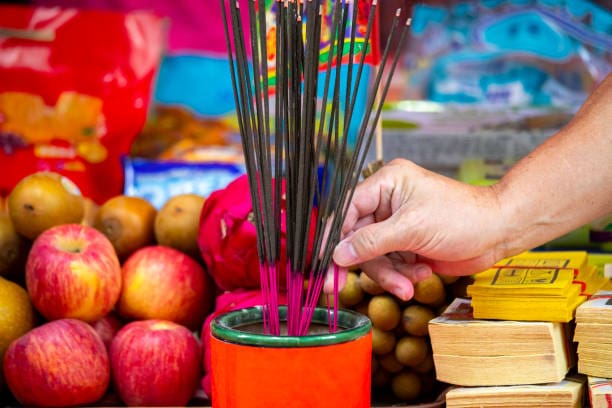
Also known as the Zhongyuan Festival or Yulanpen Festival, Chinese tradition says that during this month the gates of the underworld open and allow spirits to roam the earth, seek food and entertainment, and visit the living. And although these spirits are not thought to be malicious, wandering ghosts are among those visiting the earth.
These are believed to be spirits without descendants, or those whose descendants did not pay tribute or provide offerings after they died. Since Chinese funeral customs involve offering the dead their favourite food and drink, these spirits are desperately hungry, thirsty, and restless for recognition as a result.
“Usually we burn incense paper on the first night of the month below our block where a bin is provided,” said Vivian Wong, a Chinese Singaporean who observes the tradition. “It’s a way to give offerings to the roaming spirits and to seek safety, to ensure there are no disturbances for the month.”
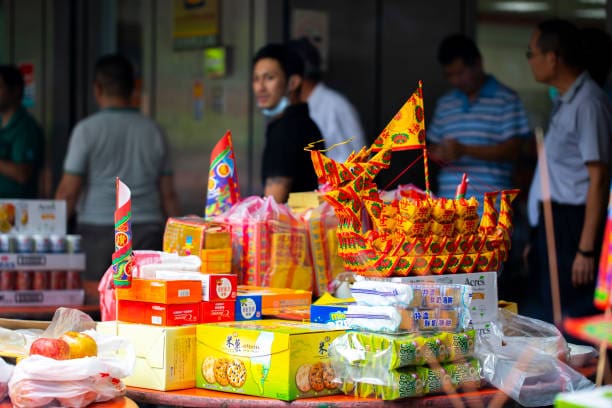
The main aim is to feed and appease these ‘hungry ghosts’ to avoid misfortune, and people often pay tribute to the homeless ghosts of strangers, so that these souls do not intrude on their lives and bring misfortune.
“Generally, we have to be more wary and try not to stay out late during the month to prevent ‘bumping’ into the spirits. Otherwise, they might hang onto you,” Vivian continued.
Though lesser known traditions are not usually continued by younger generations, the youth of Singapore also feel strongly in following the ‘rules’ of Hungry Ghost Month. “If I was close to someone that passed, I would view it as something to be comforted by,” said one younger resident. “Since the barrier is thin, I’ll feel like someone I care about is watching over me.”
In Singapore, we have varying opinions of the month. Some feel fearful of these restless spirits and the bad luck they bring, whereas others welcome their ancestors coming to visit. As we spoke, Vivian recalled a bittersweet story from an acquaintance about a mutual friend who passed away.
“Someone in the group went to Thailand for a fortune telling, and the monk randomly mentioned this friend, and that he could go to earth now. So the group got together and placed some offerings, including cans of beer. When a few minutes passed after opening the beer, it suddenly started to foam up. All of them believed their deceased friend took a sip with them,” she recalled.
While the imagery and traditions of Hungry Ghost Month may be unfamiliar to the Western world, the underlying impulse to commemorate the dead is not. Across cultures, rituals surrounding death serve the purpose to remember, honour and maintain connection with our ancestors. No matter the gestures, they all stem from the same human instinct to acknowledge the dead as a part of the social world.
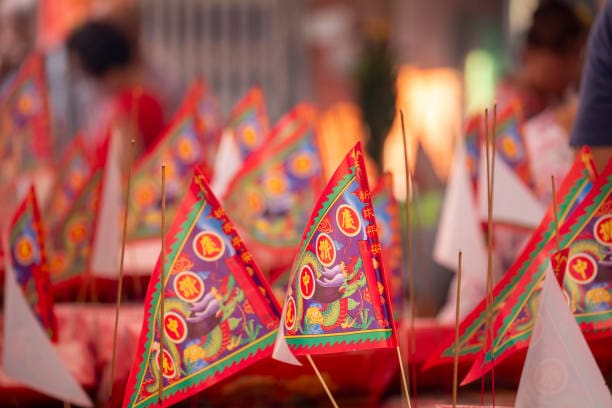
“Hungry Ghost Month is as important as Chinese New Year and the Mooncake festival – traditions like this shape Chinese culture here in Singapore,” Vivian said.
The younger resident agreed that the tradition should continue across generations. “I want it to be celebrated as long as it can,” they said. “People all around should hear about it and see it as a way to continue honoring the dead. We should learn to keep it alive as long as possible.”
In this way, Hungry Ghost Month offers a perspective that the West often struggles to speak about openly. Modern Western societies tend to treat death as something to be hidden away, rarely discussed in everyday life for fear of treading morbid territory.
By contrast, this festival places remembrance into the public sphere. Simply passing by a Singaporean neighbourhood during this month, one can see the streets filled with offerings or smell the incense smoke lingering in the air.
Even for those unfamiliar with the tradition, the rituals point to something universal. The enduring human instinct to remember the dead and keep them, in some small way, part of the land of the living.