A convict is welded inside a submarine and sent into an ocean of blood. Beneath the cosmic horror of Iron Lung lies a deeper existential question: how do we find meaning in a universe that doesn’t care if we live or die?
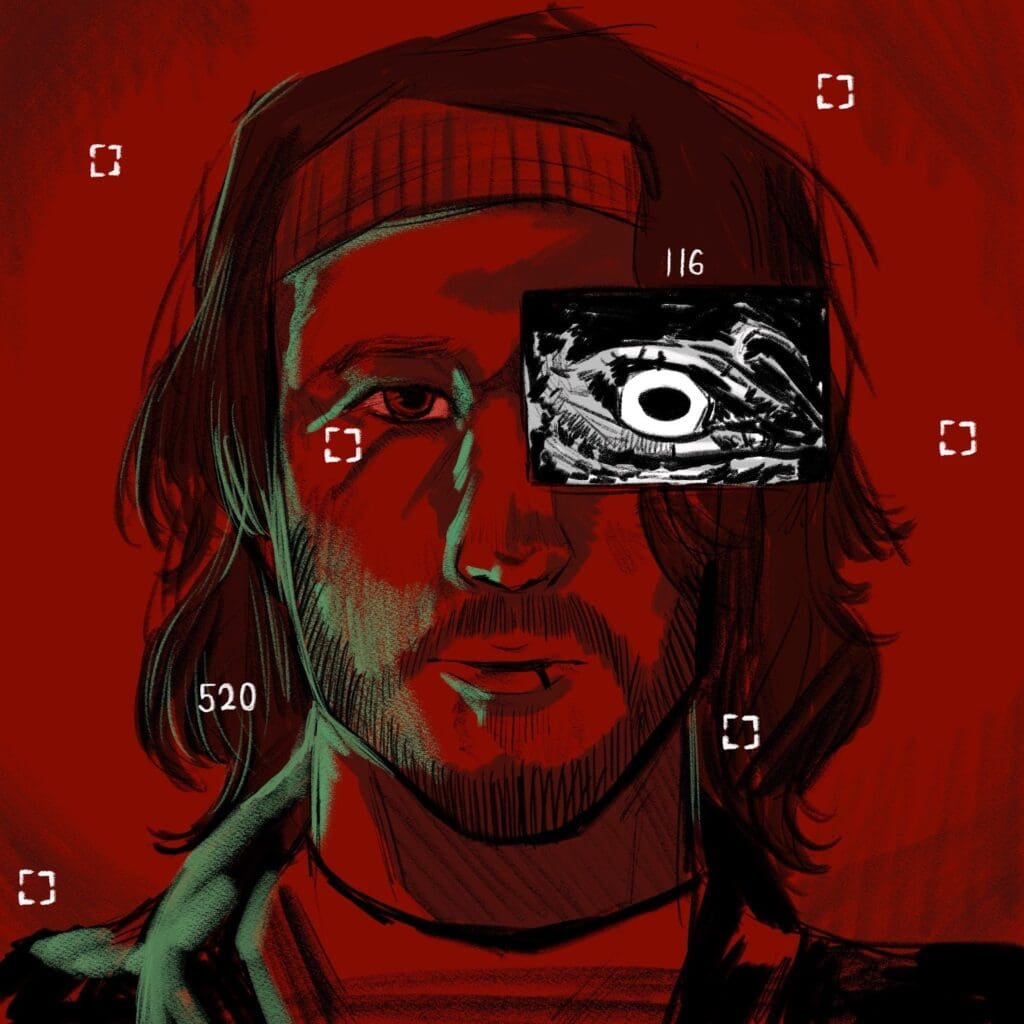
There are no windows looking out. No comfort in seeing what’s on the horizon. No one to talk you through this journey. Just groaning metal walls sweating with condensation and a camera briefly showing snapshots of the depths around.
Following an event dubbed the Quiet Rapture, all stars and planets have disappeared. Those aboard space stations are the only ones left, surviving on decades of dwindling resources and decay. All until a discovery was made on a barren moon named AT-5. A mysterious ocean of blood inhabits the rock, possibly holding discoveries and resources that could save humanity. The Consolidation of Iron builds a submarine and a convict (known only as Simon) is welded within, sent on an expedition to take pictures of the ocean floor and come back with his findings. If he can make it back, he will be free. But as we will find out, this is no expedition. But an execution.
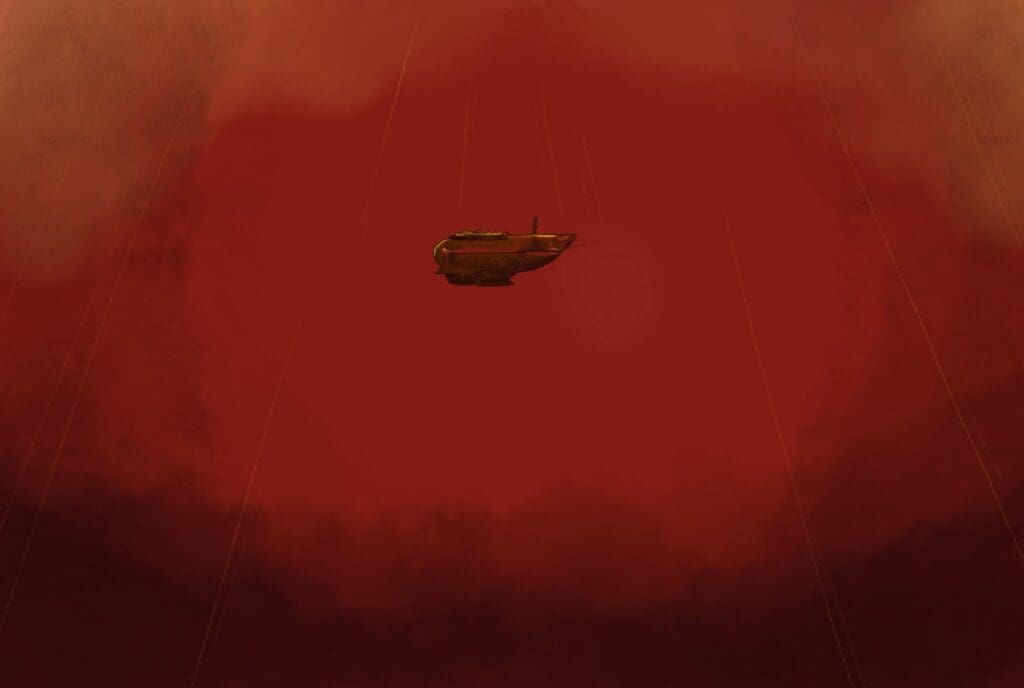
Iron Lung plays upon specific tactics to scare its audience, mostly the death anxiety that surrounds confinement horror. The submarine SM-13 works as a coffin in which Simon is trapped, and we as viewers get to experience that rush of powerlessness without being in a life or death situation ourselves.
Watching Simon frantically make his way through the ocean of blood, we too feel our heart rates spike when the submarine creaks or when an unknown force is heard on the motion detector. It is the slightest brush with annihilation, but there’s a way out for us. We close the tab, we leave the movie theatre, we step out into the open after these stifling experiences. But not only do we walk away with a new appreciation for fresh air, we are also processing mortality without having to dive into the depths ourselves.
Modern society has grown comfortable with a culture obsessed with productivity and control. We want to keep moving, never look back, always keep ourselves on our toes. But confinement horror strips life down to being simple again. All we have is breath, time, an environment we can hardly control, and the ticking of the clock as it signals the inevitable. We can’t outrun or negotiate, instead relinquishing control to the box we are welded into. It asks difficult questions of its audience as the depth meter sinks further down:
What happens to us when life narrows down like this, in a locked box without agency?
What remains when escape is impossible?
Who are we at our cores, with all distractions removed?
All impossible to answer without being in the submarine ourselves. Yet Iron Lung answers these questions simply in the final act of the movie. Simon begins with a perspective that survival and freedom matter more than anything. Above the expedition or any greater cause, he refuses to believe that this mission means more than his life.
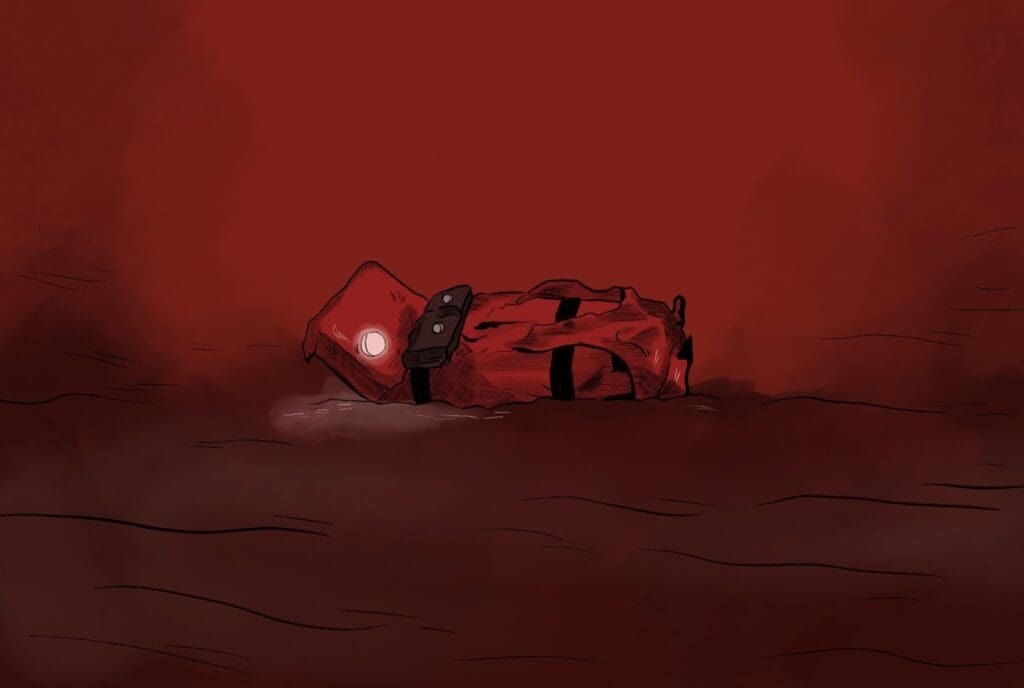
But eventually survival no longer becomes the focus as he trudges through the claustrophobic crawlspace rapidly filling with blood to retrieve a valuable blackbox. It holds voice recordings of the SM-8, another submarine that made valuable discoveries but was lost to the ocean’s depths. Irradiated, hunted, doomed, he wraps the black box in a life preserver, keeping within it all the suffering and progress of the other convicts. His last ditch effort is to hope someone out there will remember what they all went through, and what their sacrifices were for. Simon’s fate is sealed, but he refuses to disappear should he die.
Cosmic horror usually involves an otherworldly entity revealing how weak the human protagonist is against its alien forces. It stresses the reality that any actions or attempt to fight will be insignificant, even against the indomitable human spirit. But Simon’s sacrifice argues that insignificance does not mean irrelevance. He can’t survive the hull imploding under pressure as the monstrous eel bites down, but he can leave evidence in this ocean of blood.
Death is inevitable, and yet life is meaningful anyway. When we realise that humans are small and fragile against an indifferent universe, we cope. Our actions reach for meaning in the face of the unavoidable. We tell stories and leave archives, and we write names on gravestones to preserve memory. We wrap our own black boxes filled with pieces of us and hope that they float to the surface for someone to find.
Humans can’t conquer death, no matter how hard we may try. But when confronted with something bigger than us, we don’t always conquer it. Sometimes we just choose to matter anyway.